Low Blood Pressure (Hypotension): Causes, Symptoms and Tests
The essentials
Low blood pressure (hypotension) usually means a reading below 90/60 mm Hg. Many healthy people live with numbers this low and feel fine: then it needs no treatment. It matters when it causes dizziness or fainting, when it drops on standing, or when it falls suddenly, which can signal dehydration, bleeding, a medicine effect, infection or a heart or hormone problem. Simple blood tests help find the cause.
What is low blood pressure, at a glance?
- Medical name: hypotension. For most adults, normal blood pressure is below 120/80 mm Hg, and low blood pressure is below 90/60 mm Hg[1]. The two numbers are explained in our guide to what BP means.
- Often harmless: some people have low blood pressure all the time, and it is normal for them[1]. A low reading without symptoms often needs no treatment[2].
- Orthostatic hypotension: a drop of at least 20 mm Hg in the top number or 10 mm Hg in the bottom number within 3 minutes of standing[3]. It affects about 1 in 5 people over 60 living at home[4].
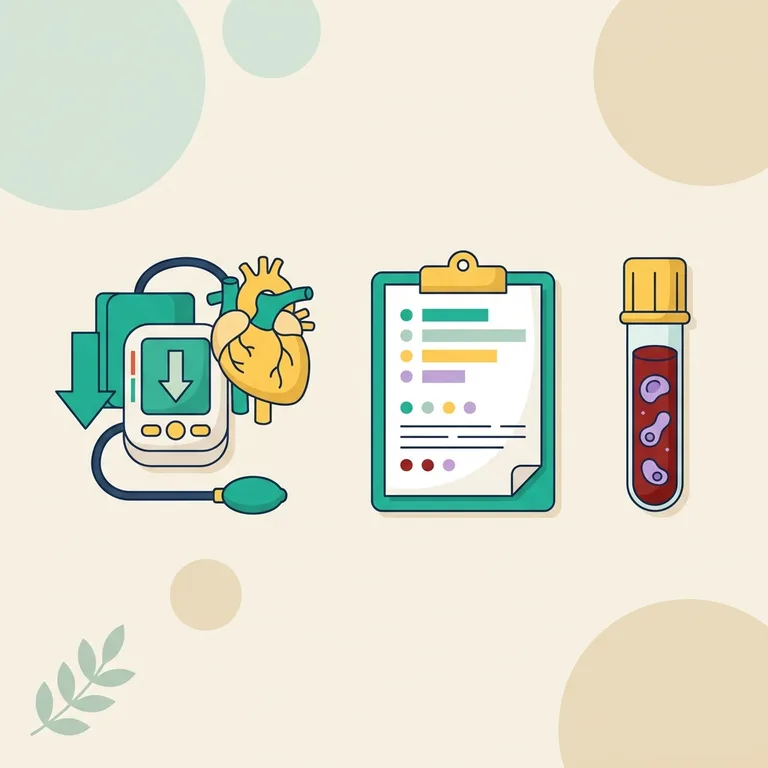
- Key tests: blood pressure lying and standing, an ECG, a complete blood count and a basic metabolic panel, with other blood tests depending on the suspected cause[2].
What are the symptoms of low blood pressure?
Symptoms come from the brain and other organs briefly getting less blood. The most common are[2]:
- dizziness or lightheadedness, especially when you stand up;
- blurry or dimmed vision;
- fainting (syncope) or feeling about to faint;
- weakness, sleepiness and trouble concentrating or confusion;
- nausea.
Symptoms are not always obvious. In older adults, orthostatic hypotension can show up only as slowed thinking or unexplained falls, without the classic feeling of faintness[8]. If dizziness is your main problem, our page on causes of dizziness covers the other possibilities, such as inner-ear problems.
A very low blood pressure with cold, clammy, pale skin, fast shallow breathing and a weak, rapid pulse is a different situation: it suggests shock, a medical emergency[2].
When is low blood pressure dangerous?
The number alone does not decide. A healthy young adult at 88/58 mm Hg who feels well is not in danger. What matters is a sudden fall from your usual level, symptoms, and the context[1].
When to see a doctor
- Emergency: call 911 if someone faints and does not wake up quickly, or if low blood pressure comes with chest pain, shortness of breath, confusion, cold and clammy skin, a racing or irregular heartbeat, heavy bleeding, black stools or vomiting blood, or a high fever with feeling very unwell. Start CPR if the person is not breathing or has no pulse[2].
- Within 24 to 48 hours if you have fainted, even once, and recovered; if dizziness on standing is new or getting worse; or if symptoms began after starting or changing a medicine[2][6].
- At your next appointment if your readings are often below 90/60 mm Hg with mild symptoms, or if you have had a fall without a clear reason.
What causes low blood pressure?
Low blood pressure has many causes, from the harmless to the serious. They are listed here from the most frequent to the least[2][5][8]:
- Common Constitutional low blood pressure: a naturally low reading, often in slim young women, without any disease.
- Common Not enough fluid: dehydration from heat, fever, vomiting or diarrhea, or not drinking enough.
- Common Medicines and alcohol: drugs for high blood pressure and heart disease, diuretics (water pills), some antidepressants and anti-anxiety drugs, painkillers, and alcohol.
- Common Standing for a long time in heat or a crowd: a reflex drop, known as neurally mediated hypotension, mostly seen in children and young adults.
- Possible After meals: postprandial hypotension, a fall in blood pressure within about 2 hours of eating, mostly in older adults, people with high blood pressure and people with Parkinson's disease[9].
- Possible Blood loss or anemia: slow bleeding from the gut or heavy periods can lower blood volume.
- Possible Pregnancy: blood pressure normally falls in the first and second trimesters.
- Possible Heart problems: a slow or irregular heart rhythm, valve disease or heart failure.
- Possible Nerve damage that controls blood vessels (neurogenic orthostatic hypotension), for example with long-standing diabetes or Parkinson's disease. It may even be an early sign of Parkinson's[8].
- Rare Hormone problems: Addison's disease (adrenal insufficiency), an underactive thyroid or a pituitary problem.
- Rare Shock: severe infection (sepsis), a severe allergic reaction (anaphylaxis), major bleeding or a heart attack. These cause a sudden, deep fall and need emergency care.
Age raises the risk of a drop on standing: orthostatic hypotension affects about 5% of people under 50 and up to 30% of those over 70[5].
How is the cause of low blood pressure found? The tests and how to read them
Blood pressure lying, then standing. This is the key test. Blood pressure is measured after resting lying down, then after 1 and 3 minutes of standing. A drop of 20/10 mm Hg or more confirms orthostatic hypotension[3][6]. The pulse is noted at the same time: when the heart barely speeds up as pressure falls, a nerve cause (neurogenic) is more likely than dehydration or a medicine[8]. Home readings help too: our blood pressure chart by age explains how to take and compare them.
ECG. It looks for a slow, fast or irregular heart rhythm[2]. Further heart tests, a tilt-table test or 24-hour blood pressure monitoring are used when fainting is unexplained[6].
Blood tests. They do not measure blood pressure, but they reveal several of its causes[2][7]:
| Test | What it can show |
|---|---|
| Complete blood count | Low hemoglobin (anemia, blood loss); high white cells (infection) |
| Basic metabolic panel | High BUN-to-creatinine ratio (dehydration); low sodium with high potassium (adrenal problem); glucose (diabetes) |
| Morning cortisol | A low value suggests adrenal insufficiency, to be confirmed by a stimulation test |
| TSH | An underactive thyroid |
| Vitamin B12 | A deficiency that can damage nerves controlling blood vessels |
| Lactate, blood cultures (hospital) | A high lactate with very low blood pressure points to shock, for example from sepsis[10] |
| Test | Result | Reference range | Flag |
|---|---|---|---|
| Hemoglobin | 10.4 g/dL | 12.0-15.5 g/dL | L |
| Urea nitrogen (BUN) | 29 mg/dL | 6-20 mg/dL | H |
| Creatinine | 0.9 mg/dL | 0.6-1.1 mg/dL | |
| BUN/creatinine ratio | 32 | 10-20 | H |
| Sodium | 137 mEq/L | 135-145 mEq/L |
- Test and result: each line is one measurement; H means above and L below the laboratory's range.
- Low hemoglobin: fewer oxygen carriers and possibly less blood volume; the doctor will look for blood loss or iron deficiency.
- High BUN with normal creatinine: a ratio above 20 often fits dehydration or bleeding in the upper gut, not kidney failure.
- Reference range: it differs between laboratories; the range printed on your own report is the one that counts.
Blood count, chemistry panel and hormone results on several pages? BloodSense explains each line of your full report in plain words, so you can see which results may relate to your low blood pressure and what to ask your doctor.
Explain my blood test resultsHow is low blood pressure followed over time?
Follow-up depends on the cause. Most people with symptoms on standing are asked to keep a blood pressure diary: readings in the morning, sitting then standing, and when symptoms occur. Blood tests are repeated when they were abnormal: a blood count after treating anemia, sodium and potassium after changing a diuretic, cortisol or TSH when a hormone problem was found. In neurogenic orthostatic hypotension, blood pressure is also checked lying down, because it often comes with high blood pressure when lying flat[8].
Follow-up matters even without symptoms: orthostatic hypotension is linked to more falls, heart attacks, strokes, heart failure and atrial fibrillation[5].
How is low blood pressure treated?
Low blood pressure without symptoms usually needs no treatment[2]. Otherwise, treatment targets the cause, step by step, starting without medicine[6][7][8]:
- Review of medicines: the doctor may lower a dose or change a medicine. Never stop a medicine on your own[2].
- Fluids and salt: drinking more and, if the doctor agrees, adding salt. This is not advised for everyone, for example with heart failure or kidney disease.
- Compression: compression stockings or an abdominal binder keep blood from pooling in the legs and belly.
- Treating the cause: iron or a transfusion for anemia, hormone replacement for adrenal or thyroid failure, fluids and antibiotics for sepsis.
- Medicines that raise blood pressure: only when symptoms persist despite these measures, prescribed and monitored by a doctor[6][7].
Shock is treated in hospital with intravenous fluids, such as Ringer's lactate, and medicines that tighten blood vessels; septic shock is defined by the need for these medicines to keep the mean arterial pressure at 65 mm Hg or more, with a lactate above 2 mmol/L[10].
What can I do to raise my blood pressure and prevent dizzy spells?
- Get up slowly: sit on the edge of the bed for a moment before standing[2].
- Drink enough through the day, more in hot weather or when you have a fever, and limit alcohol[2].
- If you feel faint, sit or lie down right away and raise your legs[2].
- Learn counter-pressure moves: crossing your legs and tensing your thighs, or clenching your fists, can raise blood pressure for a short time[6].
- If dizziness follows meals, eat smaller meals with fewer refined carbohydrates and rest after eating[9].
- Avoid standing still for a long time in heat if this triggers your symptoms[2].
- Write down your readings and symptoms to show your doctor.
Questions to ask your doctor
- Is my low blood pressure normal for me, or is something causing it?
- Could one of my medicines be lowering my blood pressure?
- Should my blood pressure be measured lying down and standing?
- Do my blood test results show dehydration, anemia or a hormone problem?
- Is it safe for me to drink more fluids and add salt?
Frequently asked questions
Is 90/60 low blood pressure?
It is the usual threshold: below 90/60 mm Hg is called low[1]. Exactly 90/60 in a person who feels well is not a problem. What matters is how you feel and whether the value is new for you.
Is low blood pressure better than high blood pressure?
Over the long term, a naturally low blood pressure without symptoms is not harmful. A sudden fall, or a drop each time you stand, is different: it raises the risk of falls and is linked to heart and brain problems[5].
Can low blood pressure make you tired?
Yes, tiredness and sleepiness are possible symptoms[2]. But fatigue has many other causes, such as anemia or thyroid problems, which a blood test can check.
Does coffee raise low blood pressure?
Caffeine can raise blood pressure for a short time, and it is sometimes suggested for dizziness after meals[9]. It does not treat the cause, and too much can disturb sleep and heart rhythm.
Why does my blood pressure drop when I stand up?
When you stand, blood pools in the legs and the body must tighten vessels and speed up the heart within seconds. Dehydration, medicines, age and nerve damage weaken this response[8].
Related articles
- BP meaningHow the two blood pressure numbers are measured and read
- Blood pressure chart by ageNormal ranges for children, adults and older adults
- Causes of dizzinessWhen the cause is not low blood pressure
- DehydrationThe most common reversible cause of low blood pressure
- Addison's diseaseA rare hormone cause, found with blood tests
- Basic metabolic panelSodium, potassium, BUN and creatinine explained
- National Heart, Lung, and Blood Institute. Low blood pressure: what is low blood pressure? National Institutes of Health. nhlbi.nih.gov (accessed October 27, 2026)
- MedlinePlus Medical Encyclopedia. Low blood pressure. Reviewed January 1, 2025. US National Library of Medicine. medlineplus.gov (accessed October 27, 2026)
- Freeman R, Wieling W, Axelrod FB, et al. Consensus statement on the definition of orthostatic hypotension, neurally mediated syncope and the postural tachycardia syndrome. Clin Auton Res. 2011;21(2):69-72. doi:10.1007/s10286-011-0119-5 (accessed October 27, 2026)
- Saedon NI, Pin Tan M, Frith J. The prevalence of orthostatic hypotension: a systematic review and meta-analysis. J Gerontol A Biol Sci Med Sci. 2020;75(1):117-122. doi:10.1093/gerona/gly188 (accessed October 27, 2026)
- Ricci F, De Caterina R, Fedorowski A. Orthostatic hypotension: epidemiology, prognosis, and treatment. J Am Coll Cardiol. 2015;66(7):848-860. doi:10.1016/j.jacc.2015.06.1084 (accessed October 27, 2026)
- Brignole M, Moya A, de Lange FJ, et al. 2018 ESC Guidelines for the diagnosis and management of syncope. Eur Heart J. 2018;39(21):1883-1948. doi:10.1093/eurheartj/ehy037 (accessed October 27, 2026)
- Shibao C, Lipsitz LA, Biaggioni I. ASH position paper: evaluation and treatment of orthostatic hypotension. J Clin Hypertens. 2013;15(3):147-153. doi:10.1111/jch.12062 (accessed October 27, 2026)
- Wieling W, Kaufmann H, Claydon VE, et al. Diagnosis and treatment of orthostatic hypotension. Lancet Neurol. 2022;21(8):735-746. doi:10.1016/S1474-4422(22)00169-7 (accessed October 27, 2026)
- Jansen RW, Lipsitz LA. Postprandial hypotension: epidemiology, pathophysiology, and clinical management. Ann Intern Med. 1995;122(4):286-295. doi:10.7326/0003-4819-122-4-199502150-00009 (accessed October 27, 2026)
- Singer M, Deutschman CS, Seymour CW, et al. The Third International Consensus Definitions for Sepsis and Septic Shock (Sepsis-3). JAMA. 2016;315(8):801-810. doi:10.1001/jama.2016.0287 (accessed October 27, 2026)
This page is general information. It does not replace the advice of a doctor, who interprets your blood pressure and test results with your symptoms, medicines and examination.