Graves' Disease: Symptoms, Causes, Thyroid Test Results and Treatment
The essentials
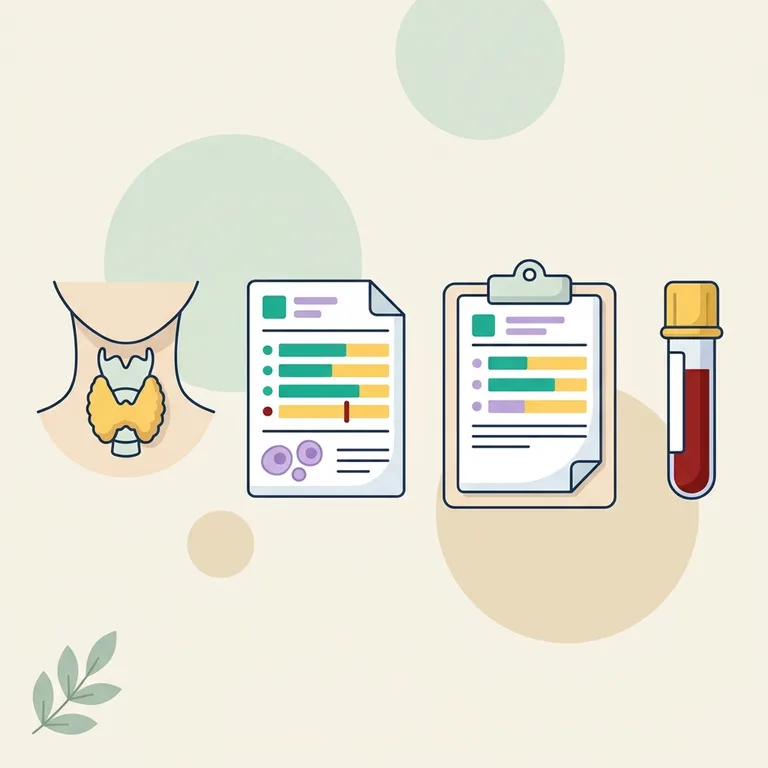
Graves' disease is an autoimmune condition in which antibodies stimulate the thyroid to make too much hormone. It is the most common cause of an overactive thyroid in the United States and is far more common in women. A typical blood pattern is a very low TSH with high FT4 and FT3 (the active, unbound hormones), often with positive TRAb or TSI antibodies. It is treatable and usually well controlled. See a doctor soon for a racing heartbeat, weight loss or eye changes, and call 911 for chest pain or fainting.
What is Graves' disease, at a glance?
Graves' disease is an autoimmune disorder that causes hyperthyroidism, an overactive thyroid[1]. It affects nearly 1 in 100 Americans, and about 4 out of 5 cases of hyperthyroidism in the United States are due to it[1]. It is 7 to 8 times more common in women than in men[2]. It is also called Basedow's disease in several European countries.
- Cause: antibodies that switch the thyroid on[1][2].
- Key blood tests: TSH, FT4, FT3, then TRAb or TSI antibodies[2].
- Treatment: medicines, radioactive iodine or surgery, chosen with you[1][2].
- Outlook: generally controllable and safely treated[2].
What are the symptoms of Graves' disease?
Most symptoms come from too much thyroid hormone and can come and go[1]: weight loss despite a bigger appetite, a rapid or irregular heartbeat, nervousness, irritability, trouble sleeping, fatigue, shaky hands, muscle weakness, sweating or heat intolerance, frequent bowel movements and an enlarged thyroid (goiter)[1].
Graves' disease can also affect the eyes and skin[1]:
- Eyes (Graves' ophthalmopathy). More than 1 in 3 people develop it[1]. Signs include gritty, puffy or bulging eyes, light sensitivity, pressure or pain, and blurred or double vision[1]. Most cases are mild; about 5% have moderate-to-severe inflammation that threatens vision[2]. Eye symptoms often start about six months before or after diagnosis, and their severity is unrelated to the thyroid hormone level[2].
- Skin (dermopathy). Rarely, reddish, thickened skin on the shins, usually mild and painless[1].
When should I see a doctor?
When to see a doctor
- Emergency: call 911 for chest pain, fainting, severe shortness of breath, a very fast or irregular heartbeat that will not settle, or confusion with fever. Untreated Graves' disease can cause a rapid, irregular heartbeat that leads to blood clots, stroke and heart failure[1].
- Within 24 to 48 hours for eye pain, double vision or any sudden change in vision, and for fever, chills, a constant sore throat, yellow skin or eyes, dark urine or a new rash if you take antithyroid medicine[1][2].
- At your next appointment, but do not wait long, for weight loss, palpitations, tremor, heat intolerance or a swelling in the neck. Ask for a thyroid panel.
What causes Graves' disease, and who is at risk?
Researchers are not sure why autoimmune disorders start. They probably arise from a mix of genes and an outside trigger such as a virus[1]. In Graves' disease the immune system makes antibodies (TSI, also called TRAb) that bind to the TSH receptor on thyroid cells and stimulate them to make too much hormone[1][2].
- Common Being a woman and being over 30[1].
- Common A family history of Graves' disease or Hashimoto's disease[1].
- Common Another autoimmune disease, such as type 1 diabetes, rheumatoid arthritis, vitiligo or autoimmune gastritis[1].
- Possible Using nicotine products[1]. Smoking also makes the eye disease more frequent and more severe[2].
- Rare Too much iodine from seaweed or supplements can cause or worsen hyperthyroidism in people with autoimmune thyroid disease[1].
How is Graves' disease diagnosed, and how do I read the results?
Diagnosis rests on your symptoms, an exam and blood tests for thyroid hormones and TSH[2]. If TSH is low and hormones are high, antibodies are tested. A positive TRAb or TSI is cost effective and confirms Graves' disease without further testing[2]. A negative result can still occur in Graves' disease; then a radioactive iodine uptake test, a thyroid scan or a Doppler ultrasound may be used[1][2]. Here is a fictitious report.
| Test | Result | Reference range | Flag |
|---|---|---|---|
| TSH | 0.01 mIU/L | 0.4-4.8 mIU/L | L |
| FT4 | 3.1 ng/dL | 0.8-1.9 ng/dL | H |
| FT3 | 720 pg/dL | 210-440 pg/dL | H |
| TRAb (TSH receptor antibodies) | 6.2 IU/L | Less than 1.75 IU/L | H |
Have thyroid results with an L or an H? BloodSense explains each line of your report and helps you prepare questions for your endocrinologist.
Get my thyroid results explainedTypical adult ranges are 0.4 to 4.8 mIU/L for TSH, 0.8 to 1.9 ng/dL for FT4 and 210 to 440 pg/dL for FT3; your lab's ranges prevail[3]. More detail is in our thyroid panel, TSH, FT4 and FT3 guides. TPO antibodies, see TPO, are more typical of Hashimoto's disease, although they can be positive in both[4].
How is Graves' disease monitored?
Your doctor repeats TSH and FT4 (sometimes FT3) regularly to adjust treatment, and checks TRAb when deciding whether to stop medicine[2]. After radioactive iodine or surgery, you will eventually develop an underactive thyroid and need a daily thyroid hormone tablet, which is monitored with TSH[2]. Ask which tests you need and how often.
How is Graves' disease treated?
The three main options are medicines, radioactive iodine and surgery. The choice depends on your age, health, symptoms and preferences[1]. No doses are given here. The ATA and European Thyroid Association guidelines set out these options[6][7].
- Beta-blockers ease tremor, racing heartbeat and nervousness within hours but do not lower hormone production[1][2].
- Antithyroid medicines (usually methimazole; propylthiouracil in the first three months of pregnancy) reduce hormone production. They are often preferred when remission is likely. They can be continued for 12 to 18 months and then stopped if TSH and TRAb are normal[1][2]. Rare side effects include a drop in white blood cells and liver problems[1].
- Radioactive iodine slowly destroys overactive thyroid cells. It is not used in pregnancy or breastfeeding, may worsen eye disease, and almost always leads to an underactive thyroid that is easily treated[1].
- Surgery is used less often, for example with large goiters or when other options are not suitable[1].
Mild eye disease is managed with lubricating drops, sunglasses and sleeping with the head raised; severe eye disease may need steroids or other medicines, radiation or surgery[1]. A medicine called teprotumumab has been shown to reduce eye bulging in active thyroid eye disease[5]. Treatment of hyperthyroidism is explained further on our hyperthyroidism page.
Can I live well with Graves' disease?
Yes. Hyperthyroidism from Graves' disease is generally controllable and safely treated, and treatment is almost always successful[2]. Antithyroid drugs do not cure it, and after definitive treatment you will probably need lifelong thyroid hormone replacement for hypothyroidism[2]. Untreated, it can cause arrhythmia, heart failure, thinning bones and pregnancy problems[1]; see arrhythmia, heart failure and osteoporosis.
- Stop smoking and ask for help; it protects your eyes[1][2].
- Ask your doctor about seaweed, kelp, iodine supplements, cough syrups and multivitamins that contain iodine[1].
- Tell your doctor right away if you are pregnant or planning a pregnancy[1].
- Book an eye check if you notice any eye symptom[2].
Questions to ask your doctor
- Do my results fit Graves' disease, and was an antibody test done?
- Which treatment do you recommend for me, and why?
- How long would I take medicine, and which warning signs should make me call?
- Do I need an eye exam?
- How often will my thyroid tests be repeated?
Frequently asked questions
Is Graves' disease the same as hyperthyroidism?
No. Hyperthyroidism is the overactive state; Graves' disease is the most common cause of it[1].
Is Graves' disease curable?
It is controllable. Antithyroid drugs do not cure it, and some people stay in remission after stopping them. Radioactive iodine or surgery end the overactivity but lead to an underactive thyroid that is treated with a daily tablet[2].
What can trigger Graves' disease?
The exact trigger is unknown. Genes, a possible viral trigger, other autoimmune diseases and nicotine use all play a role[1]. Stressful events and smoking can worsen eye disease[1].
Do I need to avoid certain foods?
Large amounts of iodine, such as kelp and other seaweed or iodine supplements, can cause or worsen hyperthyroidism. Talk with your doctor about what to limit[1].
Can Graves' disease come back?
Eye disease can come back or get worse, and hyperthyroidism can return after antithyroid medicine is stopped, which is why monitoring continues after treatment[1][2].
Related articles
- HyperthyroidismAll causes of an overactive thyroid and how they are treated
- Thyroid panelHow TSH, FT4 and FT3 fit together
- TSHWhy TSH falls first in hyperthyroidism
- HypothyroidismThe underactive thyroid that can follow treatment
- TPO antibodiesThe antibody test linked to Hashimoto's disease
- National Institute of Diabetes and Digestive and Kidney Diseases. Graves' Disease. National Institutes of Health. niddk.nih.gov (accessed October 23, 2026)
- American Thyroid Association. Graves' Disease. thyroid.org (accessed October 23, 2026)
- MedlinePlus Medical Encyclopedia. TSH test. US National Library of Medicine. medlineplus.gov (accessed October 23, 2026)
- MedlinePlus. Thyroid Antibody Tests. US National Library of Medicine. medlineplus.gov (accessed October 23, 2026)
- Douglas RS, Kahaly GJ, Patel A, et al. Teprotumumab for the treatment of active thyroid eye disease. N Engl J Med. 2020;382(4):341-352. doi:10.1056/NEJMoa1910434 (accessed October 23, 2026)
- Kahaly GJ, Bartalena L, Hegedüs L, et al. 2018 European Thyroid Association guideline for the management of Graves' hyperthyroidism. Eur Thyroid J. 2018;7(4):167-186. doi:10.1159/000490384 (accessed October 23, 2026)
- Ross DS, Burch HB, Cooper DS, et al. 2016 American Thyroid Association guidelines for diagnosis and management of hyperthyroidism and other causes of thyrotoxicosis. Thyroid. 2016;26(10):1343-1421. doi:10.1089/thy.2016.0229 (accessed October 23, 2026)
This page is general information. It does not replace the advice of a doctor, who interprets your results with your symptoms, history and examination.