Vitamin Deficiency Blood Tests: Which Vitamins to Check and Normal Levels
The essentials
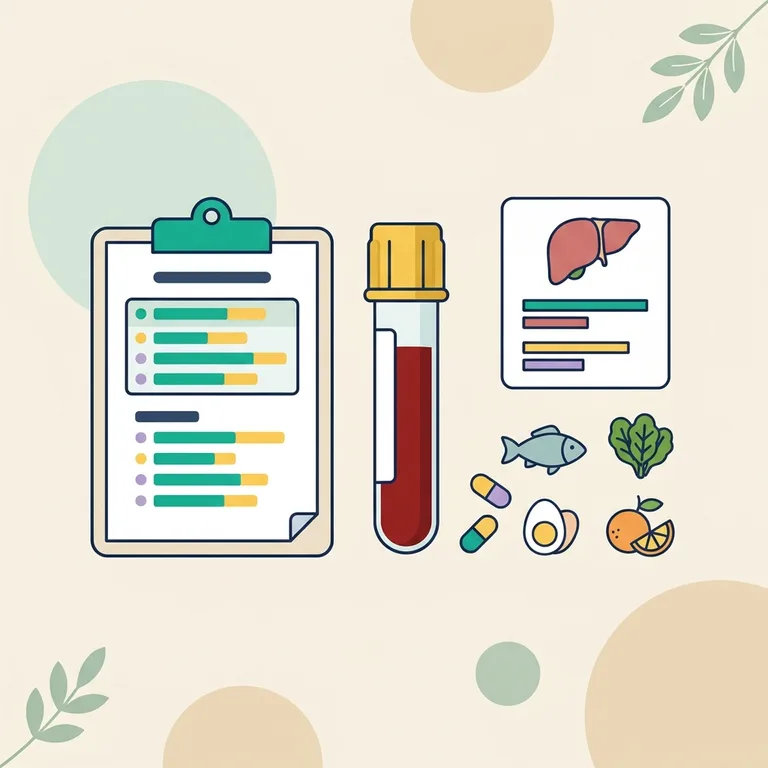
There is no single "vitamin test": a vitamin panel is a choice of separate blood tests, picked from your symptoms, diet, medicines and health conditions. Vitamin D, vitamin B12 and folate are the ones most often checked; the others are measured only when there is a clear reason. Most people tested in the US are not deficient in any vitamin.
Labs measure each vitamin with its own method, sample and range. This guide shows an annotated vitamin panel, which vitamins are worth checking and for whom, usual adult values with a source for each line, and how to read the results together.
What does a vitamin deficiency blood test show? A panel, annotated
A typical targeted panel: a 58-year-old who has taken metformin and a stomach-acid medicine for years, has tingling feet and rarely goes outdoors. Medicines such as metformin and proton pump inhibitors can affect vitamin B12 results[7], and limited sun exposure raises the risk of low vitamin D[2].
| Test | Result | Reference range | Flag |
|---|---|---|---|
| Hemoglobin | 12.9 g/dL | 12.0-15.5 g/dL | |
| MCV (red cell size) | 99 fL | 80-100 fL | |
| Vitamin D, 25-hydroxy, total | 17 ng/mL | 30-100 ng/mL | L |
| Vitamin B12 | 262 pg/mL | 299-1054 pg/mL | L |
| Folate, serum | 11.4 ng/mL | 2.7-17.0 ng/mL | |
| Methylmalonic acid (MMA) | 0.46 µmol/L | 0.07-0.27 µmol/L | H |
- Each vitamin is a separate test: vitamins A, E, C or K are absent because nothing pointed to them.
- Vitamin D flagged L: 17 ng/mL is below the lab's printed range (30-100), but the National Academies consider 20 ng/mL enough for the bone health of at least 97.5% of people[3]. The result is low by both yardsticks, though not severely.
- B12 just under the range, MMA high: a value under 299 pg/mL is a possible sign of deficiency, and a high methylmalonic acid confirms a true B12 deficiency[7]. Together, they fit the tingling feet.
- Normal blood count: an early B12 deficiency can affect the nerves before the blood count changes, so a normal hemoglobin does not rule it out[9].
- Folate is normal: it rules out the other common cause of large red cells.
Got a vitamin panel with several flags and different units? BloodSense reads your whole report with you, line by line, and lists the questions worth asking your doctor.
Explain my vitamin resultsWhich vitamins can a blood test check? Summary table and normal levels
Methods differ between labs, so the range printed on your report always comes first.
| Vitamin (test name) | What it reflects | Usual adult value | Full guide |
|---|---|---|---|
| Vitamin D (25-hydroxyvitamin D) | Vitamin D from sun, food and supplements; bones and muscles | 20 ng/mL (50 nmol/L) or more meets the needs of nearly everyone[3]; many labs and experts aim for 30 to 80 ng/mL[2] | Vitamin D blood test |
| Vitamin B12 (cobalamin) | Nerves and red blood cell production | 299-1054 pg/mL (219-773 pmol/L)[7] | Vitamin B12 levels |
| Folate (vitamin B9), serum | Cell division and red blood cells | 2.7-17.0 ng/mL (6.12-38.52 nmol/L)[8] | Folic acid blood test |
| Vitamin B6 (pyridoxal 5'-phosphate, PLP) | Active B6, measured fasting | 20-125 nmol/L[13] | Vitamin B6 blood test |
| Vitamin A (retinol) | Vision, skin, immunity | 30-120 mcg/dL (1.1-4.2 µmol/L)[10] | Vitamin A blood test |
| Vitamin E (alpha-tocopherol) | Antioxidant carried with blood fats | 5.5-18.0 mg/L from age 13[11] | Vitamin E blood test |
| Vitamin C (ascorbic acid), plasma | Recent intake and tissue stores | 23-114 µmol/L; under 11 µmol/L means deficiency[12] | Vitamin C blood test |
| Vitamin K (indirectly, prothrombin time) | Blood clotting; a low vitamin K level is one cause of a long PT[14] | Within the lab's range | Vitamin K blood test |
Vitamin D in ng/mL multiplied by 2.5 gives nmol/L (20 ng/mL = 50 nmol/L)[3]; vitamin B12 in pg/mL multiplied by about 0.74 gives pmol/L. Our guide to reading blood test results explains ranges, flags and units on any report.
Which vitamins should you get tested for?
The useful question is which deficiency could explain your symptoms or risk. In a national US survey, nearly 80% of people aged 6 and older were not at risk of deficiency in any of the seven vitamins studied (A, B6, B12, C, D, E and folate)[6]. Testing therefore targets people with a reason.
- Common Vitamin D if you are over 65, have obesity or have had weight loss surgery, have osteoporosis or thin bones, get little sun, take medicines such as phenytoin, or have a condition that limits absorption, such as Crohn's disease, ulcerative colitis or celiac disease[2].
- Common Vitamin B12 and folate together when a blood count suggests megaloblastic anemia (large red cells)[7], with tingling or numb hands and feet, fatigue or memory problems, after stomach or bowel surgery, with a diet without animal products, with alcohol use disorder[1], or after years of metformin or stomach-acid medicines[7]. An estimated 15 to 20% of older adults in the US lack vitamin B12[9].
- Possible Vitamin B6 with itchy rashes, cracks at the corners of the mouth, scaly lips or a swollen tongue[1]; vitamins A and E when fat is poorly absorbed (as with chronic bowel or liver disease); vitamin K through the prothrombin time when you bruise or bleed easily.
- Rare A broad "all vitamins" panel without symptoms: B vitamin deficiencies are not common in the US because many foods are fortified[1], and vitamin A deficiency is unusual there[10].
Even vitamin D, the most requested test, is not recommended as a screening test for everyone. The US Preventive Services Task Force found the evidence insufficient to recommend screening adults without symptoms[5], and the 2024 Endocrine Society guideline suggests against routine 25-hydroxyvitamin D testing in people without an established reason[4]. If your level does not rise on supplements, see why vitamin D may not work. Vitamins are not part of standard routine blood work either.
How do you read vitamin results together?
Low or borderline B12 with a high methylmalonic acid
A B12 level just under or just above the lower limit is a gray zone. Methylmalonic acid (MMA) rises when the body truly lacks B12, and it is not affected by the other B vitamins, which makes it the more specific confirmation test; kidney disease can also raise it[9]. Our page on the methylmalonic acid test explains the cutoffs.
High homocysteine: B12, folate, or both
Homocysteine depends on both B12 and folate, while MMA depends on B12 alone[9]. A high homocysteine with a high MMA points to B12; a high homocysteine with a normal MMA and a low folate points to folate. See the homocysteine levels guide.
Large red cells on the blood count
A high MCV or a megaloblastic anemia is the classic reason to check B12 and folate[7][8]. Small red cells point the other way, toward iron: see iron deficiency blood tests. A complete blood count alone does not measure any vitamin.
A long prothrombin time
A prolonged PT can come from a low vitamin K level, but also from liver disease or blood thinners[14]. The cause is decided with your medicines and liver tests, not with the PT alone.
Normal results, but symptoms remain
Then other tests are usually needed. Inflammation and some medicines can also shift vitamin results[1], and higher vitamin D levels have not been consistently linked with more benefit[3].
How should you prepare for a vitamin blood test?
Preparation differs by vitamin. Never stop a prescribed medicine without asking.
- Fasting depends on the test: usually none for vitamin D[2]; about 6 to 8 hours for B12[7] and 6 hours for folate[8]; an overnight fast for B6, because a non-fasting sample reflects your last meal[13]; 12 hours, with no alcohol for 24 hours, for vitamin E at some labs[11]. See fasting before a blood test.
- Supplements: you may be asked to stop folic acid before a folate test[8]. Ask whether to have blood drawn before you start a new supplement, so the result shows your real starting point.
- Biotin (often in hair, skin and nail products) can interfere with some lab tests and give incorrect results that may go unnoticed[15]: tell the lab if you take it.
- List your medicines: metformin, proton pump inhibitors, H2 blockers and phenytoin can affect B12 results[7]; birth control pills, methotrexate, some antibiotics and alcohol can lower folate results[8].
- Some samples are fragile: vitamin C must be protected from light and frozen[12], so results can take longer.
- Retest at the same lab when you can: methods and ranges differ.
When should you see a doctor about your vitamin results?
When to see a doctor
- Emergency: call 911 for chest pain, severe shortness of breath, fainting, sudden confusion, or heavy bleeding that does not stop.
- Within 24 to 48 hours if numbness or tingling spreads, walking or balance becomes difficult, you bruise or bleed easily, or the lab calls you about an urgent result.
- At your next appointment for a low vitamin D, a borderline B12 or a value slightly outside the range.
Questions to ask your doctor
- Which vitamins are worth testing for my symptoms, diet and medicines, and which are not?
- Do I need to fast, and should I pause any supplement before the blood draw?
- My B12 is borderline: should methylmalonic acid or homocysteine be checked?
- Which vitamin D level are you aiming for, and why?
- Could one of my medicines be lowering a vitamin?
- When should the test be repeated after I start a supplement?
Frequently asked questions
Does a complete blood count show a vitamin deficiency?
Not directly. A CBC can only hint at one, for example with large red cells, which leads to B12 and folate tests[7].
Why don't doctors check vitamin levels at every checkup?
Because most people are not deficient[6] and screening people without symptoms has not been shown to help[4]. Testing targets symptoms and risk factors.
Is a panel of all 13 vitamins worth it?
Rarely. B1, B2, B3 and B5 can be measured[1], but a long panel mostly adds borderline flags. A short panel chosen for your situation answers the question better.
Can I have too much of a vitamin?
Yes. Too much vitamin D, usually from supplements, can raise blood calcium and damage the kidneys[2], and large amounts of B vitamins can also cause health problems[1]. A level above the range is worth showing to your clinician with your list of supplements.
Related tests and guides
- Vitamin D blood testHow to read your 25(OH)D result and when testing helps.
- Vitamin B12 levelsLow, borderline and high B12, and the follow-up markers.
- Folate blood testNormal folate ranges and why B12 is read alongside.
- Methylmalonic acid testThe confirmation test for a true B12 deficiency.
- Routine blood workWhat a standard checkup includes, and what it leaves out.
References
- MedlinePlus. Vitamin B test. medlineplus.gov (accessed November 16, 2026)
- MedlinePlus Medical Encyclopedia. 25-hydroxy vitamin D test. medlineplus.gov (accessed November 16, 2026)
- Ross AC, Manson JE, Abrams SA, et al. The 2011 report on dietary reference intakes for calcium and vitamin D from the Institute of Medicine: what clinicians need to know. J Clin Endocrinol Metab. 2011;96(1):53-58. doi:10.1210/jc.2010-2704 (accessed November 16, 2026)
- Demay MB, Pittas AG, Bikle DD, et al. Vitamin D for the prevention of disease: an Endocrine Society clinical practice guideline. J Clin Endocrinol Metab. 2024;109(8):1907-1947. doi:10.1210/clinem/dgae290 (accessed November 16, 2026)
- US Preventive Services Task Force. Screening for vitamin D deficiency in adults: recommendation statement. JAMA. 2021;325(14):1436-1442. doi:10.1001/jama.2021.3069 (accessed November 16, 2026)
- Pfeiffer CM, Sternberg MR, Schleicher RL, et al. The CDC's Second National Report on Biochemical Indicators of Diet and Nutrition in the U.S. Population is a valuable tool for researchers and policy makers. J Nutr. 2013;143(6):938S-947S. doi:10.3945/jn.112.172858 (accessed November 16, 2026)
- MedlinePlus Medical Encyclopedia. Vitamin B12 level. medlineplus.gov (accessed November 16, 2026)
- MedlinePlus Medical Encyclopedia. Folic acid - test. medlineplus.gov (accessed November 16, 2026)
- Hannibal L, Lysne V, Bjørke-Monsen AL, et al. Biomarkers and algorithms for the diagnosis of vitamin B12 deficiency. Front Mol Biosci. 2016;3:27. doi:10.3389/fmolb.2016.00027 (accessed November 16, 2026)
- MedlinePlus Medical Encyclopedia. Vitamin A blood test. medlineplus.gov (accessed November 16, 2026)
- ARUP Laboratories. Vitamin E, serum or plasma (test 0080521). ltd.aruplab.com (accessed November 16, 2026)
- ARUP Laboratories. Vitamin C (ascorbic acid), plasma (test 0080380). ltd.aruplab.com (accessed November 16, 2026)
- ARUP Laboratories. Vitamin B6 (pyridoxal 5-phosphate) (test 0080111). ltd.aruplab.com (accessed November 16, 2026)
- MedlinePlus Medical Encyclopedia. Prothrombin time (PT). medlineplus.gov (accessed November 16, 2026)
- US Food and Drug Administration. Biotin interference with troponin lab tests: assays subject to biotin interference. fda.gov (accessed November 16, 2026)
This article is general health information. It does not replace a medical examination, diagnosis or treatment. Do not start, stop or change a supplement or medicine based on a single result without talking to your clinician.