






A vitamin K blood test is one of the least familiar lines on a lab report, and one of the most misread. Vitamin K is the nutrient your body uses to switch on the proteins that stop a cut from bleeding and the proteins that steer calcium into your bones instead of your arteries. Because that job is invisible until something goes wrong, most people only hear about vitamin K after an unexpected bruise, a surgery workup, or a clotting result that came back slower than expected. In this article you will learn what a vitamin K blood test actually measures, why direct vitamin K levels are rarely the whole story, how clotting markers such as prothrombin time fit in, what pushes your levels up or down, and which recent research has changed how specialists think about vitamin K status.
What a vitamin K blood test actually measures
There is no single number that captures vitamin K the way a glucose reading captures blood sugar. Laboratories can measure circulating vitamin K1, also called phylloquinone, directly. That measurement tells you how much of the vitamin was floating in your bloodstream in the hours after your last meal, which is useful but limited. Vitamin K is fat soluble, so plasma levels swing sharply with what you ate recently and how much fat was in that meal.
The National Institutes of Health notes that the only clinically meaningful indicator of vitamin K status is prothrombin time, the clotting test that reflects whether your liver has enough vitamin K to finish building clotting factors. Direct plasma measurement misses the menaquinones, the vitamin K2 family made by gut bacteria and found in fermented foods, which never register well in a standard assay.
In practice, a vitamin K assessment is usually a small panel rather than one test. Your clinician may combine a direct vitamin K1 level with coagulation testing, and readers who want the mechanics of clot formation can review our coagulation test results guide.
Why your doctor may order a vitamin K blood test
Vitamin K testing is not part of a routine annual panel. It is ordered when a specific clinical question needs answering, most often one of these.
- Unexplained bruising, nosebleeds, bleeding gums, or heavy menstrual bleeding with no obvious cause.
- A prolonged clotting time discovered on a pre-surgical workup or a general blood panel.
- A digestive condition that blocks fat absorption, since vitamin K travels with dietary fat.
- Long-term use of medications that interfere with vitamin K, including anticoagulants and some antibiotics.
- Newborn evaluation, because babies are born with very low vitamin K stores.
- Monitoring during long-term intravenous nutrition or after bariatric surgery.
If a slow clotting result is what prompted the referral, it helps to understand the timing marker first by reading our prothrombin time test results guide. When results are reported as a standardized ratio rather than raw seconds, our entry explaining the international normalized ratio in lab reports covers what that conversion means.
How the test is done and how to prepare
The blood draw itself is ordinary: a small sample from a vein in your arm, taking a couple of minutes. What differs is the preparation and the handling.
Vitamin K1 is light sensitive and degrades quickly, so laboratories protect the sample from light and often process or freeze it promptly. This is one reason results can take longer than a routine chemistry panel, typically several days rather than the same afternoon.
Most laboratories ask for an overnight fast, usually eight to twelve hours, because a recent fatty meal temporarily raises circulating vitamin K1. Just as important, tell your clinician about every supplement you take. Multivitamins, vitamin K2 supplements, fish oil, and high-dose vitamin E can all shift results, and some clinicians ask you to pause supplements for a defined period beforehand. Never stop a prescribed anticoagulant on your own to prepare for a test.
What the report may include
| Marker on the report | What it reflects | Why it is included |
|---|---|---|
| Vitamin K1 (phylloquinone) | Vitamin K circulating in blood right now | Snapshot of recent dietary intake and absorption |
| Prothrombin time (PT) | Seconds needed for a clot to form in the sample | The functional indicator of whether clotting factors are being activated |
| INR | Prothrombin time expressed on a standardized scale | Allows comparison between laboratories and over time |
| Uncarboxylated proteins (research use) | Proteins left unfinished when vitamin K runs short | A more sensitive picture of tissue-level status, mostly in studies |
| Liver and nutrition markers | Liver function and protein status | Separates a vitamin problem from a liver or absorption problem |
How to read your vitamin K blood test results
A direct vitamin K1 result comes back as a concentration, and reference ranges vary between laboratories because assay methods differ. Always compare your number to the range printed on your own report rather than to a range you found elsewhere. A value near the lower edge is not automatically a deficiency, especially if you fasted and had eaten few greens in the preceding days.
The more informative reading is functional. If prothrombin time is normal, your liver is finishing clotting factors properly, which means usable vitamin K is reaching the tissue that needs it most. If prothrombin time is prolonged and giving vitamin K corrects it, that sequence is far stronger evidence of deficiency than any single concentration.
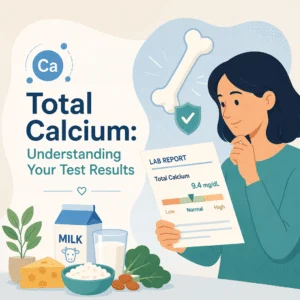
Context matters as much as the number. Because vitamin K depends on bile and dietary fat for absorption, clinicians look at liver and biliary markers alongside it, and our guide to alkaline phosphatase test results explains one of the enzymes commonly reviewed at the same time. Because vitamin K also governs calcium handling in bone and vessel walls, results are often interpreted next to our total calcium blood test guide and our vitamin D blood level guide, since the two vitamins work on the same mineral pathway from different angles.
What low and high vitamin K levels can mean
Low levels
True vitamin K deficiency is uncommon in healthy adults who eat a varied diet, because green vegetables and vegetable oils supply the vitamin and gut bacteria contribute additional forms. When levels do fall, the usual reasons are structural rather than dietary.
- Fat malabsorption from celiac disease, inflammatory bowel disease, cystic fibrosis, chronic pancreatitis, or short bowel syndrome.
- Bile flow problems, since bile is required to absorb fat-soluble vitamins.
- Advanced liver disease, where the liver cannot build clotting factors even when vitamin K is present.
- Prolonged broad-spectrum antibiotic use, which reduces the gut bacteria that produce menaquinones.
- Warfarin and related anticoagulants, which deliberately block vitamin K recycling as their therapeutic mechanism.
- Newborn status, since vitamin K crosses the placenta poorly and breast milk contains little of it.
Because gut conditions are such a frequent cause, readers investigating absorption can look at our celiac disease symptoms and treatment guide and our Crohn’s disease overview.
High levels
A high circulating vitamin K1 value is rarely a clinical concern on its own. There is no established toxicity threshold for vitamin K from food, and the usual explanation for an elevated result is a recent supplement dose or a fat-rich meal shortly before the draw. What matters clinically is the opposite direction: a value that sits high while clotting remains prolonged points the investigation toward the liver rather than the nutrient.
Vitamin K1 and vitamin K2: two forms, two jobs
Most confusion about vitamin K comes from treating it as one substance. It is a family, and the two members that matter behave differently once absorbed.
| Feature | Vitamin K1 (phylloquinone) | Vitamin K2 (menaquinones) |
|---|---|---|
| Main dietary source | Leafy greens, broccoli, soybean and canola oils | Fermented foods such as natto, some cheeses, animal foods, gut bacteria |
| Share of typical US intake | The large majority | A small minority |
| Where it mainly acts | Liver, activating clotting factors | Bone and vessel wall, activating calcium-binding proteins |
| Time in the bloodstream | Short, cleared within hours | Longer for some forms, allowing wider tissue distribution |
| Captured by a standard test | Yes, this is what most assays report | Usually not, which is a known blind spot |
That last row explains a common frustration. A person can have an unremarkable vitamin K1 result while their vitamin K2 supply, and therefore the calcium-directing proteins in bone and arteries, remains poorly supported. This gap is exactly what current research is trying to close, and it is why arterial health enters the conversation at all, as our coronary artery disease overview describes.
Diet, medications and daily habits that shift your levels
Adequate intake for adults is set at 120 micrograms a day for men and 90 micrograms a day for women, and a single serving of cooked greens usually exceeds that. Yet Harvard’s nutrition researchers report that only about one in four Americans reaches the intake goal from food, largely because leafy vegetables are eaten irregularly.
Three practical points shape your levels more than anything else.
- Fat improves absorption. Dressing a salad with oil measurably increases how much vitamin K you take up from the greens.
- Consistency beats quantity if you take an anticoagulant. The NIH guidance is not to avoid greens but to keep intake steady, because sudden swings up or down move your INR.
- Gut health counts. Repeated courses of broad-spectrum antibiotics reduce the bacteria that make menaquinones, and a prolonged low-fat or very restricted diet limits absorption of every fat-soluble vitamin, including the ones covered in our vitamin A blood level guide.
Because vitamin K also supports the proteins that mineralize bone, people already tracking skeletal health may want to read our osteoporosis causes and management guide alongside their results.
When to see a doctor
Some signs deserve prompt medical attention rather than a wait-and-see approach.
- Bruises appearing without any remembered injury, or bruises that keep spreading.
- Nosebleeds or gum bleeding that recur without an obvious cause.
- Blood in the urine or stool, or stools that look black and tarry.
- Cuts that keep oozing well beyond the usual few minutes.
- A known digestive or liver condition together with any new bleeding tendency.
- An INR result outside the range your prescriber set for you.
Do not start a vitamin K supplement to correct a result you saw on a report. If you take warfarin, supplemental vitamin K directly opposes the medication, and dosing decisions belong with the prescriber who monitors your INR.
Latest scientific advances
Research from the past three years has shifted the questions specialists ask about vitamin K, moving from how much is in the blood toward what the vitamin is doing in tissue. According to research indexed in PubMed, four findings stand out for a general reader.
A two-year trial on calcium build-up in heart arteries
A randomized trial published in JAMA Cardiology in 2026 followed patients with symptomatic coronary artery disease who took a vitamin K2 form called menaquinone-7 or a placebo for two years, with repeat heart scans along the way. What the researchers found is that calcium deposits in the coronary arteries built up more slowly in the group taking vitamin K2, and no significant side effects appeared. What this means for you is encouraging but not yet a recommendation: the study measured how much calcium accumulated, not whether participants had fewer heart attacks, and the authors were explicit that the clinical importance of a slower build-up still needs to be established. It is a signal worth watching, not a reason to start supplementing.
A closer look at what vitamin K does to bone
A 2024 systematic review in Bone & Joint Research, which pools the results of many separate trials into one analysis, examined vitamin K supplementation in middle-aged and older adults. What the researchers found is that vitamin K mainly changed the activation state of osteocalcin, a bone protein that must be switched on by vitamin K before it can bind calcium into the skeleton, and it modestly helped bone density at the lower spine, with the clearest effect in women. What this means for you is a more realistic expectation: vitamin K appears to help the body use bone-building proteins properly rather than adding bone mass on its own, so it works alongside calcium, vitamin D and weight-bearing activity rather than replacing them.
Dietary intake and the risk of fractures
A 2025 systematic review and dose-response meta-analysis in Current Rheumatology Reviews combined six studies covering more than ninety thousand people to test whether the vitamin K in everyday food relates to broken bones. What the researchers found is a consistent trend toward fewer fractures, hip fractures included, among people with higher dietary vitamin K intake, with the benefit appearing to plateau around the recommended daily amount rather than climbing indefinitely. What this means for you is that eating greens regularly is the version of this finding you can act on today, while the authors themselves note the trend did not reach the level of certainty needed to call it proven.
A better way to read vitamin K status
A 2025 report in Atherosclerosis, drawn from a large trial in older men, used a laboratory marker called dp-ucMGP, which counts the calcium-handling proteins the body left unfinished because vitamin K was in short supply. What the researchers found is that the marker dropped sharply with vitamin K2 and vitamin D supplementation, confirming it reliably tracks vitamin K status, yet the supplements did not reduce inflammation around the heart over two years. What this means for you is twofold: laboratories now have a far more sensitive way to judge vitamin K status than a simple blood concentration, and a marker moving in the right direction does not by itself guarantee a health benefit. These are trials in specific groups, and none of them changes what a clinician would advise for an otherwise healthy adult.
Glossary of key terms
| Term | Definition |
|---|---|
| Phylloquinone (vitamin K1) | The plant form of vitamin K, found mainly in leafy greens and vegetable oils. It supplies most of the vitamin K in a typical American diet. |
| Menaquinones (vitamin K2) | A family of vitamin K forms made by gut bacteria and found in fermented and animal foods. They act mostly outside the liver, in bone and blood vessels. |
| Fat-soluble vitamin | A vitamin that dissolves in fat rather than water, so it needs dietary fat and bile to be absorbed and can be stored in body tissue. |
| Gamma-carboxylation | The chemical step, powered by vitamin K, that switches certain proteins on so they can grip calcium and do their job. |
| Prothrombin time (PT) | A test measuring how many seconds a blood sample takes to clot. It is the standard functional check of vitamin K status. |
| INR | International normalized ratio, a standardized way of reporting prothrombin time so results can be compared across laboratories. |
| Osteocalcin | A protein made by bone-building cells that must be activated by vitamin K before it can bind calcium into the skeleton. |
| Matrix Gla protein | A vitamin K-dependent protein in blood vessel walls that helps keep calcium out of arteries. Its inactive form is used as a status marker in research. |
| Malabsorption | Impaired uptake of nutrients from the intestine, often affecting fat-soluble vitamins first. |
| Anticoagulant | A medication that slows clot formation. Warfarin works specifically by interfering with the body’s recycling of vitamin K. |
Frequently asked questions
What is the vitamin K blood test called on a lab order?
Laboratories usually list it as vitamin K1, phylloquinone, or simply vitamin K, serum or plasma. If your clinician is checking function rather than concentration, the order may instead read prothrombin time with INR, which is the more common way vitamin K status is assessed. Some laboratories offer a separate vitamin K2 or menaquinone-7 assay, but it is far less widely available and is mostly used in specialist or research settings. If you are unsure which one was ordered, the name printed at the top of your result section is the reliable answer.
What are normal vitamin K levels in blood?
Reference ranges differ by laboratory because assay methods are not standardized, and a commonly cited plasma range for vitamin K1 sits roughly between 0.29 and 2.64 nanomoles per liter. Use the range printed on your own report rather than one found elsewhere. Keep in mind that this figure reflects recent intake more than long-term status, so a low-normal number in someone with a normal prothrombin time and no bleeding symptoms is generally not treated as a deficiency.
What is the first sign of vitamin K deficiency?
In adults, the earliest noticeable sign is usually easy bruising or bleeding that takes longer than expected to stop, such as prolonged oozing from a small cut, bleeding gums when brushing, or recurring nosebleeds. Heavier menstrual bleeding can also be an early clue. These signs are not specific to vitamin K, which is why a clotting test is used to sort out the cause rather than assuming a nutrient shortfall. In newborns, deficiency can cause bleeding that is not visible externally, which is the reason a vitamin K injection is offered routinely at birth.
Do I need to fast before a vitamin K blood test?
Most laboratories ask for an overnight fast of about eight to twelve hours, because vitamin K1 travels with dietary fat and a recent meal temporarily raises the reading. Water is normally allowed. Follow the specific instruction your laboratory gives, since preparation varies with the assay used. Mention every supplement you take, particularly multivitamins, vitamin K2 products, fish oil and high-dose vitamin E, and never pause a prescribed anticoagulant without speaking to the prescriber first.
Can antibiotics lower my vitamin K level?
They can, though it usually takes a prolonged course rather than a short one. Broad-spectrum antibiotics reduce the gut bacteria that produce menaquinones, and certain older cephalosporin antibiotics also interfere directly with vitamin K use in the body. The effect matters most in people who are already eating very little, absorbing poorly, or taking an anticoagulant, where a change in clotting time may follow. If you are on warfarin and start an antibiotic, your prescriber will often check your INR sooner than usual.
Should I take a vitamin K supplement if my level is low?
That decision belongs with your clinician, not with the number alone. A low reading with normal clotting and no symptoms often needs nothing more than more greens and a little oil with them. A low reading alongside a digestive condition, a liver problem, or abnormal clotting needs the underlying cause addressed rather than a supplement layered on top. If you take warfarin or a similar anticoagulant, supplemental vitamin K works directly against the medication and must never be started independently.
Sources
- Office of Dietary Supplements, National Institutes of Health — Vitamin K: Fact Sheet for Health Professionals — NIH, reviewed 2025 — nih.gov
- MedlinePlus, National Library of Medicine — Prothrombin Time Test and INR (PT/INR) — MedlinePlus Medical Test, reviewed 2025 — medlineplus.gov
- Harvard T.H. Chan School of Public Health — Vitamin K — The Nutrition Source, 2025 — hsph.harvard.edu
- Vossen LM, de Leeuw PW, Schurgers LJ, et al. — Two Years of Menaquinone-7 Supplementation and Coronary Artery Calcification: A Randomized Clinical Trial — JAMA Cardiology, 2026 — doi.org/10.1001/jamacardio.2026.1279
- Xie C, Gong J, Zheng C, et al. — Effects of vitamin K supplementation on bone mineral density at different sites and bone metabolism in the middle-aged and elderly population — Bone & Joint Research, 2024 — doi.org/10.1302/2046-3758.1312.BJR-2024-0053.R1
- Haghighat MML, Haghpanah B, Milajerdi A — Dietary Vitamin K Intake and Fracture Risk: A Systematic Review and Dose-Response Meta-Analysis on the Interplay with Vitamin D — Current Rheumatology Reviews, 2025 — doi.org/10.2174/0115733971393704250828112958
- Hasific S, Ravn EJ, Rasmussen LM, et al. — Effects of vitamin K2 and D3 supplementation on epicardial adipose tissue and systemic inflammation: A substudy of the AVADEC trial — Atherosclerosis, 2025 — doi.org/10.1016/j.atherosclerosis.2025.120540
Further reading
- Compare the second clotting pathway on your report by reading our partial thromboplastin time results guide.
- Check the clotting protein that turns into the mesh of a clot with our fibrinogen blood level guide.
- Review the cells that plug a damaged vessel first by opening our platelet count test results guide.
- Assess the protein that reflects liver output and nutrition status with our albumin blood test guide.
- Explore another fat-soluble vitamin that competes with vitamin K for absorption in our vitamin E blood level guide.
Understand your lab results with BloodSense
A vitamin K result rarely means much on its own. Its message only becomes clear next to your prothrombin time, your INR, your calcium and your liver markers, and reading those together is exactly where most people get stuck. BloodSense turns that scatter of numbers into plain language, showing which values sit outside their range, which ones move together, and which questions are worth raising at your next appointment. It helps you understand your results and prepare for that conversation; it does not diagnose anything and does not replace your doctor.