






Aneurysm symptoms are unpredictable: most aneurysms cause nothing noticeable for years, while a rupture can produce sudden, severe pain that needs emergency care within minutes. An aneurysm is a bulge that forms where an artery wall has grown weak and stretched, most often in the aorta or in the arteries at the base of the brain. Because the bulge itself rarely hurts, many people learn they have one only when a scan is ordered for an unrelated reason. In this article you will learn which warning signs matter, which ones justify calling 911, what raises your risk, how doctors find and monitor a bulging artery, and what treatment actually involves. You will also see what blood work can and cannot reveal about your arteries.
What an aneurysm is, and where one forms
An artery wall has three layers built to absorb the pressure of every heartbeat. When the middle layer loses elasticity, the wall stops recoiling properly and starts to stretch outward. The result is a localized bulge that widens slowly, sometimes over decades. Pressure inside the bulge pushes on an already thinned wall, which is why aneurysms tend to enlarge rather than shrink once they form.
The locations that matter most
The aorta, the main artery leaving the heart, is the most common site. An abdominal aortic aneurysm sits below the chest and is the type usually screened for in older adults. A thoracic aortic aneurysm sits in the chest. The second major site is the circle of arteries at the base of the brain, where an intracranial aneurysm often develops at a fork in a vessel. Aneurysms can also appear in the arteries behind the knee, in the spleen, and in the vessels of the heart itself, though these are far less frequent.
Why the wall weakens in the first place
Three processes do most of the damage. Chronic high pressure stresses the wall with every beat. Atherosclerosis, the buildup of fatty plaque, stiffens and inflames the artery. Inherited differences in connective tissue, as in Marfan syndrome or Ehlers-Danlos syndrome, leave the wall structurally fragile from birth. Smoking accelerates all three at once, which is why it is the single strongest modifiable risk factor for abdominal disease.
Aneurysm symptoms by location and situation
The most important distinction is not where the aneurysm sits but whether it is intact or leaking. An intact aneurysm produces symptoms only when it grows large enough to press on a neighboring structure. A leaking or ruptured one produces sudden, unmistakable pain.
When the aneurysm is still intact
Many people have no complaints at all. Larger abdominal aneurysms can cause a deep, steady ache in the back or the side, a sensation of fullness after small meals, or a pulsing feeling near the navel that matches the heartbeat. Larger brain aneurysms can press on a nerve behind the eye and cause a drooping eyelid, a pupil that stays wide, double vision, or numbness on one side of the face. None of these signs is specific on its own, which is exactly why they are so easy to dismiss.
When the aneurysm leaks or ruptures
A ruptured brain aneurysm classically causes a headache that arrives in seconds and is described as the worst of a person’s life, often with vomiting, a stiff neck, light sensitivity, confusion, or loss of consciousness. Some people experience a smaller warning leak days or weeks earlier, known as a sentinel headache. A ruptured aortic aneurysm causes sudden tearing pain in the abdomen, back, or chest, along with clammy skin, a racing pulse, and faintness. Both situations are emergencies in which minutes change outcomes.
| Location | Signs while intact | Signs of rupture |
|---|---|---|
| Abdominal aorta | Usually none; sometimes deep back or side ache, pulsing near the navel | Sudden tearing abdominal or back pain, faintness, clammy skin |
| Thoracic aorta | Usually none; sometimes hoarseness, cough, trouble swallowing | Sudden severe chest or upper back pain, breathlessness |
| Brain arteries | Usually none; sometimes eye pain, drooping lid, double vision, facial numbness | Thunderclap headache, vomiting, stiff neck, light sensitivity, collapse |
| Behind the knee | Swelling or a pulsing lump behind the knee, calf discomfort | Sudden cold, pale, painful foot from a blocked artery |
When to see a doctor
Call 911 immediately for a headache that reaches full intensity within seconds, for sudden tearing pain in the chest, abdomen, or back, or for a pulsing abdominal mass accompanied by faintness. Do not drive yourself, and do not wait to see whether the pain settles.
Book a routine appointment instead if you are a man over 65 who has ever smoked, if a parent or sibling has had an aneurysm, if you live with a connective tissue disorder, or if you have noticed a persistent pulsing sensation in your abdomen. These conversations lead to a scan, not to an emergency, and they are the most common route by which a treatable aneurysm is found early.
Causes and risk factors worth knowing
Risk is cumulative rather than binary. Each factor below adds a little pressure or a little wall damage, and they compound over years.
What you can influence
- Smoking, by a wide margin the strongest modifiable factor, and the one most closely tied to how fast an abdominal aneurysm grows.
- Uncontrolled hypertension, which many people track using an everyday high blood pressure guide.
- Elevated cholesterol carried in plaque-forming particles, monitored through LDL cholesterol levels.
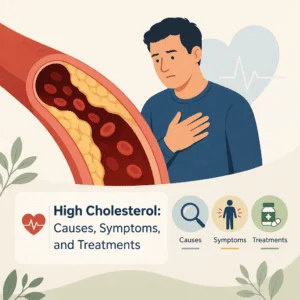
- Chronic inflammation and untreated arterial disease, which are common threads in high cholesterol and its treatments.
- Cocaine or heavy stimulant use, which causes abrupt pressure spikes.
What you cannot change
- Age, since arterial elasticity declines steadily after roughly 50.
- Sex, with abdominal aneurysms more common in men but more often fatal in women.
- Family history, which raises the odds substantially when a first-degree relative is affected.
- Inherited connective tissue conditions such as Marfan syndrome.
- Polycystic kidney disease, which is linked to brain aneurysms and often followed alongside chronic kidney disease and its treatments.
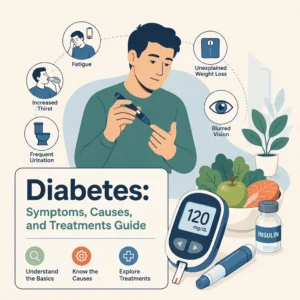
Long-term metabolic conditions matter too, though not always in the direction people expect. Anyone managing diabetes symptoms and treatments should have vascular risk reviewed as part of routine care rather than treated as a separate problem.
How doctors find and monitor an aneurysm
Imaging is the only way to confirm an aneurysm and measure it. Ultrasound is the first choice for the abdominal aorta because it is quick, painless, and involves no radiation. CT angiography gives a detailed three-dimensional map and is used for surgical planning. MR angiography avoids radiation and suits repeat imaging in younger patients. Catheter angiography, in which contrast is injected through a thin tube, gives the finest detail of brain vessels and is often combined with treatment in the same session.
Who gets screened
In the United States, a one-time abdominal ultrasound is recommended for men aged 65 to 75 who have ever smoked. The CDC publishes a plain-language overview of aortic aneurysm risk and screening. Brain aneurysm screening is not offered to the general public; it is reserved for people with two or more affected close relatives or with specific inherited conditions.
What blood work can and cannot tell you
No blood test detects an aneurysm. What blood work does is map the conditions that damage artery walls and confirm you are fit for a procedure. A lipid panel shows the fat particles driving plaque. Inflammation is estimated through a C-reactive protein test, and more sensitively through hs-CRP and other markers of silent inflammation. Kidney function is checked before contrast imaging using a creatinine test. Surgeons also review a complete blood count and clotting proteins such as fibrinogen levels before an operation. A raised D-dimer result reflects clot activity in general and cannot, on its own, point to an aneurysm.
Treatment options and what watchful waiting really means
Treatment depends on size, location, growth rate, shape, and your overall health. Most aneurysms found today are small, and most small ones are watched rather than repaired, because the risk of an operation would exceed the risk of leaving the bulge alone.
Surveillance
Watchful waiting is an active plan, not a decision to do nothing. It combines scheduled scans, aggressive blood pressure control, cholesterol treatment, and complete smoking cessation. Imaging intervals typically range from every six months to every few years depending on size, and a bulge that grows faster than expected moves the conversation toward repair.
Repair for aortic aneurysms
Endovascular repair threads a fabric-covered stent graft through an artery in the groin and seats it inside the aneurysm so blood flows through the graft rather than against the weak wall. Recovery is short, but the graft needs lifelong imaging follow-up. Open repair replaces the damaged segment with a synthetic tube. It is a bigger operation with a longer recovery and a more durable result, and it remains the better option for some anatomies and younger patients.
Repair for brain aneurysms
Endovascular coiling packs soft platinum coils into the bulge through a catheter until blood can no longer swirl inside it. A flow diverter is a fine mesh tube placed across the neck of the aneurysm to redirect blood down the parent artery, letting the bulge clot off gradually. Surgical clipping places a small metal clip across the base through an opening in the skull. Each carries its own trade-offs, and the choice depends on shape, size, and position.
Lowering your risk day to day
Nothing reverses an existing aneurysm, but several habits meaningfully slow the processes that create and enlarge one. Stopping smoking is the single most valuable step, and the benefit begins within months. Keeping blood pressure in the target range your clinician sets removes the mechanical stress that drives expansion. Treating cholesterol reduces the plaque and inflammation that degrade the wall. Regular moderate exercise, a diet built around vegetables, whole grains, and unsaturated fats, moderate alcohol intake, and treatment of sleep apnea all support the same goal. If you already have a diagnosed aneurysm, ask specifically about heavy lifting and straining, since both cause sharp pressure spikes.
Latest scientific advances
Research over the past three years has clarified who is most at risk, what genuinely helps, and where medicine still has no answer. Here is what recent work adds, in plain terms.
Screening older men saves lives
A 2024 systematic review, meaning a study that pools and re-analyzes many earlier trials rather than running a new one, examined one-time ultrasound screening in men aged 65 and over. It found consistent reductions in ruptures, in deaths from abdominal aortic aneurysm, and in emergency surgery, alongside some short-lived anxiety in people told they have a small bulge. What this means for you: if you are a man over 65 who has ever smoked, a single painless scan is one of the best-evidenced preventive tests available, and it is worth asking for by name.
Genetics point back to cholesterol
A large 2023 genetic study combining fourteen population groups identified more than a hundred inherited signals linked to abdominal aortic aneurysm, and traced them to lipid handling, vessel remodeling, inflammation, and connective tissue biology. The same analysis found that cholesterol carried outside HDL particles appears to be a genuine driver of the disease rather than a bystander. What this means for you: treating cholesterol is not only about the heart. It plausibly protects the aortic wall as well, which strengthens the case for taking a lipid panel result seriously even when you feel completely well.
An aneurysm is a signal about the whole circulation
A long-running community cohort, a group of people followed over many years, reported in 2026 that adults who developed an abdominal aortic aneurysm went on to have clearly higher rates of heart attack, stroke, and death from any cause than similar adults without one. What this means for you: a diagnosed aneurysm is a prompt to review the whole cardiovascular picture with your clinician, not just to book the next scan.
Diabetes behaves unexpectedly, and that is not permission
An updated 2024 review found that abdominal aneurysms tend to grow more slowly in people with diabetes than in people without it, an association researchers have observed repeatedly without fully explaining. What this means for you: this is an observation about growth rate, not a health benefit, and it changes nothing about managing blood sugar well. Diabetes still raises overall cardiovascular risk substantially.
No medication yet reliably slows growth
A 2023 systematic review of existing drugs tested for repurposing, including antibiotics, blood pressure medicines, and supplements, concluded that none convincingly slows expansion or prevents rupture. What this means for you: be skeptical of any product promising to shrink an aneurysm. The proven levers remain smoking cessation, blood pressure control, cholesterol treatment, and timely imaging. Work continues, and results are still preliminary.
Rupture risk in the brain is being mapped more precisely
A 2024 clinical series combined with a review of the published literature reinforced that size, irregular shape, location, uncontrolled hypertension, and continued smoking are the factors most consistently linked to rupture of a brain aneurysm. What this means for you: the two factors you control directly, blood pressure and tobacco, are also among the most influential. These findings come from observational data and guide, rather than dictate, individual decisions.
Glossary
| Term | Definition |
|---|---|
| Aneurysm | A localized bulge in an artery caused by a weakened, stretched vessel wall. |
| Aorta | The largest artery in the body, carrying blood from the heart down through the chest and abdomen. |
| Abdominal aortic aneurysm | A bulge in the section of the aorta that runs through the abdomen. It is the type most often screened for. |
| Intracranial aneurysm | A bulge in an artery inside the skull, usually at a fork between vessels. Also called a brain aneurysm. |
| Rupture | The bursting of an aneurysm, which causes internal bleeding and is a medical emergency. |
| Sentinel headache | A sudden severe headache from a small warning leak, sometimes preceding a full rupture by days or weeks. |
| Endovascular repair | Treatment delivered through a catheter inside the blood vessel, avoiding a large surgical opening. |
| Flow diverter | A fine mesh tube placed across the neck of a brain aneurysm to redirect blood along the main artery. |
| Surveillance imaging | Repeat scans on a set schedule to track whether an aneurysm is growing. |
| Atherosclerosis | The buildup of fatty plaque inside artery walls, which stiffens and inflames them. |
Frequently asked questions
What causes a brain aneurysm?
Brain aneurysms form where blood flow places repeated stress on a naturally weaker point, usually a fork between arteries at the base of the brain. Long-standing high blood pressure, smoking, and inherited differences in connective tissue all make that spot more likely to stretch. Family history matters as well, particularly when two or more close relatives have been affected. Age plays a part too, with most diagnoses falling between 30 and 60. In many people no single cause can be identified, and the aneurysm is best understood as the result of several small factors acting together over decades.
Can you survive a brain aneurysm?
Yes, and most people who have one survive it, because most brain aneurysms never rupture and many are never even discovered. When rupture does occur it is serious and outcomes vary widely, but survival and good recovery are entirely possible, especially when someone reaches a hospital quickly. Speed is the factor that matters most, which is why a sudden worst-ever headache should always trigger a 911 call rather than a wait-and-see approach. For unruptured aneurysms found on a scan, the outlook is generally reassuring with monitoring or planned treatment.
What are the early symptoms of a brain aneurysm?
Most brain aneurysms produce no early symptoms at all, which is the hardest part of the condition to accept. When a larger one presses on nearby nerves it may cause pain above or behind one eye, a drooping eyelid, a persistently enlarged pupil, double or blurred vision, or numbness on one side of the face. A sudden, extremely severe headache lasting days can signal a small warning leak and needs urgent assessment. Ordinary tension headaches and migraines are far more common than aneurysms and are not usually a cause for concern on their own.
How can you help prevent a brain aneurysm?
You cannot change your genes, but you can remove most of the mechanical stress on your arteries. Stopping smoking is the highest-value change, and it lowers both the chance of forming an aneurysm and the chance of an existing one rupturing. Keeping blood pressure within your target range is the second. Avoiding cocaine and other stimulants, limiting alcohol, staying physically active, and treating sleep apnea all contribute. If two or more close relatives have had a brain aneurysm, ask your clinician whether imaging is appropriate for you.
What are the main types of aneurysm?
Aneurysms are classified by location and by shape. By location, the most common are abdominal aortic, thoracic aortic, and intracranial. Less common sites include the artery behind the knee, the splenic artery, and the coronary arteries. By shape, a saccular aneurysm bulges from one side of the vessel like a berry, while a fusiform aneurysm widens the whole circumference of the artery. A pseudoaneurysm is different again: it is a contained leak outside the vessel wall, often following an injury or a catheter procedure.
Does a blood test show an aneurysm?
No blood test can detect or rule out an aneurysm, because only imaging shows the shape of an artery. Blood work still plays a real role by measuring the risk factors that damage artery walls, such as cholesterol and inflammation, and by confirming that your kidneys and clotting are ready for contrast imaging or surgery. If a result comes back outside the reference range, treat it as one input among many and discuss the pattern with your clinician rather than reacting to a single number.
Sources
- Centers for Disease Control and Prevention — About Aortic Aneurysm, 2024 — cdc.gov
- MedlinePlus, National Library of Medicine — Aneurysms, 2024 — medlineplus.gov
- Mayo Clinic — Brain Aneurysm: Symptoms and Causes, 2025 — mayoclinic.org
- Foley E et al. — Systematic review of clinical effectiveness and safety of abdominal aortic aneurysm screening in men — The European Journal of Public Health, 2024 — read the review
- Edsall A et al. — Associations between abdominal aortic aneurysm with cardiovascular disease and all cause death in the Atherosclerosis Risk in Communities study — European Journal of Vascular and Endovascular Surgery, 2026 — read the cohort study
- Roychowdhury T et al. — Genome-wide association meta-analysis identifies risk loci for abdominal aortic aneurysm and highlights PCSK9 as a therapeutic target — Nature Genetics, 2023 — PubMed 37845353
- Skovbo Kristensen JS et al. — Exploring drug re-purposing for treatment of abdominal aortic aneurysms: a systematic review and meta-analysis — European Journal of Vascular and Endovascular Surgery, 2023 — PubMed 38013062
- Alawattegama LH et al. — The effect of diabetes on abdominal aortic aneurysm growth: updated systematic review and meta-analysis — VASA, 2024 — PubMed 39206613
- Celikoglu E et al. — Risk factors for intracranial aneurysm rupture: a clinical case series and systematic review of the literature — Turkish Neurosurgery, 2024 — PubMed 37528725
- Zhang P et al. — Risk factors for abdominal aortic aneurysm in general populations: a systematic review and meta-analysis — PLOS ONE, 2025 — PubMed 40982438
Further reading
- Learn how readings are taken and what the two numbers mean by reading a blood pressure measurement guide.
- Many readers interpret total cholesterol levels.
- Some people also review triglyceride blood levels.
- Anyone facing contrast imaging often checks an eGFR blood test result.
- Readers monitoring kidney health frequently consult a chronic kidney disease overview.
Understand your lab results with BloodSense
An aneurysm is found by imaging, but the conditions that weaken artery walls show up in ordinary blood work long before a scan is ever ordered. BloodSense reads your lab report and explains what results such as LDL cholesterol, triglycerides, C-reactive protein, and kidney function markers mean in plain language, including how they sit against reference ranges. It helps you understand your results and prepare better questions for your appointment; it does not diagnose and does not replace your doctor.