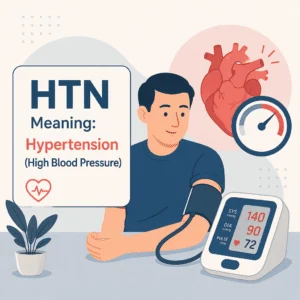







High blood pressure, often shortened to HBP and known medically as hypertension, is the sustained force of blood pushing too hard against your artery walls. Clinicians describe it with two numbers measured in millimeters of mercury (mm Hg): systolic pressure, the top number recorded when your heart beats, and diastolic pressure, the bottom number when it rests. Because high blood pressure usually causes no symptoms, many people carry it for years without knowing.
In this guide you will learn what high blood pressure means, how the ranges are defined, what causes it, the risks it carries, how it is measured, and practical, evidence-based ways to bring the numbers down. You will also see how related lab and vital-sign results fit into the bigger picture, and what recent research says about modern treatment.
What high blood pressure (HBP) means
HBP stands for high blood pressure, the same condition doctors call hypertension. Blood pressure measures how forcefully blood presses on the inside of your arteries as the heart pumps and relaxes. A reading pairs two numbers, such as 118/76 mm Hg, and both of them matter for your health.
Systolic and diastolic pressure
Systolic pressure, the first and higher number, reflects the push when your heart contracts. Diastolic pressure, the second and lower number, reflects the pressure between beats, when the heart refills. High blood pressure means these numbers stay above the recommended level over time, not just for a moment. A single high reading after coffee, stress, or a rushed appointment does not equal a diagnosis; clinicians look for a consistent pattern across several readings.
Doctors also watch pulse pressure, the gap between the two numbers, and how your pressure behaves across the day and night. These details help explain why a diagnosis of high blood pressure rests on repeated measurements rather than a single snapshot.
Blood pressure ranges: from normal to stage 2
Most clinicians in the United States classify readings using categories from the American College of Cardiology and the American Heart Association. Under the current guideline, high blood pressure is defined as readings that stay at or above 130/80 mm Hg. The table below shows the standard blood pressure ranges for adults.
| Category | Systolic (mm Hg) | Diastolic (mm Hg) |
|---|---|---|
| Normal | Below 120 | and below 80 |
| Elevated | 120 to 129 | and below 80 |
| Stage 1 high blood pressure | 130 to 139 | or 80 to 89 |
| Stage 2 high blood pressure | 140 or higher | or 90 or higher |
| Hypertensive crisis | Higher than 180 | and/or higher than 120 |
Your personal target can differ. A clinician may set a stricter or a more relaxed goal depending on your age, kidney health, diabetes status, and overall cardiovascular risk. In older adults, the top number often rises on its own as arteries stiffen, a pattern called isolated systolic hypertension. Treat these categories as a shared map, not a verdict, and always read them alongside your own history.
What causes high blood pressure
For most adults, high blood pressure causes build up quietly over years and have no single trigger. Doctors call this primary, or essential, hypertension. A smaller share of cases, called secondary hypertension, stems from another condition, such as kidney disease, a hormone disorder, sleep apnea, or certain medicines, and often improves when that cause is treated.
Common risk factors
Several factors raise your chances of developing hypertension:
- A diet high in sodium and low in potassium
- Excess body weight and limited physical activity
- Drinking too much alcohol and using tobacco
- Ongoing stress and poor sleep
- Older age, family history, and diabetes or chronic kidney disease
Many of these are modifiable, which is why lifestyle change sits at the center of prevention and treatment. When high blood pressure appears suddenly, runs very severe, or does not respond to usual treatment, clinicians search harder for a secondary cause.
High blood pressure symptoms and hidden risks
High blood pressure symptoms are famously scarce. Most people feel completely normal, which is why hypertension is often called a silent condition. When readings climb very high, some people notice headache, chest discomfort, or shortness of breath, but these are late signals rather than reliable warnings. The only dependable way to know your numbers is to measure them.
Left uncontrolled, high blood pressure strains the heart, blood vessels, kidneys, brain, and eyes. Over time it raises the risk of heart attack, stroke, heart failure, kidney disease, and vision loss. Because the damage is gradual and quiet, routine checks and related lab work help catch problems early.
Lab results that connect to your blood pressure
Blood pressure rarely travels alone, so clinicians often review other markers alongside it. To judge how well your kidneys are coping, a care team may check your estimated glomerular filtration rate (estimated glomerular filtration rate, or eGFR) and read your creatinine level. Because hypertension and high cholesterol together multiply cardiovascular risk, your doctor may also order a full lipid panel and review your LDL cholesterol levels.
Blood sugar matters too, since diabetes and high blood pressure frequently occur together. To screen for that link, clinicians often track your glycated hemoglobin, or A1c, and may add a fasting glucose test. Seeing these results together makes it easier to understand the full cardiovascular picture rather than one number in isolation.
How high blood pressure is measured
Clinicians measure blood pressure with an inflatable cuff and a gauge or an automated monitor. A single office reading offers a useful snapshot, but because pressure fluctuates, providers usually confirm a diagnosis with several readings taken over time rather than on one day.
Home and 24-hour monitoring
Home blood pressure monitoring (HBPM) lets you record numbers during normal daily life, while 24-hour ambulatory monitoring (ABPM) captures readings during activity and sleep. Both can reveal patterns an office visit misses, such as white-coat readings that rise only at the clinic, or elevated night-time pressure that would otherwise go unnoticed.
Getting an accurate reading
Small details change the result. For a reliable reading, sit quietly for five minutes, keep both feet flat and your back supported, rest your arm at heart level, and avoid caffeine, exercise, or smoking for at least 30 minutes beforehand. Use a correctly sized cuff, take two or three readings a minute apart, and write them down to share with your clinician. A consistent routine makes your home numbers far more useful.
How to lower high blood pressure
For many people, everyday habits move the numbers meaningfully. Clinicians usually recommend lifestyle changes first and then add medicine when needed. Steps that reliably help lower high blood pressure include:
- Following a heart-friendly eating pattern such as the DASH diet, rich in vegetables, fruit, and whole grains
- Cutting back on sodium while eating more potassium-rich foods
- Reaching and keeping a healthy weight
- Moving most days, aiming for about 150 minutes of activity each week
- Limiting alcohol, stopping tobacco, and protecting your sleep
Diet works partly by shifting the balance of minerals your body handles. If you want to understand that balance, it helps to read your sodium blood test results and to check your potassium blood test results, since both minerals influence how your body manages fluid and pressure.
When lifestyle change is not enough, several well-established medicine classes lower pressure effectively, and many people use more than one. Medicines control high blood pressure rather than cure it, so ongoing monitoring matters. Never start or stop a blood-pressure medicine without medical guidance.
When to see a doctor about high blood pressure
Regular checks guide most decisions, but some situations call for prompt attention. Contact your healthcare team if:
- Home readings stay in the elevated or high range across several days
- A clinic reading reaches stage 1 or stage 2 and has not yet been evaluated
- You are starting, stopping, or changing a blood-pressure medicine
- Your readings swing widely, or a new health condition appears
Seek emergency care right away if your reading is higher than 180/120 mm Hg and you have chest pain, trouble breathing, sudden weakness, vision changes, or a severe headache. That combination can signal a hypertensive crisis, which needs urgent treatment.
Latest scientific advances in high blood pressure care
Research over the past few years has sharpened how clinicians treat it. Here are two developments explained in plain language.
Aiming for a lower number may help higher-risk adults
Two large 2024 trials in China tested a stricter goal. In adults with type 2 diabetes, and again in adults at high cardiovascular risk, treating to a systolic target below 120 mm Hg prevented more heart attacks, strokes, and heart-failure events than the usual target below 140. A 2025 analysis that pooled six trials and about 80,000 people found intensive treatment cut major cardiovascular events by roughly a quarter.
A quick translation of the jargon: systolic is the top number, and a pooled analysis, or meta-analysis, simply combines results from many trials to reveal the overall pattern. In that pooled data, treating about 58 people to the lower target for a few years prevented one extra major event, while roughly one in 55 experienced a side effect such as a dizzy drop in pressure or a rise in potassium.
What this means for you: lower can be better for some higher-risk adults, but a very low target is not right for everyone, and the extra side effects are one reason clinicians keep an eye on kidney tests and potassium. These are large, well-designed studies, yet most participants lived in China, so the exact numbers may not fit every person. Treat your own target as a conversation with your clinician.
A simple salt swap that lowers pressure
Replacing regular table salt with a potassium-enriched salt substitute is emerging as an easy win. A 2022 systematic review of 23 trials and roughly 32,000 people found that salt substitutes lowered systolic pressure by about 5 mm Hg and were linked to fewer deaths. A 2023 trial in elderly-care homes found a similar swap lowered systolic pressure by about 7 mm Hg and reduced cardiovascular events.
What this means for you: swapping your salt is a small change that may nudge your numbers down. There is an important caveat, though. Because these substitutes add potassium, they are not safe for everyone; people with kidney disease or those taking certain blood-pressure medicines can build up too much potassium. The evidence is consistent across many trials, but the largest survival benefits came mainly from specific populations, so check with your clinician before making the switch.
Glossary of key terms
| Term | Definition |
|---|---|
| High blood pressure (HBP) | Blood pressure that stays at or above the recommended level over time; the everyday name for hypertension. |
| Hypertension | The medical term for high blood pressure. |
| Systolic pressure | The top number in a reading, showing the force when the heart beats. |
| Diastolic pressure | The bottom number, showing the pressure between beats when the heart rests. |
| mm Hg | Millimeters of mercury, the unit used to report blood pressure. |
| Elevated blood pressure | Readings of 120 to 129 systolic and below 80 diastolic, a warning stage before high blood pressure. |
| Hypertensive crisis | A dangerously high reading above 180/120 mm Hg that needs urgent care. |
| Home blood pressure monitoring (HBPM) | Measuring your own blood pressure at home with a cuff and monitor. |
| Ambulatory blood pressure monitoring (ABPM) | A device that records blood pressure automatically over 24 hours, including during sleep. |
| eGFR | Estimated glomerular filtration rate, a blood-based estimate of how well the kidneys filter waste. |
Frequently asked questions
Is HBP the same as hypertension?
Yes. HBP is simply the everyday abbreviation for high blood pressure, and hypertension is the medical term for the same condition. All three describe blood pressure that stays higher than the recommended level over time. The label does not change your care; what matters is how high the numbers are, how consistent they are, and your overall health. If you see HBP, hypertension, or high blood pressure on a report, they all point to the same thing.
What is a normal blood pressure by age?
There is no single normal-by-age number, because the healthy target is broadly the same for most adults: below 120/80 mm Hg. Blood pressure does tend to rise with age as arteries stiffen, and older adults are more likely to fall into the elevated or high categories. Even so, clinicians generally aim for similar goals across adulthood, adjusting for individual health. Children and teens are compared with ranges for their age, height, and sex rather than adult cut-offs.
How often should I check my blood pressure?
It depends on your numbers and your risk. Adults with normal readings can check at routine visits, while anyone with elevated or high readings usually monitors more often, following a clinician’s plan. Measuring at home a few times a week, at the same time of day, gives a clearer picture than occasional office checks. Bring your log to appointments so your care team can spot trends and adjust treatment. Your clinician will tailor the schedule to your situation.
Can high blood pressure be lowered without medication?
Often, yes, especially for mild elevations. Cutting sodium, eating more potassium-rich foods, losing excess weight, moving regularly, limiting alcohol, and improving sleep can lower blood pressure and sometimes reduce the need for medicine. Results vary from person to person, and some people still need medication to reach a safe range. Lifestyle change and medicine also work well together. Make changes with your clinician’s input rather than stopping any prescribed treatment on your own.
Do medications cure high blood pressure?
Usually not. Medicines control high blood pressure effectively, but they manage the underlying tendency rather than cure it, so most people need ongoing treatment and monitoring. If treatment stops, pressure often climbs again. The upside is that steady control lowers the risk of heart attack, stroke, and kidney damage. Some people who make major lifestyle changes can reduce their doses over time, always under medical guidance.
What if my home and clinic readings differ?
Differences are common and usually not a cause for alarm. Readings can rise at the clinic, sometimes called white-coat readings, or, less often, look normal there but run high at home. Bring your home log to your appointment so your clinician can compare the two. They may confirm the pattern with 24-hour ambulatory monitoring or review your measurement technique. What matters most is the overall trend across many readings, not any single number.
Sources
- Centers for Disease Control and Prevention. About High Blood Pressure, 2026. cdc.gov
- MedlinePlus, U.S. National Library of Medicine (National Institutes of Health). High Blood Pressure, 2026. medlineplus.gov
- Mayo Clinic. High blood pressure (hypertension): symptoms and causes, 2024. mayoclinic.org
- Guo X, and colleagues. Benefit-harm trade-offs of intensive versus standard blood pressure control: an individual participant data analysis of randomised controlled trials. The Lancet, 2025. doi.org/10.1016/S0140-6736(25)01391-1
- Bi Y, and colleagues. Intensive blood-pressure control in patients with type 2 diabetes (BPROAD). New England Journal of Medicine, 2024. doi.org/10.1056/NEJMoa2412006
- Liu J, and colleagues. Lowering systolic blood pressure to less than 120 mm Hg versus less than 140 mm Hg (ESPRIT). The Lancet, 2024. doi.org/10.1016/S0140-6736(24)01028-6
- Tsai YC, and colleagues. Effectiveness of salt substitute on cardiovascular outcomes: a systematic review and meta-analysis. Journal of Clinical Hypertension, 2022. doi.org/10.1111/jch.14562
- Yuan Y, and colleagues. Salt substitution and salt-supply restriction for lowering blood pressure in elderly care facilities. Nature Medicine, 2023. doi.org/10.1038/s41591-023-02286-8
Further reading
- Total Cholesterol: Understanding Your Levels
- HDL Cholesterol: Understanding Your Levels
- Chronic Kidney Disease: Symptoms, Causes, Treatments
- Albumin/Creatinine Ratio: Understanding Results
- BNP: Understanding Your Blood Test Results
Understand your lab results with BloodSense
Get your results interpreted in minutes
High blood pressure rarely acts alone, so the story often continues in your bloodwork, from a basic metabolic panel and kidney markers such as creatinine and eGFR to a cholesterol (lipid) panel and blood sugar tests. BloodSense turns those numbers into clear, plain-language explanations so you can see how they connect to your blood pressure and spot trends early. It helps you understand your results and prepare sharper questions; it does not diagnose conditions and does not replace your doctor.