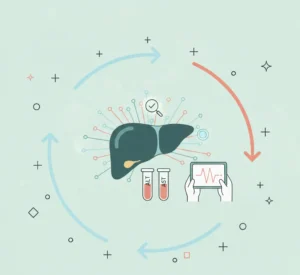







An hs-CRP test measures a protein your liver releases when your body is inflamed, and it can flag the kind of quiet, ongoing inflammation that a standard checkup often misses. Together with a few numbers already sitting in your complete blood count, this single result helps paint a picture of chronic low-grade inflammation, sometimes called silent inflammation because it rarely causes obvious symptoms. This article explains what an hs-CRP test is, how it differs from a routine CRP measurement, which CBC-derived markers point toward hidden inflammation, what the ranges generally mean, and when a raised result is worth a conversation with your doctor. The goal is to help you read your own report with more confidence and less worry.
What an hs-CRP test actually measures
C-reactive protein is a substance your liver makes in response to inflammation anywhere in the body. A standard CRP test is designed to detect the large jumps seen with infections or flare-ups of conditions like rheumatoid arthritis. A high-sensitivity version, the hs-CRP test, uses a more precise method to pick up the much smaller amounts that circulate during steady, low-level inflammation. That extra sensitivity is why clinicians reach for it when the question is long-term cardiovascular and metabolic risk rather than an acute illness.
The value is reported in milligrams per liter (mg/L). Because it reflects general inflammation and not one specific disease, an hs-CRP test is rarely read on its own. Doctors weigh it alongside your symptoms, history, and other results, which is exactly how a broader panel such as a complete blood count is meant to be used when you review your complete blood count results.
hs-CRP versus standard CRP
Both tests measure the same protein; they differ in the range they read well. Standard CRP is suited to spotting marked inflammation, while the hs-CRP test resolves the low end of the scale used for cardiovascular risk estimation. If your report simply says “CRP,” it may not be the high-sensitivity version, so it is worth checking the exact test name before drawing conclusions about subtle inflammation.
Silent inflammation: why “normal” labs can still hide it
Acute inflammation is loud. You feel the swelling, heat, and pain of a sprained ankle or a bad cold, and the numbers spike accordingly. Chronic low-grade inflammation is different. It simmers at a level too low to feel yet high enough, over years, to nudge the risk of heart disease, type 2 diabetes, and other conditions. That is why many people with a clean-looking basic panel can still carry a quietly elevated inflammatory burden.
Several everyday factors feed this slow burn: excess body weight, poor sleep, ongoing stress, smoking, gum disease, and a diet heavy in ultra-processed foods. None of these produce a dramatic lab reading on their own, but together they can keep an hs-CRP test result sitting in the higher range month after month.
The stakes are quiet but real. Because the process unfolds slowly, there is often no single moment that prompts action, which is part of why this pattern is easy to overlook. Catching it early tends to rely on periodic testing and on reading several markers side by side rather than waiting for symptoms to appear.
How the hs-CRP test is done and what can skew it
The test itself is straightforward: a routine blood draw, usually from a vein in your arm, with no special preparation required in most cases. You typically do not need to fast, though your clinician may combine it with other tests that do call for fasting. The sample is then analyzed with a high-sensitivity assay that can read low concentrations accurately.
What matters more than the draw is timing. Because C-reactive protein rises with any inflammation, several temporary factors can lift the result and mislead interpretation if they are not accounted for:
- A recent cold, flu, or other infection, which can raise the number for days to weeks.
- Injury, surgery, or dental work that provokes a short-lived inflammatory response.
- Vigorous or unaccustomed exercise in the day or two before the draw.
- Pregnancy and certain medications, which can shift baseline levels.
For these reasons, an hs-CRP test is most informative when you are otherwise well and feeling healthy. A result taken while you are fighting a virus reflects that acute event, not your long-term inflammatory baseline, which is why clinicians often repeat a raised value once any short-term trigger has passed.
CBC-derived markers that hint at hidden inflammation
Your complete blood count is not usually thought of as an inflammation panel, yet several of its values shift when inflammation is present. Reading them together, rather than one at a time, is where patterns emerge. When a white blood cell reading looks off, it helps to understand your white blood cell differential results in context.
Neutrophil-to-lymphocyte ratio (NLR)
The neutrophil-to-lymphocyte ratio divides the neutrophil count by the lymphocyte count, two numbers already printed on most CBC reports. A higher ratio tends to reflect more systemic inflammation, because inflammatory stress often raises neutrophils while lowering lymphocytes. It is inexpensive, needs no extra blood draw, and has been widely studied as a general marker of inflammatory stress across many conditions.
Other quiet signals in the CBC
- Platelet count: platelets rise modestly during sustained inflammation, and ratios such as the platelet-to-lymphocyte ratio build on this.
- Red cell distribution width (RDW): a wider spread in red-cell size has been linked to chronic inflammatory states.
- White blood cell count: a persistently high-normal count can accompany low-grade inflammation, though many other things move it too.
Ferritin deserves a special mention. It is an iron-storage protein, but it also climbs during inflammation, so a raised value does not always mean high iron. Reading it beside iron studies avoids a common misinterpretation, which is easier once you understand your ferritin blood levels and cross-check them against your serum iron test results.
hs-CRP compared with other inflammation tests
hs-CRP is one of several ways to gauge inflammation, and each has a different strength. Knowing how they differ helps explain why your clinician might order one rather than another, or combine them.
| Test | What it reflects | Typical use |
|---|---|---|
| hs-CRP | Low-level, ongoing inflammation | Refining long-term cardiovascular risk |
| Standard CRP | Marked, acute inflammation | Checking for infection or a flare |
| ESR (sed rate) | Slower, general inflammatory activity | Monitoring some chronic conditions |
| NLR from CBC | Systemic inflammatory stress | A low-cost clue from routine bloods |
No single test is definitive. The erythrocyte sedimentation rate, or ESR, responds more slowly and less specifically than CRP, while the neutrophil-to-lymphocyte ratio costs nothing extra when a CBC is already ordered. Because each captures a slightly different angle, clinicians often read them together, and the fuller picture is easier to follow when you have your blood test panel interpreted in one place.
What the numbers generally mean
For cardiovascular risk estimation, major US institutions have long grouped hs-CRP results into three broad bands. These are general reference points, not diagnoses, and your clinician may interpret them differently based on your overall picture. A recent infection, injury, or intense exercise can temporarily push the number up, so a single high reading is usually repeated before it means much.
| hs-CRP level (mg/L) | General cardiovascular risk band | What it usually prompts |
|---|---|---|
| Under 1.0 | Lower relative risk | Routine monitoring |
| 1.0 to 3.0 | Average relative risk | Lifestyle review with a clinician |
| Above 3.0 | Higher relative risk | Repeat testing and closer follow-up |
Very high readings, often above 10 mg/L, usually signal an acute event such as an infection rather than the slow inflammation these bands were designed to capture. In that situation the test is typically rescheduled once you have recovered. Seeing your result in plain language is the aim when you choose to have your lab results interpreted clearly.
It also helps to remember that these bands describe relative risk across groups, not a personal guarantee. Two people with the same hs-CRP value can have very different overall risk once age, blood pressure, cholesterol, and family history are added in. That is why the number is a starting point for a conversation, not a conclusion on its own.
When to see a doctor
An hs-CRP test is a risk-refinement tool, not an alarm on its own. Still, some situations do warrant a professional review rather than watchful waiting.
- A repeatedly elevated hs-CRP test result, confirmed on a second sample taken when you are well.
- A raised inflammatory marker alongside symptoms such as unexplained fatigue, joint pain, or weight change.
- A high result combined with other cardiovascular risk factors like high blood pressure, high cholesterol, or a family history of heart disease.
- Inflammation markers that keep rising over successive tests despite lifestyle changes.
Your doctor may add other tests, look for a source of inflammation, or focus on the modifiable factors that most influence the number. Only a qualified clinician can turn these readings into a diagnosis or a treatment plan.
How AI pattern analysis fits in
Read individually, an hs-CRP value and a handful of CBC numbers can feel disconnected. Their real signal often appears in the relationships between them and in how they trend over time. This is where pattern-based tools help: by lining up your inflammatory markers with the rest of a panel, they surface combinations a quick glance might miss and translate them into plain wording. Used well, this supports a more focused conversation with your doctor, and it never replaces one, as explained in this patient’s guide to AI lab interpretation.
The point is not to hand you a verdict. It is to help you notice, for example, that a mildly raised hs-CRP test result sits next to a creeping neutrophil-to-lymphocyte ratio, so you can ask better questions and track whether changes are moving in the right direction. Trends usually say more than any single snapshot, and seeing them laid out clearly makes it easier to judge whether your efforts are paying off between visits.
Latest scientific advances
According to PubMed, research over the last few years has strengthened the case for reading low-grade inflammation as a distinct, measurable risk. Here is what several recent studies found, in plain terms.
A 2025 review of inflammation in cardiovascular disease concluded that a simple, routine hs-CRP measurement can be at least as strong a predictor of future heart events as traditional cholesterol markers, making it a practical way to spot people whose main residual risk is inflammatory rather than lipid-related (DOI). For the reader, this reinforces why the test is worth understanding, though it remains one input among several.
A very large UK Biobank analysis of more than 420,000 people, published in 2025, showed that inflammation markers derived from a standard blood count, including the neutrophil-to-lymphocyte ratio, were independently linked to later heart disease and modestly improved risk prediction when added to classic risk factors (DOI). In practice, this means numbers already on your CBC may carry useful information that is easy to overlook.
A 2026 analysis from the long-running Rotterdam Study reported that hs-CRP appears to partly mediate the link between aging and stiffer, less flexible blood vessels, with a somewhat stronger effect in men (DOI). The finding is still one piece of a larger puzzle, but it supports the idea that chronic inflammation is part of how vascular aging unfolds.
Finally, a 2024 meta-analysis found that a higher neutrophil-to-lymphocyte ratio was associated with worse outcomes in adults with sepsis, underlining how this simple ratio tracks the intensity of the body’s inflammatory response (DOI). That evidence comes from acute illness, so it should be read as supporting the marker’s biological meaning rather than as guidance for everyday screening.
Glossary
| Term | Definition |
|---|---|
| hs-CRP | High-sensitivity C-reactive protein; a precise blood test that detects low levels of inflammation. |
| C-reactive protein | A protein released by the liver in response to inflammation in the body. |
| Chronic low-grade inflammation | Persistent, low-level inflammation that rarely causes symptoms but can affect long-term health. |
| Complete blood count | A common panel measuring red cells, white cells, and platelets in your blood. |
| Neutrophil-to-lymphocyte ratio | A calculated value from the CBC used as a general marker of systemic inflammation. |
| Ferritin | An iron-storage protein that also rises during inflammation, complicating iron interpretation. |
| Red cell distribution width | A CBC value describing variation in red-cell size, sometimes linked to inflammation. |
| Erythrocyte sedimentation rate | A slower, less specific blood test that reflects general inflammatory activity. |
| Acute-phase response | The body’s short-term reaction to injury or infection, raising markers like CRP and ferritin. |
Frequently asked questions
What is an hs-CRP test used for?
It measures low levels of C-reactive protein to gauge chronic, low-grade inflammation. Clinicians most often use it to help refine long-term cardiovascular risk, adding context to cholesterol and blood pressure. Because it reflects general inflammation rather than a single disease, it is interpreted alongside your history, symptoms, and other results, never in isolation.
What does a high hs-CRP result mean?
A higher value suggests more inflammation, and in the risk-screening context a level above 3.0 mg/L generally falls in the higher band. On its own it does not diagnose a condition. A recent infection, injury, or hard workout can raise it temporarily, so doctors usually confirm an elevated result with a repeat test taken when you feel well.
Can a CBC show inflammation without an hs-CRP test?
To a degree, yes. Values such as the neutrophil-to-lymphocyte ratio, platelet count, and red cell distribution width can shift with inflammation. These clues are less specific than an hs-CRP test, but read together they can suggest an inflammatory pattern worth exploring further with a healthcare professional.
Is silent inflammation the same as an infection?
No. An infection triggers acute, often intense inflammation that usually causes symptoms and large lab changes. Silent, or chronic low-grade, inflammation runs quietly at a much lower level over long periods and is frequently linked to lifestyle and metabolic factors rather than a single acute cause.
How can I lower chronic inflammation markers?
Modifiable factors matter most: not smoking, reaching a healthy weight, regular physical activity, better sleep, managing stress, and a diet rich in whole foods. These habits are associated with lower inflammatory markers over time. Any changes, especially if you have a medical condition, are best planned with your doctor.
How often should an hs-CRP test be repeated?
There is no fixed schedule for everyone. When a result is elevated, a repeat after a few weeks, once any acute illness has passed, helps confirm whether the finding is persistent. Beyond that, timing depends on your overall risk profile and should be decided with your clinician.
Sources
- MedlinePlus, US National Library of Medicine — C-Reactive Protein (CRP) Test — MedlinePlus Medical Test, 2024 — https://medlineplus.gov/lab-tests/c-reactive-protein-crp-test/
- Cleveland Clinic — Blood Tests to Determine Risk of Coronary Artery Disease, 2022 — https://my.clevelandclinic.org/health/diagnostics/16792-blood-tests-to-determine-risk-of-coronary-artery-disease
- Harvard Health Publishing — Inflammation and heart disease: A smoldering threat, 2023 — https://www.health.harvard.edu/heart-health/inflammation-and-heart-disease-a-smoldering-threat
- Arnold N, Koenig W — Inflammation in atherosclerotic cardiovascular disease: From diagnosis to treatment — European Journal of Clinical Investigation, 2025 — https://doi.org/10.1111/eci.70020
- Qin P, Ho FK, Celis-Morales CA, Pell JP — Association between systemic inflammation biomarkers and incident cardiovascular disease in 423,701 individuals — Cardiovascular Diabetology, 2025 — https://doi.org/10.1186/s12933-025-02721-9
- Mohammadi Jouabadi S, et al. — High-sensitivity C-reactive protein mediates age-related vascular dysfunction: the Rotterdam study — European Journal of Preventive Cardiology, 2026 — https://doi.org/10.1093/eurjpc/zwaf370
- Wu H, Cao T, Ji T, Luo Y, Huang J, Ma K — Predictive value of the neutrophil-to-lymphocyte ratio in the prognosis and risk of death for adult sepsis patients: a meta-analysis — Frontiers in Immunology, 2024 — https://doi.org/10.3389/fimmu.2024.1336456
Further reading
- complete blood count results explained
- ferritin blood levels
- serum iron test results
- the patient’s guide to AI lab interpretation
- a guide to understanding your lab results
Understand your lab results with BloodSense
Get your results interpreted in minutes
Silent inflammation rarely shows up in a single number, which is why context matters. BloodSense lines up markers such as your hs-CRP, C-reactive protein, complete blood count, and ferritin, then explains in plain language what the pattern may suggest. It helps you understand your own results and prepare for a more focused visit. It does not diagnose any condition and does not replace your doctor, who remains the only person qualified to interpret your health and decide on care.