






Your total cholesterol level is the single number most people notice first on a lipid panel, and it is also the one most often misread. It adds up all the cholesterol carried in your blood at the moment of the draw, which means a result of 210 mg/dL can describe two very different people: one with a protective profile and one with real cardiovascular risk. In this article you will learn what the number actually measures, how to read it against current American reference ranges, which companion markers change its meaning, what lifestyle and medical factors move it, and what recent research says about lowering it. The goal is simple: turn one line on a lab report into information you can use.
What total cholesterol actually measures
Cholesterol is a waxy lipid your body needs. It builds cell membranes, insulates nerve fibers, and serves as the raw material for vitamin D, bile acids, and steroid hormones such as cortisol and estradiol. Your liver makes most of what you use; food supplies the rest.
Because cholesterol does not dissolve in blood, it travels inside protein-wrapped carriers called lipoproteins. Your total cholesterol result is the sum of the cholesterol inside all of those carriers. In practice, laboratories describe it with a simple relationship: total cholesterol equals HDL cholesterol plus LDL cholesterol plus roughly one fifth of your triglyceride value, which approximates the cholesterol carried by very low-density lipoproteins.
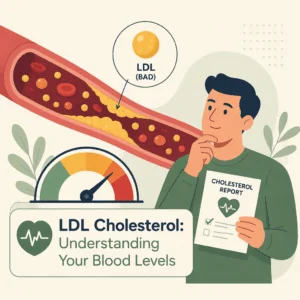
That formula explains the central limitation of the number. A high total can come from a large amount of LDL, the carrier that deposits cholesterol into artery walls, or from a large amount of HDL, the carrier that helps remove it. The two situations carry opposite implications. Anyone reviewing a lipid result should therefore read the full panel rather than the headline figure, which is why our complete lipid panel results guide covers each fraction separately.
Where the number comes from in your body
Liver cells assemble cholesterol through a long enzymatic chain whose rate-limiting step is an enzyme called HMG-CoA reductase, the target of statin medications. When dietary intake drops, the liver compensates by making more; when intake rises, production usually falls. This feedback loop is why dietary cholesterol alone shifts blood levels less than people expect, and why saturated fat, genetics, thyroid function, and body weight often matter more.
How to read your total cholesterol result
United States laboratories report cholesterol in milligrams per deciliter (mg/dL). Most international labs use millimoles per liter (mmol/L); to convert, divide the mg/dL value by 38.67. The reference bands below reflect guidance published by the National Library of Medicine and the Centers for Disease Control and Prevention.
| Group | Desirable | Borderline high | High |
|---|---|---|---|
| Adults aged 20 and older | Below 200 mg/dL | 200 to 239 mg/dL | 240 mg/dL and above |
| Children and teens up to 19 | Below 170 mg/dL | 170 to 199 mg/dL | 200 mg/dL and above |
| Companion target: LDL, adults | Below 100 mg/dL | 130 to 159 mg/dL | 160 mg/dL and above |
| Companion target: HDL, adults | 60 mg/dL or higher | 40 to 59 mg/dL | Below 40 mg/dL is unfavorable |
| Companion target: non-HDL, adults | Below 130 mg/dL | 130 to 159 mg/dL | 160 mg/dL and above |
These bands are population thresholds, not personal targets. Someone who has already had a heart attack, or who lives with diabetes or chronic kidney disease, is usually given a lower goal by a clinician. Conversely, a total of 205 mg/dL in a young adult with high HDL, normal triglycerides, and no family history rarely triggers treatment on its own.
The ratio that adds context
Dividing total cholesterol by HDL cholesterol produces a ratio that many American labs print alongside the raw values. A total of 220 mg/dL with an HDL of 75 mg/dL gives a ratio near 2.9, generally considered favorable. The same total with an HDL of 35 mg/dL gives 6.3, a far less reassuring picture. Compare your own figure against the reference bands in our HDL cholesterol blood level guide before drawing conclusions from the total alone.
Non-HDL cholesterol, the quieter alternative
Subtracting HDL from the total leaves non-HDL cholesterol: everything carried by particles that can lodge in an artery wall. Many lipid specialists now consider it a better single summary than the total, and it requires no fasting and no extra blood. If your report shows a normal total but an elevated non-HDL value, the second number is the one to discuss. Readers tracking particle count directly can review the reference values in our apolipoprotein B test results guide.
How the test is performed
Total cholesterol is measured on a routine venous blood sample, almost always as part of a lipid panel rather than in isolation. Fasting rules have relaxed: many clinicians now accept a non-fasting sample because total cholesterol and HDL barely move with meals. When triglycerides matter, or when a previous non-fasting result was borderline, a 9 to 12 hour fast is still requested, and Mayo Clinic guidance reflects that mixed practice.
Several everyday factors nudge the result. Acute illness, recent surgery, and pregnancy can lower it temporarily. Dehydration and prolonged tourniquet time during the draw can raise it slightly. Standing rather than sitting during collection can add a few percent. Biological week-to-week variation of roughly 5 to 10 percent is normal, which is why a single borderline value is usually repeated before any decision is made.
Adults with no risk factors commonly have cholesterol checked every four to six years. People with high blood pressure, diabetes, obesity, a family history of premature heart disease, or an existing prescription are tested more often. Children are typically screened once between ages nine and eleven and again between seventeen and twenty-one.
What a high total cholesterol level can indicate
An elevated result is a signal, not a diagnosis. The most common explanation is a mix of diet, body weight, physical inactivity, and inherited tendency. Beyond that, several medical conditions raise cholesterol as a side effect and deserve consideration when a level rises without an obvious cause.
- Underactive thyroid, which slows the clearance of LDL particles from the blood; a raised result alongside fatigue and cold intolerance is worth checking against our TSH blood test results guide.
- Poorly controlled diabetes and insulin resistance, which typically raise triglycerides and lower HDL; readers can cross-check the companion values in our fasting glucose test results guide.
- Kidney disease, particularly nephrotic syndrome, and cholestatic liver disease.
- Familial hypercholesterolemia, an inherited condition affecting roughly one in 250 people, which produces very high levels from childhood and often runs visibly through a family tree.
- Certain medications, including some diuretics, corticosteroids, retinoids, and older antiretroviral drugs.
Sustained elevation contributes to the slow accumulation of plaque inside arteries. Anyone wanting the mechanism explained in detail can consult our atherosclerosis symptoms and causes guide, and those already given a diagnosis will find management options in our high cholesterol causes and treatments guide.
When a low total cholesterol level matters
Results below about 120 mg/dL are uncommon and usually reflect something other than an unusually healthy diet. Overactive thyroid, malabsorption, advanced liver disease, chronic malnutrition, and intensive lipid-lowering therapy are the usual explanations. A low value found in someone who is not on medication and is losing weight without trying should be investigated rather than celebrated.
Markers that give the number its meaning
Total cholesterol is most useful when read beside a small group of related measurements. Each answers a question the total cannot.
- Triglycerides, the fats that reflect recent carbohydrate and alcohol intake and inflate the total when high; the reference bands appear in our triglycerides blood level guide.
- Lipoprotein(a), a largely genetic particle that raises risk independently of the total and is worth measuring once in a lifetime, as explained in our lipoprotein(a) blood level guide.
- High-sensitivity C-reactive protein, which captures the inflammatory side of arterial disease rather than the lipid side; our CRP blood test results guide sets out how it is interpreted.
- LDL cholesterol, still the primary treatment target in American practice, with thresholds detailed in our LDL cholesterol blood level guide.
What moves your total cholesterol level
Most people can shift their result meaningfully without medication, though genetics sets the range within which that shift happens. The levers below are the ones supported by the strongest evidence.
| Lever | Practical action | Typical direction of change |
|---|---|---|
| Saturated fat | Replace butter, fatty cuts of meat and full-fat dairy with olive oil, nuts and fish | Lowers total and LDL |
| Soluble fiber | Add oats, barley, beans, lentils, apples and psyllium most days | Lowers total and LDL modestly |
| Aerobic activity | Accumulate 150 minutes per week of brisk walking, cycling or swimming | Lowers triglycerides, raises HDL |
| Body weight | A sustained loss of 5 to 10 percent of body weight | Lowers total and triglycerides |
| Alcohol | Reduce intake, especially if triglycerides are elevated | Lowers triglycerides and total |
| Smoking | Quitting, with clinical support if needed | Raises HDL and improves the ratio |
When medication enters the conversation
Clinicians do not treat a total cholesterol number in isolation. They estimate ten-year cardiovascular risk using age, sex, blood pressure, smoking status, diabetes, and the lipid panel together. Statins remain the first-line option; ezetimibe, bempedoic acid, and injectable PCSK9 inhibitors are added when the target is not reached or statins are not tolerated. The decision belongs in a consultation, not a search result.
When to speak with a clinician
- A total cholesterol level of 240 mg/dL or above on two separate samples.
- Any elevated result accompanied by chest discomfort, breathlessness on exertion, or leg pain when walking.
- A parent, sibling, or child who had a heart attack or stroke before age 55 in men or 65 in women.
- Visible cholesterol deposits: yellowish patches around the eyelids, or thickened Achilles tendons.
- A result that has climbed sharply since the previous test with no change in habits.
Latest scientific advances
Research published over the past three years has sharpened the practical picture around cholesterol. The findings below are summarized in plain language, and each appears in the Sources list.
A 2023 meta-analysis in the European Heart Journal pooled randomized trials comparing vegetarian and vegan eating patterns with omnivorous ones. Pooling trials means combining many small studies so the overall signal becomes clearer. Plant-based patterns lowered total cholesterol, LDL cholesterol, and apolipoprotein B compared with the usual diet. What this means for you: shifting a meaningful share of your protein toward beans, lentils, soy, and nuts is one of the better-tested dietary moves for a high total, and the effect showed up within months rather than years.
A 2024 systematic review in Sports Medicine examined how structured exercise programs change blood lipids across a large body of trials. Exercise reliably improved triglycerides and HDL cholesterol, while its effect on total cholesterol was real but smaller. What this means for you: if your total barely moves after you start training, that is expected and not a sign of failure. The ratio between total and HDL often improves even when the headline number stays flat, and the cardiovascular benefit of activity extends well beyond lipids.
A 2025 meta-analysis in Mayo Clinic Proceedings compared statin treatment alone with statin plus ezetimibe, a second drug that blocks cholesterol absorption in the gut. The combination lowered LDL cholesterol further than a statin alone and was associated with fewer cardiovascular events, without a rise in side effects. What this means for you: if your level remains above target on a statin, adding a well-tolerated second medication is now a well-supported option rather than an experimental one, and it is a reasonable question to raise with your clinician.
A 2025 network meta-analysis in The BMJ assessed intermittent fasting schedules against conventional calorie restriction for weight and cardiometabolic markers. A network meta-analysis compares several approaches at once, even when they were never tested head to head. Fasting schedules produced weight loss broadly similar to steady calorie reduction, with only small differences between them, and the authors described the certainty of the evidence as moderate at best. What this means for you: choose the eating pattern you can sustain. There is no strong evidence that a particular fasting window beats simply eating less overall when the goal is a better lipid profile.
A 2025 systematic review in the Journal of Health, Population and Nutrition estimated how common abnormal cholesterol levels are among adults worldwide, drawing on two decades of surveys. Abnormal lipid results proved widespread across every world region studied, with substantial variation by country and time period. What this means for you: a borderline total cholesterol result is common rather than exceptional, which is a reason to act calmly and systematically rather than to panic, and a reason that routine screening remains worthwhile even when you feel well.
These are population-level findings. None of them predicts what will happen to one individual, and none replaces a conversation with the clinician who knows your history.
Glossary of key terms
| Term | Definition |
|---|---|
| Total cholesterol | The sum of all cholesterol carried in the blood, across every type of lipoprotein particle, at the moment of the blood draw. |
| Lipoprotein | A protein-and-fat package that transports cholesterol and triglycerides through the bloodstream, since fats cannot dissolve in blood on their own. |
| LDL cholesterol | Low-density lipoprotein cholesterol, the fraction that can deposit into artery walls. It is the main treatment target in American practice. |
| HDL cholesterol | High-density lipoprotein cholesterol, which helps return excess cholesterol to the liver for disposal. |
| Non-HDL cholesterol | Total cholesterol minus HDL cholesterol. It captures every particle capable of contributing to plaque in one figure. |
| Lipid panel | The standard blood test reporting total cholesterol, LDL, HDL, and triglycerides together, sometimes with calculated ratios. |
| Cholesterol ratio | Total cholesterol divided by HDL cholesterol. Lower values generally indicate a more favorable balance between the two. |
| Atherosclerosis | The gradual buildup of fatty plaque inside artery walls, which narrows and stiffens the vessels over years. |
| Familial hypercholesterolemia | An inherited condition that produces very high cholesterol from childhood and clusters within families. |
| Statin | A class of medication that reduces the liver’s own cholesterol production by blocking a key enzyme in the synthesis pathway. |
Frequently asked questions
What is a normal total cholesterol level for an adult?
For adults aged 20 and older, a total cholesterol level below 200 mg/dL is considered desirable, 200 to 239 mg/dL is borderline high, and 240 mg/dL or above is high. These are population reference bands rather than personal goals. A clinician who knows your blood pressure, smoking status, family history, and whether you live with diabetes may set a lower target for you, or may be untroubled by a slightly elevated figure in the absence of other risk factors.
Does total cholesterol change with age?
Yes. Levels tend to rise gradually from young adulthood through middle age in both sexes, then plateau or decline in later life. Women often see a noticeable increase around menopause as estrogen falls. The reference thresholds themselves do not shift with age for adults, which is why an aging result can drift into the borderline band without anything unusual happening. Trends across several years are more informative than any single value.
Do I need to fast before a cholesterol test?
Often not. Total cholesterol and HDL change very little after eating, so many clinicians accept a non-fasting sample for routine screening. A fast of 9 to 12 hours is still requested when triglycerides need to be measured accurately, when a previous result was borderline, or when your clinician is monitoring treatment. Follow the specific instruction on your lab slip rather than a general rule.
Can total cholesterol be too low?
It can. Values below roughly 120 mg/dL are unusual outside of intensive medication and are sometimes linked to an overactive thyroid, malabsorption, chronic liver disease, or undernutrition. On its own a low figure is not dangerous, but a level that has fallen without explanation, particularly alongside unintentional weight loss, deserves investigation rather than reassurance.
How quickly can I lower my total cholesterol level?
Dietary changes usually show up on a repeat panel within six to twelve weeks, which is why clinicians often recheck at about three months. Weight loss and increased activity work more gradually and their effect depends on how much changes. Medication acts faster, with most of a statin’s effect visible after four to six weeks. Genetics sets limits on what lifestyle alone can achieve, and that is not a personal failing.
Is total cholesterol or LDL cholesterol more important?
LDL cholesterol, and increasingly non-HDL cholesterol, carry more decision-making weight in current American practice because they isolate the particles that contribute to plaque. Total cholesterol remains a useful screening figure and a quick way to spot a substantial abnormality, but it should not be interpreted alone. Read it together with LDL, HDL, and triglycerides on the same report.
Sources
- MedlinePlus, National Library of Medicine — Cholesterol Levels: What You Need to Know — MedlinePlus Health Topic — medlineplus.gov
- Centers for Disease Control and Prevention — About Cholesterol — CDC Cholesterol Program — cdc.gov
- Mayo Clinic — Cholesterol test — Mayo Clinic Tests and Procedures — mayoclinic.org
- Koch CA, Kjeldsen EW, Frikke-Schmidt R — Vegetarian or vegan diets and blood lipids: a meta-analysis of randomized trials — European Heart Journal, 2023 — doi.org/10.1093/eurheartj/ehad211
- Smart NA, Downes D, van der Touw T, et al. — The Effect of Exercise Training on Blood Lipids: A Systematic Review and Meta-analysis — Sports Medicine, 2024 — doi.org/10.1007/s40279-024-02115-z
- Banach M, Jaiswal V, Ang SP, et al. — Impact of Lipid-Lowering Combination Therapy With Statins and Ezetimibe vs Statin Monotherapy on the Reduction of Cardiovascular Outcomes: A Meta-analysis — Mayo Clinic Proceedings, 2025 — doi.org/10.1016/j.mayocp.2025.01.018
- Semnani-Azad Z, Khan TA, Chiavaroli L, et al. — Intermittent fasting strategies and their effects on body weight and other cardiometabolic risk factors: systematic review and network meta-analysis of randomised clinical trials — The BMJ, 2025 — doi.org/10.1136/bmj-2024-082007
- Ballena-Caicedo J, Zuzunaga-Montoya FE, Loayza-Castro JA, et al. — Global prevalence of dyslipidemias in the general adult population: a systematic review and meta-analysis — Journal of Health, Population and Nutrition, 2025 — doi.org/10.1186/s41043-025-01054-3
Further reading
- Explore the protein that carries protective particles by reading our apolipoprotein A1 blood level guide.
- Check the amino acid linked to vascular damage with our homocysteine blood level guide.
- Understand how narrowed heart vessels develop by reading our coronary artery disease guide.
- Recognize the warning signs of interrupted blood flow to the brain with our stroke symptoms and treatments guide.
- Review the condition that reshapes an entire lipid profile in our diabetes symptoms and treatments guide.
Understand your lab results with BloodSense
A total cholesterol value only becomes useful once it sits beside your LDL, HDL, triglycerides, and the ratio your lab calculated. BloodSense reads your lipid panel as a whole, explains each line in plain language, and shows how the markers relate to one another. It helps you understand what your report says and prepare better questions, and it does not diagnose or replace your physician.