






Chronic Obstructive Pulmonary Disease (COPD): Symptoms and Treatment
Chronic obstructive pulmonary disease, or COPD, is a long-term lung condition that makes breathing harder because the airways and air sacs in the lungs are damaged and airflow becomes blocked. It usually develops slowly, and many people first notice it as breathlessness during everyday activities or a cough that will not go away. COPD affects tens of millions of people, most often those with a long smoking history, though it can also occur in people who never smoked. There is no cure, but COPD is treatable, and the right care can ease symptoms, prevent flare-ups, and slow the disease’s progression. This guide explains what COPD is, its symptoms, causes, how it is diagnosed with a spirometry test, the treatments available, and the latest research.
What is COPD?
COPD is a progressive lung disease that blocks airflow in and out of the lungs, and for most people the damage already done cannot be reversed. It develops gradually, often over decades, as ongoing irritation damages the airways and the tiny air sacs where oxygen enters the blood. An estimated 16 million adults in the United States have been diagnosed with COPD, and many more likely have it without knowing. COPD ranks among the leading causes of death in the country, which is part of why early recognition and treatment matter so much.
COPD is not one disease but an umbrella term for two overlapping conditions, and most people diagnosed with COPD have some combination of both rather than a pure form of either. Emphysema damages the walls of the tiny air sacs deep in the lungs so they lose elasticity and cannot exchange oxygen as efficiently, covered further in this guide to the air sac damage of emphysema. Chronic bronchitis involves long-term airway inflammation that triggers extra mucus and a persistent productive cough, explained further in this guide to the airway inflammation of chronic bronchitis. Because the two so often occur together and are treated similarly, doctors group them under the single label of COPD.
Symptoms of COPD
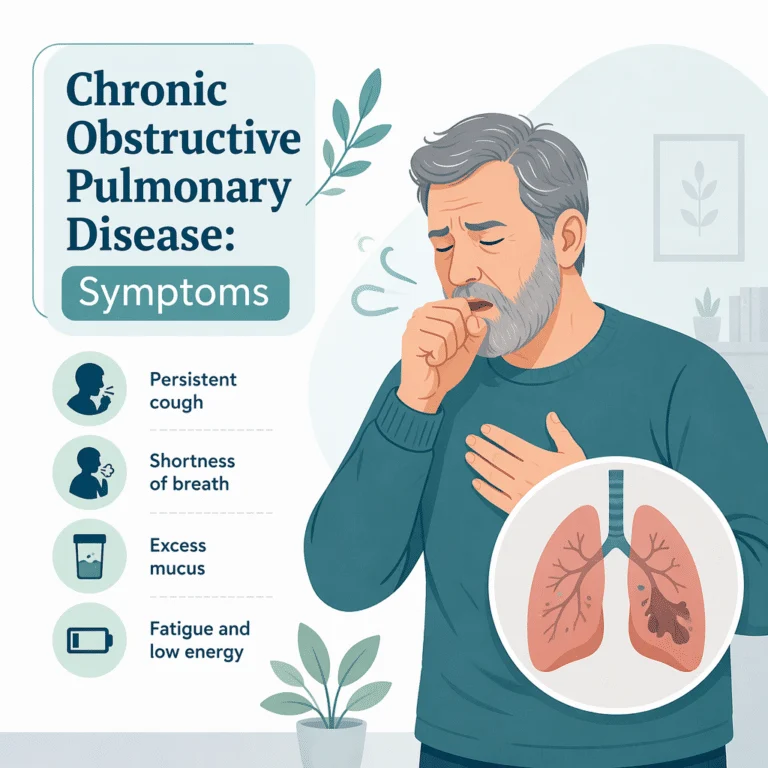
The hallmark symptoms of COPD are a chronic cough, often with mucus, and shortness of breath most noticeable during physical activity such as climbing stairs or carrying groceries. Wheezing and chest tightness are also common. Because these symptoms usually build gradually over years, many people adjust their routines without realizing how much breathing capacity they have lost, which is one reason COPD is often diagnosed later than it could be.
As COPD advances, frequent respiratory infections and ongoing fatigue often develop, and more advanced disease can bring unintentional weight loss or swelling in the ankles and legs. Symptoms can also worsen suddenly during a COPD exacerbation, when breathlessness, coughing, and mucus production all flare over a short period. Recognizing these flare-ups quickly and getting prompt care can make a real difference to long-term lung health, a topic this guide returns to below.
What causes COPD and its risk factors
Cigarette smoking is the leading cause of COPD in the United States, and most people diagnosed with the condition currently smoke or used to. Chemicals in tobacco smoke irritate and inflame the airways over years, gradually destroying lung tissue and narrowing the passages that carry air in and out. Other inhaled irritants raise risk too, including secondhand smoke, workplace dust and chemical fumes, and long-term exposure to indoor or outdoor air pollution.
COPD can also develop in people who have never smoked, which surprises many patients. A history of childhood respiratory infections, having an early asthma diagnosis, and long-term exposure to lung irritants at work or in polluted air can all contribute on their own. A smaller but important share of cases trace back to alpha-1 antitrypsin deficiency, an inherited condition in which the body lacks enough of a protein that normally protects the lungs, letting damage build even without smoking, sometimes at a younger age. Because this genetic cause is easy to miss, testing for it is recommended for everyone diagnosed with COPD, discussed further below.
How COPD is diagnosed
COPD is diagnosed with a breathing test called spirometry, which measures how much air you can forcefully exhale and how quickly. You breathe into a mouthpiece before and after inhaling a bronchodilator, a medication that opens the airways, and the machine compares two numbers: FEV1, the air forced out in the first second, and FVC, the total air exhaled after a full, deep breath. An FEV1/FVC ratio below 0.70 after the bronchodilator, meaning you cannot force out at least 70 percent of your total breath in that first second, confirms obstructed airflow and supports a diagnosis of COPD. A chest X-ray or CT scan often follows to gauge lung damage and rule out a lung tumor or other explanations, while pulse oximetry and, sometimes, an arterial blood gas test measure blood oxygen and carbon dioxide levels.
| GOLD grade | Airflow limitation (post-bronchodilator FEV1) |
|---|---|
| GOLD 1 (mild) | FEV1 80% of predicted or higher |
| GOLD 2 (moderate) | FEV1 between 50% and 79% of predicted |
| GOLD 3 (severe) | FEV1 between 30% and 49% of predicted |
| GOLD 4 (very severe) | FEV1 below 30% of predicted |
Beyond airflow, doctors also place people into GOLD groups A, B, or E based on symptom burden and past-year flare-ups, which helps guide the treatment choices covered next. Blood tests add important information too. Guidelines recommend that everyone diagnosed with COPD have an alpha-1 globulin blood test at least once, since a low result can point to alpha-1 antitrypsin deficiency, the inherited cause described earlier. Checking the blood eosinophil count has also become routine, because a higher count helps identify people likely to benefit from adding an inhaled corticosteroid to their inhalers, while a low count suggests little benefit and more pneumonia risk from that addition. A complete blood count is often ordered as well, and it can show the hemoglobin level and the hematocrit level rising when chronic low oxygen prompts extra red blood cell production, or falling if anemia of chronic disease develops alongside COPD.
Treatment options for COPD
Treatment cannot undo lung damage already done, but it can ease symptoms, reduce flare-ups, and slow COPD’s progression, and the single most effective step at any stage is to stop smoking. Quitting slows lung function decline more than any medication, so smoking cessation support, including counseling and medication, is typically the first recommendation.
| Approach | Role |
|---|---|
| Smoking cessation | Most effective step to slow lung function decline at any stage |
| Bronchodilator inhalers | Long-acting medications that relax airway muscles; the treatment mainstay |
| Triple therapy | Adds an inhaled corticosteroid for frequent exacerbations, especially with higher eosinophils |
| Pulmonary rehabilitation | Supervised exercise and education that improve stamina and daily function |
| Oxygen therapy | For people with low resting blood oxygen; improves survival |
| Vaccination | Flu, COVID-19, pneumococcal, and RSV shots lower serious infection risk |
| Procedural options | Lung volume reduction or transplant for select advanced cases |
Inhaled bronchodilators, which relax the muscles around the airways, are the foundation of ongoing treatment for most people. When exacerbations keep happening despite this, guidelines recommend triple therapy, adding an inhaled corticosteroid to the bronchodilator combination, particularly for people with an elevated blood eosinophil count, who are more likely to benefit and less likely to develop pneumonia from it. Pulmonary rehabilitation, a supervised program of exercise, breathing, and education, is one of the most effective ways to improve daily symptoms. Vaccination against flu, COVID-19, pneumococcal disease, and RSV helps prevent infections that often trigger exacerbations, and for advanced disease, procedures such as lung volume reduction or lung transplant can be considered.
Living with COPD and long-term outlook
COPD cannot be cured, but with a good treatment plan most people can manage their symptoms, stay active, and maintain a good quality of life for years after diagnosis. Staying engaged with pulmonary rehabilitation, keeping up with medications, eating well, and staying active within your ability all help preserve the lung function you have left. Emotional support matters too, since living with a chronic breathing condition can bring anxiety or low mood, and many people benefit from a support group or counselor.
Preventing exacerbations, or flare-ups, is one of the most important parts of living with COPD, because each one can cause a lasting loss of lung function and raises the risk of hospitalization and death, making the disease harder to manage afterward. Exacerbations are usually triggered by a respiratory infection, such as a cold, the flu, or pneumonia, or by exposure to air pollution, smoke, or other irritants, and they tend to become more frequent as COPD advances. Warning signs include worse-than-usual breathlessness, a cough that increases or brings up more mucus, mucus that changes color, and wheezing that feels different from your baseline, and any of these is reason to contact your care team promptly. Because repeated exacerbations speed the decline in lung function, avoiding known triggers, keeping vaccinations current, and following your prescribed inhaler routine are some of the most powerful ways to protect your long-term outlook.
Latest scientific advances in COPD research
Recent research has begun to expand treatment beyond inhalers alone for people whose COPD keeps flaring despite standard therapy. According to PubMed-indexed research, a pooled analysis of two phase 3 trials found that adding the biologic medication dupilumab to standard triple inhaled therapy cut the annual rate of moderate-to-severe exacerbations by about 31 percent in patients with elevated blood eosinophils, a marker of type 2 inflammation (Bhatt et al., 2025), supporting its 2024 approval as the first biologic medication for COPD. What this means for you: if exacerbations continue despite triple therapy, a blood eosinophil count can help your doctor judge whether a biologic add-on is worth discussing.
A separate set of phase 3 trials tested ensifentrine, an inhaled medication that works differently from existing bronchodilators, in people with moderate-to-severe COPD mostly already using other inhalers; over six months it improved lung function and cut exacerbations by 36 to 43 percent, supporting its 2024 approval (Anzueto et al., 2023). What this means for you: newer add-on inhaled options now exist for people still symptomatic on standard bronchodilators, worth asking your doctor about. At the same time, a 2026 study of nearly 4,000 people hospitalized for a severe COPD flare-up found that blood eosinophils were checked in fewer than half of patients, and more than one in five went home without inhaled therapy matching current guidelines (Peukert et al., 2026). What this means for you: after a hospital stay for a flare-up, it is reasonable to ask whether your eosinophil count was checked and your inhalers match current guidance.
Glossary of key COPD terms
| Term | Definition |
|---|---|
| Spirometry | A breathing test measuring how much air you exhale and how quickly, used to diagnose and stage COPD. |
| FEV1 | Forced expiratory volume in one second, the air forced out during the first second of a spirometry test. |
| FVC | Forced vital capacity, the total air exhaled after taking as deep a breath as possible. |
| GOLD grade | A staging system rating how severely airflow is limited, from grade 1, mild, to grade 4, very severe. |
| Exacerbation | A sudden worsening of COPD symptoms, often triggered by infection or irritants; also called a flare-up. |
| Alpha-1 antitrypsin deficiency | An inherited condition that lowers a lung-protecting protein; a less common cause of COPD. |
| Pulmonary rehabilitation | A supervised program of exercise, breathing training, and education that improves daily function. |
Frequently asked questions about COPD
What are the early signs and symptoms of COPD?
Early COPD often causes mild breathlessness during exertion, such as climbing stairs, along with an occasional cough that can be mistaken for a cold or normal aging. As the disease progresses, the cough becomes more persistent and produces mucus, and breathlessness occurs with lighter activity. Because early symptoms are subtle, many people do not seek testing until the disease has advanced.
Is COPD the same as emphysema or chronic bronchitis?
COPD is the umbrella term for both conditions rather than a separate disease. Emphysema involves damage to the air sacs deep in the lungs, while chronic bronchitis involves long-term airway inflammation and mucus production, and most people with COPD have a combination of both.
Can you get COPD without ever smoking?
Yes. While cigarette smoking causes most cases in the United States, COPD can also develop from long-term exposure to secondhand smoke, workplace dust and chemical fumes, air pollution, or repeated childhood respiratory infections. A smaller number of cases are linked to alpha-1 antitrypsin deficiency, an inherited condition that can cause COPD even in people who never smoked.
What is a COPD exacerbation, and what triggers one?
A COPD exacerbation is a flare-up in which breathlessness, coughing, and mucus production suddenly worsen beyond a person’s usual symptoms. Exacerbations are most often triggered by respiratory infections, such as a cold or the flu, or by exposure to air pollution and other irritants.
What is the life expectancy for someone with COPD?
Life expectancy with COPD varies widely and depends on the disease’s severity at diagnosis, whether the person continues smoking, and how well exacerbations are controlled. Many people diagnosed early who quit smoking and stay on top of treatment live for decades, while advanced disease with frequent flare-ups has a greater impact on survival and quality of life.
Is COPD curable, or can it be reversed?
COPD is not curable, and lung damage already done cannot be reversed. It is very treatable, though: quitting smoking, using the right inhalers, staying active through pulmonary rehabilitation, and preventing exacerbations can meaningfully slow the disease’s progression and help people maintain a good quality of life for years.
Sources
- National Heart, Lung, and Blood Institute — COPD — NHLBI, 2024 — nhlbi.nih.gov
- MedlinePlus, National Library of Medicine — COPD — MedlinePlus, 2024 — medlineplus.gov
- Cleveland Clinic — Chronic Obstructive Pulmonary Disease (COPD) — Cleveland Clinic Health Library, 2023 — my.clevelandclinic.org
- Bhatt et al. — Dupilumab for chronic obstructive pulmonary disease with type 2 inflammation: a pooled analysis of two phase 3, randomised, double-blind, placebo-controlled trials — The Lancet Respiratory Medicine, 2025 — doi.org/10.1016/S2213-2600(24)00409-0
- Anzueto et al. — Ensifentrine, a Novel Phosphodiesterase 3 and 4 Inhibitor for the Treatment of Chronic Obstructive Pulmonary Disease: Randomized, Double-Blind, Placebo-Controlled, Multicenter Phase III Trials (the ENHANCE Trials) — American Journal of Respiratory and Critical Care Medicine, 2023 — doi.org/10.1164/rccm.202306-0944OC
- Peukert et al. — GOLD-concordant inhaled maintenance therapy at hospital discharge after hospitalisation for severe COPD exacerbation: a multicentre retrospective observational study — The Lancet Regional Health – Europe, 2026 — doi.org/10.1016/j.lanepe.2026.101776
Further reading
- See how a short-term illness differs from COPD in this guide to the short recovery course of acute bronchitis.
- Learn about a lung infection that can trigger a flare-up in this guide to the symptoms and treatment of pneumonia.
- Build confidence reading test results with this guide to reference ranges, flags, and next steps on a lab report.
Understand your lab results with BloodSense
COPD care leans on more than a breathing test: alpha-1 antitrypsin screening, the blood eosinophil count, and a complete blood count all add pieces to the picture, from uncovering a genetic cause to guiding which inhaler combination is likely to help. Seeing where each value falls against its reference range makes it easier to discuss with your pulmonologist or primary care doctor, especially after a hospital stay or a change in symptoms. BloodSense translates a full lab report into plain language, showing what each marker means and helping you track changes over time instead of reading one line in isolation.