






Chlamydia: Symptoms, Causes, and Treatment Options
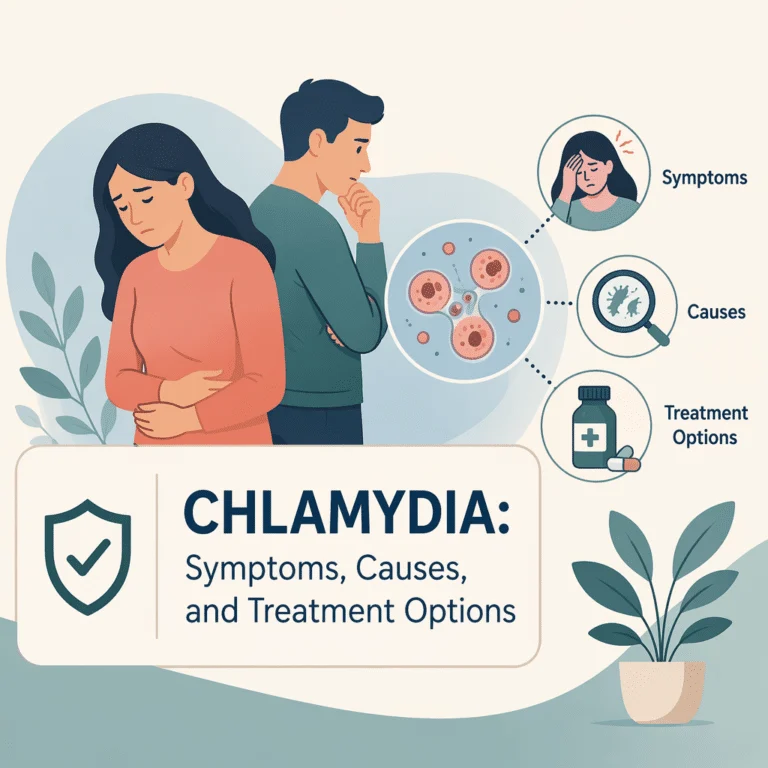
Chlamydia is a common bacterial infection spread through vaginal, anal, or oral sex, and it is the most frequently reported sexually transmitted infection in the United States. Most infections cause no symptoms at all, which is exactly why routine screening, rather than waiting to notice something wrong, is the most reliable way to catch it. That silence can sound unsettling, but chlamydia is simple to test for and completely curable with a short course of antibiotics, and treating it early prevents nearly all of its more serious complications. This guide explains what chlamydia is, its symptoms, causes, how it is diagnosed, the treatments available, and the latest research.
What is chlamydia?
Chlamydia is an infection caused by the bacterium Chlamydia trachomatis, one of the most common sexually transmitted infections in the United States. It spreads through vaginal, anal, or oral sex with a partner who has the infection, and because it so often causes no symptoms, many people carry and pass along chlamydia without ever knowing it.
More than 1.5 million cases were reported in the United States in 2024, making chlamydia the most frequently reported bacterial STI in the country, though case counts have fallen for two years in a row. Women carry the largest share of the burden, and rates have historically been highest among people aged 15 to 24, but anyone who is sexually active can get chlamydia. Because it is both extremely common and usually silent, chlamydia is best treated as a routine screening matter rather than a symptom to watch for.
Symptoms of chlamydia
Most people with chlamydia have no symptoms at all, which is exactly why screening matters more than watching for warning signs. When symptoms do occur in women, they can include an unusual vaginal discharge, a burning feeling when urinating, bleeding between periods or after sex, pain during sex, and mild pain in the lower abdomen or pelvis. In men, symptoms are also often absent but can include discharge from the penis, burning with urination, and, less commonly, pain or swelling in the testicles.
Chlamydia can also infect the rectum, from receptive anal sex or from an infection spreading from the genitals, and the throat, from oral sex; both of these are usually silent as well, though a rectal infection can sometimes cause pain, discharge, or bleeding. Because symptoms are so often absent or mild no matter which body site is involved, many people do not know they are infected until a routine test comes back positive or a partner is diagnosed, which is exactly the reasoning behind the screening recommendations described below.
What causes chlamydia and its risk factors
Chlamydia is caused by infection with the bacterium Chlamydia trachomatis, which spreads through vaginal, anal, or oral sex with a partner who has the infection. It does not spread through casual contact such as sharing food, toilet seats, or swimming pools. A pregnant person can also pass chlamydia to a baby during vaginal delivery, which can cause conjunctivitis or pneumonia in the newborn, so screening during pregnancy protects two people at once.
Anyone who is sexually active can get chlamydia, but risk is higher with a new or multiple sex partners, inconsistent condom use, and a previous sexually transmitted infection, and rates have historically been highest among people under 25. Because chlamydia and gonorrhea spread the same way and often occur together, testing for one usually means testing for the other, and understanding the symptoms and treatment of gonorrhea rounds out the picture for anyone diagnosed with either infection. Left untreated, chlamydia also makes it easier to acquire or pass along HIV, which is one more reason consistent screening matters even when nothing feels wrong.
How chlamydia is diagnosed
Chlamydia is diagnosed with a nucleic acid amplification test, or NAAT, run on a first-catch urine sample or a swab from the vagina, cervix, rectum, or throat, depending on where exposure may have occurred. This detail is worth underlining because it surprises many people: chlamydia is not diagnosed with a blood test, even though blood work is used to check so many other health conditions. Self-collected vaginal swabs, whether taken at a clinic or as part of an at-home kit, perform about as well as swabs collected by a clinician, though a positive result should still be confirmed and treated by a healthcare provider rather than managed alone.
| Who | Recommended screening |
|---|---|
| Sexually active women under 25 | Annual screening |
| Women 25 and older with risk factors (new or multiple partners, inconsistent condom use, or a past STI) | Annual screening |
| Pregnant women | Screening early in pregnancy, with repeat testing in the third trimester for those under 25 or with risk factors |
| Sexually active gay, bisexual, and other men who have sex with men | At least annual screening at exposed sites (urethra, rectum, throat); every 3 to 6 months if at higher risk, including those on PrEP or living with HIV |
Because chlamydia often accompanies other infections, clinicians typically run the same urine or swab NAAT to also check for gonorrhea, and many recommend an HIV test at the same visit along with a syphilis test, particularly for people with new or multiple partners. If burning with urination is the main complaint, a clinician may also order a urine culture test or check the white blood cell count on a urine test, since a routine urinary tract infection can feel a lot like chlamydia. A broader sexual health visit sometimes also includes recognizing the symptoms and causes of herpes, another common infection sometimes checked for at the same time. Learning how to read the flags and reference ranges on a lab report can help you make sense of NAAT and any co-testing results together.
Treatment options for chlamydia
Chlamydia is completely curable with the right antibiotics, and most people feel back to normal quickly once treatment begins. The Centers for Disease Control and Prevention recommends doxycycline, 100 milligrams taken by mouth twice a day for 7 days, as the preferred treatment for most people with chlamydia, a shift from the single-dose azithromycin regimen once used routinely.
| Approach | Role |
|---|---|
| Doxycycline | CDC-preferred first-line antibiotic; 100 mg taken twice daily for 7 days |
| Azithromycin | A single 1-gram dose used mainly during pregnancy, when doxycycline is not recommended |
| Partner treatment | Evaluating and treating all sex partners from the preceding 60 days, including expedited partner therapy where allowed |
| Retesting after treatment | Repeat testing around 3 months later to catch reinfection, since most repeat positives come from a new exposure rather than treatment failure |
| Doxycycline post-exposure prophylaxis (doxy-PEP) | A single 200 mg dose within 72 hours of condomless sex, for some gay and bisexual men and transgender women with a bacterial STI in the past year; prevents future infection rather than treating one already present |
People treated for chlamydia should abstain from sex for a full 7 days after finishing the antibiotic course and until any sex partners have also completed treatment, to avoid passing the infection back and forth. Because reinfection is common, everyone diagnosed with chlamydia should have recent sex partners evaluated and treated, sometimes through expedited partner therapy, which lets a clinician treat a partner without an in-person exam first. Retesting around 3 months after treatment is recommended for nearly everyone who was treated, regardless of whether partners were treated, because a positive result at that point usually reflects a new exposure rather than a failure of the original antibiotics. Doxy-PEP, a single 200 mg dose of doxycycline taken within 72 hours of condomless sex, can meaningfully lower future chlamydia risk for some gay and bisexual men and transgender women with a bacterial STI in the past year, but it is a prevention strategy for people at ongoing risk, not a treatment for an existing infection, and it works more reliably against chlamydia than against gonorrhea.
Living with chlamydia and long-term outlook
Chlamydia is entirely curable, and completing treatment clears the infection for the vast majority of people. The bigger concern is not the infection itself but what can happen if it goes unnoticed for a long time, since chlamydia so often causes no symptoms in the first place. In women, an infection that goes untreated can travel into the uterus and fallopian tubes and cause pelvic inflammatory disease, which can lead to chronic pelvic pain, ectopic pregnancy, and infertility from scarring. In men, an untreated infection can occasionally cause epididymitis, a painful swelling of the tube behind the testicle, and in either sex, chlamydia has been linked to a reactive arthritis.
None of this is a reason for alarm; it is a reason for regular screening, since catching chlamydia early becomes far easier once testing is routine rather than symptom-driven. People who are treated, retested around 3 months later, and screened again on the recommended schedule going forward can expect chlamydia to be a manageable, fully treatable part of their health history rather than a lasting problem. Having chlamydia says nothing about anyone’s character; it is an extremely common infection, and open conversations with partners about testing, along with consistent condom use, further lower the chances of getting it again.
Latest scientific advances in chlamydia research
According to PubMed-indexed research, a 2026 systematic review and meta-analysis pooling 10 randomized trials in more than 1,100 men found that doxycycline cured chlamydia more often than a single dose of azithromycin, with cure rates of about 93 percent versus 81 percent, and the biggest advantage appeared in rectal infections (Boujemaa et al., 2026). What this means for you: this trial-level evidence reinforces why doxycycline is now the preferred first choice for chlamydia, especially for rectal infections. A related 2026 study following more than 33,000 gay and bisexual men and transgender women using doxy-PEP found that its protection against chlamydia, about 66.5 percent, and against syphilis, about 60.7 percent, held up for more than two years, but its protection against gonorrhea largely disappeared as tetracycline-resistant strains became more common (Yechezkel et al., 2026). What this means for you: doxy-PEP can durably lower chlamydia risk for people who are eligible, but it should not be relied on to prevent gonorrhea.
Testing is also getting faster without sacrificing accuracy. A 2025 study evaluating a point-of-care NAAT platform across 13 US sites, including Planned Parenthood clinics, found that self-collected urine and vaginal swabs performed comparably to samples collected by a clinician, with lab-quality results available in about 20 minutes and no meaningful accuracy gap between trained staff and first-time users (Van Der Pol et al., 2025). What this means for you: self-collection is a reliable option for chlamydia testing, and same-visit results may soon mean less time between a test and starting treatment. Together, these studies point toward chlamydia care that is more accurate, with doxycycline as the trial-backed first choice, and more convenient, with fast, self-collected testing becoming a validated part of routine screening.
Glossary of key chlamydia terms
| Term | Definition |
|---|---|
| NAAT | A highly sensitive test that detects the genetic material of Chlamydia trachomatis in urine or a swab sample. |
| Chlamydia trachomatis | The bacterium that causes chlamydia infection. |
| Asymptomatic | Having an infection without any noticeable symptoms, which describes most chlamydia cases. |
| Pelvic inflammatory disease | An infection of the uterus, fallopian tubes, or ovaries that can follow untreated chlamydia. |
| Expedited partner therapy | A practice that lets a clinician give a patient medication or a prescription to deliver to a sex partner without that partner being examined first. |
| Doxy-PEP | A single preventive dose of doxycycline taken after condomless sex to lower the chance of some bacterial STIs. |
| Reinfection | A new chlamydia infection after successful treatment, usually from an untreated partner rather than a failed cure. |
Frequently asked questions about chlamydia
What is chlamydia and how do you get it?
Chlamydia is a common bacterial infection caused by Chlamydia trachomatis, spread through vaginal, anal, or oral sex with a partner who has the infection. It does not spread through casual contact, and a person can have chlamydia without knowing it, since most infections cause no symptoms.
What are the symptoms of chlamydia in women?
Most women with chlamydia have no symptoms at all. When symptoms do appear, they can include abnormal vaginal discharge, burning with urination, bleeding between periods or after sex, pain during sex, and mild pelvic or lower abdominal pain.
What are the symptoms of chlamydia in men?
Many men with chlamydia also have no symptoms. When present, symptoms can include discharge from the penis and burning with urination, with testicular pain or swelling occurring less often.
Is chlamydia diagnosed with a blood test?
No. Chlamydia is diagnosed with a nucleic acid amplification test, or NAAT, performed on a first-catch urine sample or a swab from the vagina, cervix, rectum, or throat. There is no blood test used to diagnose a current chlamydia infection.
What is the treatment for chlamydia, doxycycline or azithromycin?
The CDC-preferred treatment is doxycycline, 100 milligrams taken twice a day for 7 days, which cures chlamydia more reliably than the older single-dose azithromycin regimen. Azithromycin is still used during pregnancy, when doxycycline is not recommended.
Can you get chlamydia again after being treated?
Yes. Chlamydia does not create immunity, so a person can be reinfected, usually from an untreated partner rather than a failure of the original treatment. This is why retesting around 3 months after treatment is recommended, along with making sure all recent partners are treated too.
Sources
- Centers for Disease Control and Prevention — About Chlamydia — CDC, 2024 — cdc.gov
- Centers for Disease Control and Prevention — Sexually Transmitted Infections Treatment Guidelines: Chlamydial Infections — CDC, 2021 — cdc.gov
- MedlinePlus, National Library of Medicine — Chlamydia Infections — MedlinePlus, 2024 — medlineplus.gov
- Boujemaa et al. — Efficacy and safety of doxycycline versus azithromycin for the treatment of Chlamydia trachomatis in cis-men: A systematic review and meta-analysis — International Journal of STD & AIDS, 2026 — doi.org/10.1177/09564624261435919
- Yechezkel et al. — Durability of doxycycline effectiveness against gonorrhoea after implementation of post-exposure prophylaxis in southern California, USA: a retrospective, test-negative, observational study — The Lancet Infectious Diseases, 2026 — doi.org/10.1016/S1473-3099(26)00123-4
- Van Der Pol et al. — Sensitivity and specificity of the Cobas Liat CT/NG/MG nucleic acid test in a clinical laboratory setting and point-of-care location — Journal of Clinical Microbiology, 2025 — doi.org/10.1128/jcm.00706-25
Further reading
- See how a related bacterial STI compares in this guide to gonorrhea symptoms, causes, and treatment.
- Compare symptoms across common infections in this guide to herpes symptoms and causes.
- Understand a test often ordered at the same visit in this guide to interpreting an HIV test result.
- Learn what a lab checks for in a urine sample with this guide to understanding a urine culture.
- Explore a marker that flags urinary inflammation in this guide to white blood cells in a urine test.
- Build confidence reading test results with this guide to reference ranges, flags, and next steps on a lab report.
Understand your lab results with BloodSense
Chlamydia care leans on lab testing at every stage: a NAAT to diagnose the infection, often paired with an HIV test and other STI screening at the same visit, and a repeat test around 3 months after treatment to catch reinfection early. Seeing those results laid out clearly, including any related findings from a urine culture or a white blood cell count when urinary symptoms overlap, makes it easier to understand exactly what was checked, what came back positive or negative, and what happens next with your care team.