






A stool pH test measures how acidic or alkaline a sample of stool is, and it is used mainly to find out whether sugars from food are being absorbed properly in the small intestine. It is a small, inexpensive measurement that rarely stands on its own, but in the right situation it points a clinician toward a very specific problem: carbohydrate that never got absorbed and was fermented by bacteria further down the gut. The test is most often ordered for infants and young children with persistent watery diarrhea, and less often for adults being assessed for malabsorption. In this article you will learn what the number actually reflects, how reference ranges differ between breastfed infants, formula-fed infants and adults, what acidic and alkaline results tend to suggest, which tests are read alongside it, and which collection mistakes quietly distort the result.
What a stool pH test measures
pH is a scale that runs from 0 to 14. Below 7 is acidic, 7 is neutral, and above 7 is alkaline. A stool pH test simply places a sample on that scale, either with a calibrated pH meter or with an indicator strip, and reports a single number to one decimal place.
That number is not a direct measure of the diet. It is a measure of what the bacteria living in the colon have been doing. Carbohydrate that the small intestine absorbs normally never reaches those bacteria. Carbohydrate that is not absorbed does reach them, and they ferment it.
Why unabsorbed sugar makes stool acidic
When colonic bacteria break down leftover sugars such as lactose, sucrose or starch, they produce short-chain fatty acids, mostly acetate, propionate and butyrate, along with lactic acid and gas. Those acids lower the pH of the stool. The more unabsorbed sugar arrives in the colon, the more acid is produced and the lower the pH falls. The same fermentation also draws water into the bowel, which is why acidic stool and watery, explosive diarrhea often appear together, and why the surrounding skin can become sore.
An alkaline result reflects the opposite situation: little or no sugar fermentation, and often more protein breakdown or more rapid transit. To interpret either pattern you also need the rest of the stool picture, which is why clinicians rarely look at pH without also checking appearance and texture. If you are learning to read a stool report as a whole, start with our stool consistency results guide.
Normal stool pH ranges and how they differ by age
There is no single universal cutoff. Laboratories set their own reference intervals, methods differ, and age and diet shift the expected value substantially. The figures below are the ones most commonly quoted in clinical practice, and they should always be read against the range printed on your own report.
| Group | Commonly quoted stool pH | What it usually reflects |
|---|---|---|
| Breastfed infant | About 5.0 to 6.0 | A bifidobacteria-rich gut fermenting human milk sugars, producing acetate and lactate |
| Formula-fed infant | About 6.0 to 7.5 | A more mixed bacterial community and less lactate production, so a higher baseline |
| Older child and adult | About 6.0 to 7.5 | A mature, mostly neutral colonic environment on a mixed diet |
| Result below about 5.5 in a child | Flagged as acidic | Raises the question of carbohydrate malabsorption, classically lactose |
| Result above about 7.5 | Flagged as alkaline | Raises the question of infection, inflammation, rapid transit or bacterial overgrowth |
Two practical points follow from this table. First, a value of 5.6 in a healthy breastfed baby with normal weight gain is usually meaningless on its own. Second, the same value in a bottle-fed baby with weeks of frothy diarrhea and poor growth is worth investigating. Context does most of the work, which is a recurring theme in reading any laboratory report and one we cover in our guide to reference ranges and result flags.
What an acidic stool pH result can suggest
An acidic result tells you that fermentable carbohydrate reached the colon. It does not tell you why. Several different problems produce the same chemistry.
Lactose intolerance and lactase deficiency
Lactase is the enzyme in the small intestine that splits lactose, the sugar in milk. When lactase activity is low, lactose passes through undigested and is fermented in the colon. In adults this is extremely common and usually harmless; primary lactase decline with age affects a majority of the world’s population. In infants it is far less common, and a genuinely low stool pH with diarrhea deserves a proper workup rather than an assumption.
Congenital and acquired disaccharidase deficiency
Disaccharidases are the small-intestinal enzymes that split double sugars. Beyond lactase, sucrase-isomaltase splits table sugar and part of starch. Genetic sucrase-isomaltase deficiency can present in infancy when sucrose is first introduced, and milder inherited variants can surface much later with symptoms that overlap with irritable bowel syndrome. If bloating and loose stools after starchy or sugary meals sound familiar, it is worth reading our irritable bowel syndrome overview.
Post-infectious and mucosal malabsorption
The enzymes that digest sugars sit on the tips of the intestinal villi, the tiny finger-like projections lining the small intestine. Anything that damages that surface temporarily strips them away. A rotavirus or other viral gastroenteritis is the classic example: the child recovers from the acute illness but keeps having acidic, watery stools for a few weeks until the villi regrow. Celiac disease damages the same surface for a different reason and can produce a similar picture. To see how an acute infection is confirmed, look at our rotavirus antigen test guide, and for the autoimmune cause consult our celiac disease overview.
Short bowel and rapid transit
If a length of small intestine has been removed surgically, or if food moves through too quickly to be absorbed, sugars arrive in the colon regardless of how good the enzymes are. Stool pH falls for purely mechanical reasons. The same applies to very high intakes of poorly absorbed sweeteners such as sorbitol.
What an alkaline stool pH result can suggest
Alkaline stool is a less specific finding, but it points away from sugar malabsorption and toward a handful of other processes.
- Small intestinal bacterial overgrowth, where bacteria colonize a part of the gut that should be relatively sparse and shift the balance of what is produced.
- Secretory diarrhea, in which the bowel actively pumps out fluid and salts, diluting the acids that fermentation would normally generate.
- Colonic inflammation, including inflammatory bowel disease, where protein breakdown and tissue damage change the chemistry. Clinicians usually confirm this with an inflammation marker rather than pH, and you can review the main one in our fecal calprotectin results guide.
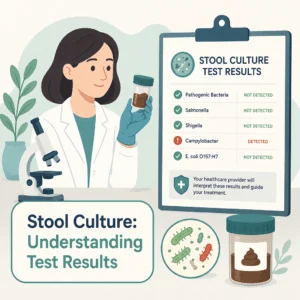
- Certain bacterial infections, which may also be picked up by a culture. Our stool culture results guide explains what that involves.
- A sample that simply sat too long before it was measured, which is discussed below and is a common and underrated explanation.
Tests that are read alongside a stool pH test
A stool pH test is almost never interpreted alone, because on its own it can only say that fermentation happened or did not. The companion tests below convert that hint into an answer.
| Companion test | What it adds |
|---|---|
| Reducing substances in stool | Detects unabsorbed sugars directly. Paired with a low pH it makes carbohydrate malabsorption much more likely than either result alone |
| Fecal fat and fat droplets | Separates a sugar problem from a fat problem, and points toward the pancreas or the bile system |
| Fecal elastase | Measures how well the pancreas is producing digestive enzymes |
| Fecal calprotectin or lactoferrin | Distinguishes an inflammatory cause from a purely absorptive one |
| Hydrogen or methane breath testing | Confirms lactose or other sugar malabsorption in older children and adults after a measured dose |
| Stool culture and parasite testing | Rules out an infectious cause of the diarrhea before malabsorption is blamed |
Each of these has its own report and its own pitfalls. Check pancreatic enzyme output by reading our fecal elastase results guide, assess fat digestion with our fat droplets results guide, and rule out parasites such as Giardia duodenalis with a dedicated ova and parasites panel.
When protein loss is suspected instead
If a child has diarrhea, poor growth and low blood protein, the question shifts from sugar to protein leaking out of the gut wall. That is measured with a different marker, explained in our alpha-1 antitrypsin results guide.
Collection and timing mistakes that distort the result
Stool pH is chemically fragile. More false results come from handling than from biology, and most of them push the number in a predictable direction.
- Delay before measurement. Bacteria keep fermenting in the container, and volatile acids evaporate. A sample left at room temperature drifts, so most laboratories want it fresh or chilled and measured quickly.
- Contamination with urine. Urine dilutes the sample and shifts the reading, which is why a fresh sample should be taken from a diaper liner or collection device rather than from a soaked diaper.
- Water or absorbed liquid. A liquid stool that has soaked into a diaper leaves the acids behind and yields a misleadingly high value.
- Recent antibiotics. Antibiotics reduce the bacteria that ferment sugar, so a genuinely malabsorbing child can produce a falsely normal or high pH for days to weeks.
- Diet at the time of collection. A child who has already been switched to a lactose-free formula may test normally, which is useful to know but can mask the diagnosis if nobody records the change.
- Barium, laxatives, mineral oil and some antacids, which alter both the chemistry and the texture of the sample.
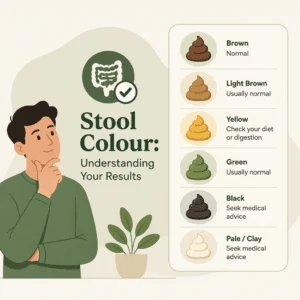
Because these variables also change how the stool looks, the appearance recorded on the report is a useful cross-check. Compare unusual shades against our stool color results guide.
What happens next, and when to see a doctor
An isolated abnormal stool pH test rarely leads straight to a diagnosis. In practice a clinician will repeat the measurement on a properly collected sample, add reducing substances and an inflammation or infection marker, and look at the child’s growth chart. If carbohydrate malabsorption still looks likely, the next step is usually a supervised dietary change, sometimes followed by breath testing in an older child or adult, and in rare, severe or clearly congenital cases a small-bowel biopsy with enzyme measurement.
Signs that should prompt medical attention
- An infant who is losing weight, crossing downward through growth percentiles, or failing to thrive.
- Diarrhea lasting more than about two weeks, or diarrhea that keeps returning after each feed.
- Signs of dehydration, including fewer wet diapers, a dry mouth, sunken eyes, unusual sleepiness or no tears when crying.
- Blood in the stool, black tarry stools, or persistent severe abdominal pain.
- Fever with diarrhea, or diarrhea after recent antibiotic use.
- Unexplained weight loss, anemia or nutritional deficiencies in an adult with chronic loose stools.
Blood in the stool is never explained by pH and should be assessed separately, which our fecal occult blood test results guide describes. Diarrhea that follows a course of antibiotics also has its own specific toxin test, which a clinician can order separately.
Latest scientific advances
Research from the last three years has not changed how a stool pH test is ordered, but it has clarified what the number represents and where the field is heading. Everything below is early or supportive evidence rather than settled practice.
Stool pH tracks what feeding does to an infant’s gut
A randomized trial in healthy Chinese infants, published in 2025, compared formulas containing different combinations of prebiotic fibers and a Bifidobacterium strain, with breastfed babies as a reference group. Alongside microbial sequencing, the researchers measured stool pH, short-chain fatty acids and lactic acid. The formulas that encouraged a bifidobacteria-rich gut shifted stool chemistry closer to the breastfed pattern. What this means for you: a low pH in a thriving breastfed baby is a sign of a normally developing gut, not a red flag. A randomized trial, one where participants are assigned to groups by chance, is a strong design, but this one measured gut chemistry rather than long-term health.
A probiotic changed stool acidity in a controlled infant trial
A 2023 randomized, double-blind, placebo-controlled trial in the Philippines gave healthy term infants a Bifidobacterium longum subspecies infantis strain and followed growth, stool patterns, fecal pH and organic acids. Supplemented infants grew normally and produced more fecal acetate, one of the acids that lowers pH, with the clearest effect in exclusively breastfed babies. What this means for you: stool acidity responds to what feeds the bacteria, which is one more reason not to read a single value in isolation.
Sugar-splitting enzyme deficiency is broader than once thought
A 2024 clinical review in a pediatric gastroenterology journal argued that sucrase-isomaltase deficiency, long considered a rare condition of infancy, spans a spectrum. Milder inherited variants can appear later in life with symptoms that look like irritable bowel syndrome. The authors noted that testing enzyme activity on a small-bowel sample remains the reference standard and that breath tests need further validation. What this means for you: if starchy or sugary meals reliably trigger bloating and loose stools, an enzyme problem is worth raising with a clinician even in adulthood. This is a narrative review, so it summarizes the field rather than proving a new fact.
Self-reported lactose intolerance is often wrong
A 2024 systematic review looked at six studies covering roughly 845 adults with irritable bowel syndrome and compared what people believed about their lactose tolerance with objective test results. Self-diagnosis matched testing only moderately well, and many people who avoided dairy did not actually malabsorb lactose. The authors concluded that lactose-free diets and routine breath testing should not be applied to everyone with these symptoms. What this means for you: before cutting out a whole food group, objective testing is worth having. A systematic review, a structured pooling of existing studies, is among the more reliable forms of evidence, though it can only be as good as the studies it collects.
Measuring fermentation acids is still not standardized
A 2025 systematic review and meta-analysis pooled studies comparing fecal short-chain fatty acids in people with colorectal cancer and healthy controls. Levels of butyrate and, to a lesser degree, acetate were lower in the cancer group, suggesting reduced microbial fermentation. The authors were explicit that measurement methods vary too much between laboratories for this to be used clinically yet. What this means for you: the acids behind your stool pH are of real scientific interest, but detailed fermentation profiling is a research tool, not something to request as a screening test.
Glossary
| Term | Definition |
|---|---|
| pH | A scale from 0 to 14 describing how acidic or alkaline something is. Below 7 is acidic, 7 is neutral, above 7 is alkaline. |
| Carbohydrate malabsorption | A situation in which sugars or starches are not absorbed in the small intestine and pass into the colon instead. |
| Fermentation | The process by which gut bacteria break down leftover sugars, producing acids and gas. |
| Short-chain fatty acids | Small acids such as acetate, propionate and butyrate made by bacterial fermentation. They lower stool pH and feed the cells lining the colon. |
| Disaccharidase | An enzyme on the surface of the small intestine that splits a double sugar into single sugars. Lactase and sucrase-isomaltase are the best known. |
| Reducing substances | A stool test that detects unabsorbed sugars directly. It is usually ordered together with stool pH. |
| Villi | Tiny finger-like projections lining the small intestine that carry the enzymes and surface needed for absorption. |
| Secretory diarrhea | Diarrhea caused by the bowel actively releasing fluid and salts, rather than by unabsorbed food drawing water in. |
| Bacterial overgrowth | An excess of bacteria in the small intestine, where numbers are normally low, which can disturb digestion. |
| Failure to thrive | A pattern in which a child does not gain weight or grow at the expected rate for their age. |
FAQ
What is a normal stool pH?
For older children and adults, most laboratories treat a value between roughly 6.0 and 7.5 as normal. Breastfed infants normally sit lower, often around 5.0 to 6.0, because human milk sugars feed acid-producing bacteria. Formula-fed infants generally fall between those two patterns. Because methods and reference intervals differ between laboratories, the range printed on your own report is the one that counts. A value slightly outside it, in someone who feels well and is growing normally, usually means very little.
What does acidic stool mean in a baby?
It usually means that sugar from milk or formula reached the colon instead of being absorbed, and bacteria fermented it into acids. In a thriving, breastfed baby this is often simply normal. It becomes clinically interesting when it is combined with watery or frothy diarrhea, a sore bottom from the acidity, poor weight gain, or symptoms that started after a stomach bug. In that setting a clinician will usually repeat the test, add a reducing substances test, and review feeding and growth before considering lactose intolerance or another absorption problem.
Does diet change stool pH?
Yes, considerably. Fermentable fibers, resistant starch and milk sugars all feed the bacteria that produce acid, so a diet rich in them tends to lower pH. A diet high in protein and low in fermentable carbohydrate tends to raise it. Feeding type matters most in infancy, where breastfeeding, formula composition and added prebiotics all measurably shift stool chemistry. This sensitivity to diet is exactly why a single value cannot diagnose anything by itself, and why clinicians ask what someone has been eating in the days before the sample.
How is a stool pH test done?
A fresh sample is collected, ideally without any contact with urine or absorbent material, and sent to the laboratory quickly or kept cold. In infants, a plastic liner placed inside the diaper is often used so the liquid part of the stool is not soaked up. In the laboratory the sample is placed on an indicator strip or measured with a pH meter, and the result is reported as a single number. No preparation, fasting or medication change is normally required, although you should tell your clinician about any recent antibiotics.
What is tested alongside a stool pH test?
Reducing substances are the most common companion, because together they build a much stronger case for carbohydrate malabsorption than either does alone. Depending on the symptoms, a clinician may add fecal fat or fat droplets, fecal elastase for pancreatic function, calprotectin or lactoferrin for inflammation, and a culture or parasite panel to exclude infection. In older children and adults, a hydrogen or methane breath test after a measured dose of lactose is often the step that confirms or rules out the diagnosis.
Can a stool pH test diagnose lactose intolerance on its own?
No. A low value is consistent with lactose intolerance but is equally consistent with any other cause of unabsorbed sugar, including a recent viral infection, another enzyme deficiency, celiac disease or rapid transit. It can also be low in perfectly healthy breastfed infants. Diagnosis rests on the whole picture: symptoms, growth, response to removing lactose under supervision, and where appropriate a breath test or enzyme measurement. Treat the pH number as one piece of evidence that helps a clinician decide what to test next.
Sources
- Cleveland Clinic — Lactose Intolerance: Symptoms, Diagnostic Tests and Treatment — Cleveland Clinic Health Library — my.clevelandclinic.org
- National Institute of Diabetes and Digestive and Kidney Diseases — Diagnosis of Lactose Intolerance — NIDDK, National Institutes of Health — niddk.nih.gov
- MedlinePlus, National Library of Medicine — Lactose Intolerance — MedlinePlus Health Topic — medlineplus.gov
- Mayo Clinic — Lactose Intolerance: Diagnosis and Treatment — Mayo Clinic — mayoclinic.org
- Danialifar TF, Chumpitazi BP, Mehta DI, Di Lorenzo C — Genetic and acquired sucrase-isomaltase deficiency: A clinical review — Journal of Pediatric Gastroenterology and Nutrition, 2024 — doi.org/10.1002/jpn3.12151
- Pop A, Popa SL, Pop DD, Ismaiel A, Nechita VI, Dumitrascu DL — Self-Perceived Lactose Intolerance Versus Confirmed Lactose Intolerance in Irritable Bowel Syndrome: A Systematic Review — Journal of Gastrointestinal and Liver Diseases, 2024 — doi.org/10.15403/jgld-5836
- Wang Y, Wopereis H, Kakourou A, et al — Restoration of gut microbiota with a specific synbiotic-containing infant formula in healthy Chinese infants born by cesarean section — European Journal of Clinical Nutrition, 2025 — doi.org/10.1038/s41430-025-01571-8
- Capeding MRZ, Phee LCM, Ming C, et al — Safety, efficacy, and impact on gut microbial ecology of a Bifidobacterium longum subspecies infantis LMG11588 supplementation in healthy term infants: a randomized, double-blind, controlled trial in the Philippines — Frontiers in Nutrition, 2023 — doi.org/10.3389/fnut.2023.1319873
- Sylwestrzak T, Ciosek M, Pastuszak K, Jastrzebski T — Fecal Short-Chain Fatty Acids in Colorectal Cancer Patients Versus Healthy Controls: A Systematic Review and Meta-Analysis — Journal of Clinical Medicine, 2025 — doi.org/10.3390/jcm14248949
Further reading
- Check how well your pancreas releases digestive enzymes by reading our fecal elastase results guide.
- Separate an inflammatory cause from an absorption problem with our fecal lactoferrin results guide.
- Investigate fat that is not being absorbed by consulting our fat droplets results guide.
- Understand the infections that trigger sudden watery diarrhea with our gastroenteritis overview.
- Explore the inherited condition that affects both digestion and the lungs in our cystic fibrosis overview.
Understand your lab results with BloodSense
A stool pH value only makes sense next to the rest of the panel, and most reports arrive without that context. BloodSense reads your results together, so a low pH sits alongside reducing substances, fat droplets, fecal elastase and inflammation markers instead of standing alone. It explains in plain language what each number suggests and which questions are worth raising, and it helps you understand your report rather than guess at it. It does not diagnose, and it does not replace your doctor.