






Rotavirus was, until recently, the single leading cause of severe diarrhea in young children worldwide. Vaccination has changed that picture dramatically in countries with established programs, cutting hospitalizations for rotavirus gastroenteritis by 70% to 90%. The testing question has changed with it: a positive rotavirus antigen result is now less common, and interpreting one requires knowing whether the child has been vaccinated and when.
The rotavirus antigen test remains the fastest and cheapest way to identify the virus in a stool sample, and in the right clinical situation it delivers a useful answer in under half an hour.
What is the rotavirus antigen?
Rotavirus is a double-stranded RNA virus with a distinctive wheel-shaped appearance under electron microscopy, which is where its name comes from. It infects the mature enterocytes lining the small intestine.
The antigen detected by stool testing is usually VP6, the inner capsid protein shared across all group A rotaviruses, which are the strains responsible for essentially all human disease. Because VP6 is common to the whole group, an antigen test identifies rotavirus generally rather than distinguishing between strains. It is detected by enzyme immunoassay or by rapid lateral flow immunochromatography, in which antibodies fixed to a test strip capture the antigen and produce a visible line.
Behind the scenes: how rotavirus causes disease
Rotavirus infects the tips of the intestinal villi, the finger-like projections that absorb nutrients and fluid. Three mechanisms then combine to produce the characteristic profuse watery diarrhea.
- Destruction of mature absorptive cells reduces the surface area available for fluid uptake
- Loss of brush border enzymes, particularly lactase, causes undigested sugars to remain in the gut and draw water in osmotically
- The viral protein NSP4 acts as an enterotoxin, directly stimulating chloride and fluid secretion
The incubation period is one to three days. Illness typically begins with vomiting and fever, followed by watery diarrhea lasting three to eight days. Viral shedding is enormous, with billions of particles per gram of stool, and the infectious dose is as low as ten particles, which explains how efficiently it spreads in daycare settings. The transient lactase deficiency also explains why some children have loose stools for a week or two after the acute illness ends.
The rotavirus antigen test: before, during, and after
Before
No preparation is required. There is no fasting and no dietary restriction. Recent rotavirus vaccination should be noted, since live vaccine strains are shed in stool and can produce a positive antigen result, most commonly in the week or two after the first dose.
During
A small stool sample is collected in a clean container, ideally within the first three to five days of symptoms when shedding is highest. For infants, a sample can be taken from a diaper before it is absorbed, though absorbent material can interfere with recovery. Samples should be tested promptly or refrigerated.
After
Rapid immunochromatographic tests return a result in 10 to 30 minutes and can be run at the point of care. Laboratory enzyme immunoassays typically report within a day. Because most cases are managed supportively regardless of the result, the main value of testing is confirming a cause, avoiding unnecessary antibiotics, and guiding infection control in hospitals and childcare settings.
How to read your lab report
This is a qualitative test with no numeric value to interpret.
| Result | Meaning | Typical next step |
|---|---|---|
| Negative | No rotavirus antigen detected above threshold | Consider norovirus and other causes, especially if symptoms are typical |
| Positive | Rotavirus antigen present | Supportive care, rehydration, and contact precautions |
| Invalid | Control line absent or insufficient sample | Repeat with a fresh sample |
Accuracy and its limits
Rapid antigen tests for rotavirus achieve sensitivity of roughly 70% to 90% and specificity of roughly 95% to 99% against molecular reference methods. A 2024 evaluation in Clinical Laboratory of an immunochromatographic test for rapid detection of norovirus, rotavirus, and adenovirus in stool samples examined exactly this performance question across the three major viral causes of gastroenteritis.
The practical implication is asymmetric. A positive result is highly reliable. A negative result is less so, particularly if the sample was taken late in the illness when shedding has fallen, or if the child is older with a milder infection and lower viral load. When the clinical picture strongly suggests rotavirus but the antigen test is negative, molecular testing is the appropriate follow-up, and our RT-PCR results guide explains how that method differs.
Vaccine strain detection
Live attenuated rotavirus vaccines are shed in stool after administration, most heavily following the first dose. An antigen test performed in the days after vaccination can return positive without any illness attributable to wild-type virus. Standard antigen tests cannot distinguish vaccine strains from wild-type; only genotyping can. Recording vaccination dates is therefore part of interpreting the result.
What health conditions are related to rotavirus?
- Acute gastroenteritis in children under five, the classic and most common presentation
- Severe dehydration and electrolyte disturbance, the principal cause of morbidity and mortality
- Metabolic acidosis in severe cases from bicarbonate loss
- Transient lactose intolerance following the acute infection, lasting days to a few weeks
- Nosocomial gastroenteritis outbreaks in pediatric wards and neonatal units
- Gastroenteritis in older adults, particularly in long-term care settings
- Prolonged and severe infection in immunocompromised children
Because the immediate risk is dehydration rather than the infection itself, clinical assessment focuses on hydration status, urine output, alertness, and weight change rather than on the laboratory result.
Rotavirus antigen in a broader context
| Method | Sensitivity | Turnaround | Best use |
|---|---|---|---|
| Rapid antigen test | 70% to 90% | 10 to 30 minutes | Point-of-care confirmation in a typical case |
| Laboratory enzyme immunoassay | 80% to 95% | Same day | Higher-volume laboratory testing |
| RT-PCR | Above 95% | Hours | Negative antigen with high suspicion; immunocompromised patients |
| Multiplex panel | Above 95% | 1 to 5 hours | Broad differential or outbreak investigation |
| Genotyping | Reference method | Days | Distinguishing vaccine from wild-type strain; surveillance |
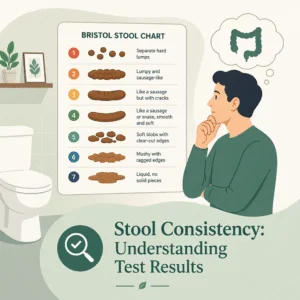
Rotavirus is one of several viruses tested together in practice, and our viral antigen test results guide covers the combined panels. Where a broad differential including bacteria and parasites is in play, our multiplex panel results guide describes what those platforms add. Stool appearance also carries information, and our stool consistency results guide explains what watery stool indicates.
Latest scientific advances
Recent research has centered on post-vaccine epidemiology and on improving detection at the point of care. The sources below are PubMed-indexed.
Rotavirus in the co-detection era
A hospital-based surveillance study published in the International Journal of Infectious Diseases in 2026, covering 1,250 gastroenteritis cases and 1,250 controls, found that rotavirus was the predominant co-detected pathogen alongside norovirus, present in 68% of norovirus co-detections. It also detected enteric viruses in control patients without gastroenteritis, with overlapping viral loads. This reinforces that identifying rotavirus in a sample and establishing it as the cause of illness are separate steps.
Comparative rapid test performance
The 2024 Clinical Laboratory evaluation of an immunochromatographic test for norovirus, rotavirus, and adenovirus in stool provides current performance data for the combined rapid format most laboratories now use, replacing single-target rotavirus cards in many settings.
Next-generation point-of-care detection
A 2026 study in Microchimica Acta described a silica-shell-protected magnetic fluorescent lateral flow immunoassay for on-site ultrasensitive immunodetection of foodborne viruses directly from stool, explicitly addressing the long-standing sensitivity gap between rapid antigen formats and laboratory molecular methods.
Vaccine impact and strain surveillance
Ongoing surveillance continues to document the substantial fall in severe rotavirus disease where vaccination programs are established, alongside monitoring for strain replacement. Genotyping remains essential to that work and to distinguishing vaccine-derived from wild-type detections in individual cases.
The future of rotavirus testing
As vaccination reduces disease prevalence, the pretest probability of rotavirus falls and the positive predictive value of any test falls with it, which strengthens the case for confirmatory molecular testing in unclear cases. Ultrasensitive lateral flow formats aim to close the sensitivity gap while keeping the speed and cost advantages of antigen testing. Rapid genotyping that could distinguish vaccine strains at the point of care would resolve one of the most common interpretive difficulties. Wastewater surveillance is increasingly used to track community circulation independently of individual testing.
Variations in specific populations
- Infants under three months: often partially protected by maternal antibodies, with milder illness
- Children six months to two years: peak incidence and peak severity, and the group in which testing yield is highest
- Recently vaccinated infants: may shed vaccine strain and test positive without wild-type infection
- Older children and adults: usually mild or asymptomatic reinfection, with lower viral load and therefore lower antigen test sensitivity
- Immunocompromised patients: prolonged shedding and more severe, sometimes chronic infection
- Older adults in institutional care: outbreaks occur and are frequently attributed to norovirus without testing
How care and hygiene affect outcomes
No diet shortens rotavirus infection. What determines outcome is hydration. Oral rehydration solution with the correct balance of glucose and electrolytes is the standard of care, and sports drinks, fruit juice, and soda are poor substitutes because their sugar content worsens osmotic diarrhea. Breastfeeding should continue throughout. Normal age-appropriate feeding should resume early, since prolonged fasting delays recovery of the intestinal lining. Temporary reduction of lactose can help if loose stools persist after the acute phase.
For prevention, rotavirus vaccination is by far the most effective measure and is given in infancy on a defined schedule. Hand washing with soap and water is more effective than alcohol hand rub against non-enveloped viruses, and surfaces need appropriate disinfection. Children should stay home from daycare until at least 48 hours after diarrhea stops.
Next steps and practical advice
A positive result means supportive care: oral rehydration, continued feeding, and contact precautions. Antibiotics have no role and can prolong symptoms. Antidiarrheal medications are not recommended in young children.
Seek urgent care for signs of significant dehydration, including reduced urine output or fewer wet diapers, dry mouth, absence of tears, sunken eyes or fontanelle, lethargy, or poor responsiveness. Blood in stool, persistent high fever, severe abdominal pain, or diarrhea lasting beyond a week all warrant reassessment, since they point away from uncomplicated rotavirus.
Myths and facts about rotavirus
| Myth | Fact |
|---|---|
| Vaccinated children cannot get rotavirus | Vaccination greatly reduces severe disease but does not fully prevent infection; breakthrough cases are usually milder |
| A negative antigen test rules out rotavirus | Sensitivity is 70% to 90%; late sampling and low viral load produce false negatives |
| Antibiotics help | Rotavirus is viral; antibiotics have no effect and disrupt the gut microbiome |
| Sports drinks are good for rehydration | Their sugar concentration worsens osmotic diarrhea; oral rehydration solution is formulated correctly |
| Only children get rotavirus | Adults are infected too, usually mildly, and outbreaks occur in long-term care settings |
| You should stop feeding during the illness | Early resumption of normal feeding speeds recovery of the intestinal lining |
Frequently asked questions
What does a positive rotavirus antigen test mean?
Rotavirus antigen is present in the stool. Combined with typical symptoms, it confirms rotavirus gastroenteritis. In a recently vaccinated infant, it may reflect shedding of the live vaccine strain.
How accurate is the rotavirus antigen test?
Sensitivity is roughly 70% to 90% and specificity roughly 95% to 99% against molecular reference methods. Positive results are reliable; negative results are less so and may need molecular confirmation.
Can a vaccinated child test positive?
Yes, in two ways. Live vaccine strain is shed for a period after administration, particularly after the first dose, and breakthrough infection with wild-type virus can still occur, usually with milder illness.
How long does rotavirus last?
Vomiting and fever typically last one to three days, and diarrhea three to eight days. Loose stools can persist for one to two weeks afterward because of transient lactase deficiency.
How long is a child contagious?
Shedding begins before symptoms and continues for about ten days after they resolve, and considerably longer in immunocompromised children. A 48-hour exclusion after diarrhea stops is the usual practical rule.
Do I need to fast before the test?
No. There is no preparation. Collect the sample early in the illness for the best chance of detection.
What if the test is negative but symptoms are typical?
Norovirus is the most likely alternative, followed by adenovirus, astrovirus, and sapovirus. Molecular testing or a multiplex panel identifies these where the answer will change management.
Is treatment different if rotavirus is confirmed?
Not usually. Management is supportive either way. Confirmation helps avoid unnecessary antibiotics, informs infection control, and contributes to surveillance data.
Glossary of key terms
- Rotavirus: a double-stranded RNA virus causing severe gastroenteritis in young children
- VP6: the inner capsid protein detected by group A rotavirus antigen tests
- NSP4: a viral protein acting as an enterotoxin to drive fluid secretion
- Immunochromatography: the lateral flow method used in rapid antigen tests
- Enzyme immunoassay: a laboratory antibody-based detection method
- Oral rehydration solution: a balanced glucose and electrolyte formulation for treating dehydration
- Shedding: continued release of virus in stool after symptoms resolve
- Genotyping: molecular characterization used to distinguish strains, including vaccine from wild-type
Sources
- High Levels of Co-Detection of Norovirus and Other Enteric Pathogens in Patients With and Without Acute Gastroenteritis — International Journal of Infectious Diseases, 2026 — doi.org/10.1016/j.ijid.2026.108844
- Evaluation of Immunochromatographic Test for Rapid Detection of Norovirus, Rotavirus, and Adenovirus in Stool Samples — Clinical Laboratory, 2024 — doi.org/10.7754/Clin.Lab.2024.240534
- SiO Shell-Protected Magnetic Fluorescent Tag for On-Site Ultrasensitive Immunodetection of Foodborne Viruses — Microchimica Acta, 2026 — doi.org/10.1007/s00604-026-08149-6
- Centers for Disease Control and Prevention — Rotavirus — CDC Topic Page, 2024 — cdc.gov
- World Health Organization — Rotavirus — WHO Immunization Fact Sheet, 2024 — who.int
- MedlinePlus, National Library of Medicine — Rotavirus Infections — MedlinePlus Health Topic, reviewed 2025 — medlineplus.gov
Further reading
- Confirm a suspected infection when the rapid test is negative by reading our RT-PCR results guide.
- See how rotavirus is tested alongside norovirus and adenovirus in our viral antigen test results guide.
- Cover bacteria and parasites in the same sample with our multiplex panel results guide.
- Interpret what watery stool itself indicates by consulting our stool consistency results guide.
- Check the marker that separates invasive from watery diarrhea in our fecal leukocytes results guide.
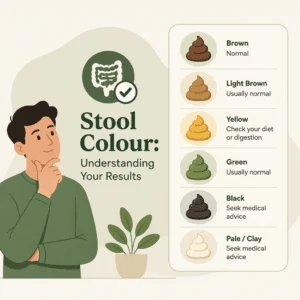
- Understand what stool color changes signal during gastroenteritis by reviewing our stool color results guide.
Understand your lab results with BloodSense
A rotavirus result is one part of the picture during an episode of gastroenteritis. Electrolytes, kidney function, blood counts, and inflammatory markers all describe how the body is coping. BloodSense reads your stool and blood results together, explains each one in plain language, and highlights what is worth discussing with your doctor.
Understand your lab results with BloodSense
This article is for informational purposes and does not replace medical advice. Signs of dehydration in an infant or young child require prompt medical assessment.