







Conjunctivitis (Pink Eye): Symptoms, Causes, Treatments
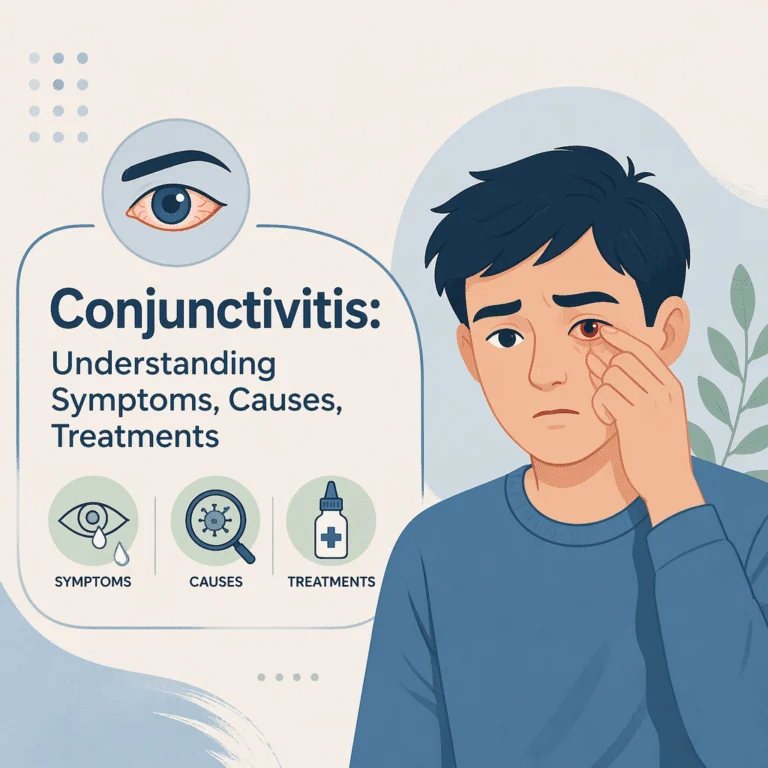
Conjunctivitis, widely known as pink eye, is inflammation of the conjunctiva, the clear, thin tissue that covers the white of the eye and lines the inside of the eyelid. When it becomes irritated or infected, blood vessels in this membrane swell, giving the eye its telltale pink or red color. Pink eye is very common and, in most cases, mild and short-lived, clearing up on its own or with simple care within a week or two. Viral, bacterial, and allergic pink eye can look alike at first glance yet call for different care, so knowing which type you have matters. This guide explains what pink eye is, its symptoms, causes, how the viral, bacterial, and allergic types are told apart, the treatments available, and the latest research.
What is pink eye?
Pink eye is one of the most common eye problems in the United States and can affect anyone. The conjunctiva becomes inflamed for several different reasons, so doctors group it into three main types: viral, bacterial, and allergic conjunctivitis, plus irritant causes such as chlorine, smoke, air pollution, cosmetics, or a reaction to contact lens solution. As alarming as a bright red, swollen eye can look, pink eye is usually minor and treatable rather than a sign of something serious.
Viral and bacterial conjunctivitis are both contagious and spread through close contact, respiratory droplets, or touching a contaminated surface and then the eyes, so outbreaks can move quickly through schools and households. Allergic conjunctivitis, by contrast, is not contagious; it results from the eyes reacting to pollen, pet dander, dust, or other allergens, often alongside sneezing during allergy season. Because the three types overlap but need different care, knowing what sets them apart is the most useful first step toward feeling better.
Symptoms of pink eye
Whatever the cause, pink eye typically brings redness, watering, a gritty or burning feeling, and mild light sensitivity. The eyelids can look puffy or swollen, and many people wake up with crusting on the lashes, sometimes heavy enough to seal the eyelids shut overnight. Pink eye can affect one eye or both, often starting in one before spreading to the other within a day or two.
Most pink eye is uncomfortable but not dangerous, so it helps to know which symptoms point to something more serious. Seek prompt eye-care evaluation for any change in vision or blurring, significant eye pain rather than mild irritation, marked light sensitivity, very intense redness, pink eye following recent eye surgery or an eye injury, or pink eye in a newborn baby. These signs can point to a deeper problem that needs urgent attention rather than routine home care.
What causes pink eye and its risk factors
Viral conjunctivitis is the most common form and is usually caused by adenovirus, the same family of viruses that often causes a common cold, so many people notice the early symptoms of a common cold a few days before their eyes turn pink. Bacterial conjunctivitis develops when bacteria such as Staphylococcus or Streptococcus infect the conjunctiva, sometimes after a scratch, a contact lens problem, or contact with an infected person. Allergic conjunctivitis is triggered when the eyes react to pollen, pet dander, dust mites, or mold, so it flares up in particular seasons, often with a runny nose or other allergy symptoms.
Certain factors raise the risk of pink eye or help it spread: close contact with an infected person, crowded settings such as schools and daycares, and touching or rubbing the eyes with unwashed hands all raise the chance of viral or bacterial conjunctivitis. Wearing contact lenses, especially sleeping in them or not cleaning them properly, raises the risk of bacterial conjunctivitis and its complications, while a personal or family history of allergies, hay fever, or eczema raises the odds of allergic conjunctivitis.
How pink eye is diagnosed
Pink eye is almost always diagnosed clinically: a doctor identifies it from your symptoms, a look at your eyes, and questions about recent colds, allergies, or contact lens use, without needing tests. Because the three types can overlap early on, doctors pay close attention to the discharge, whether one or both eyes are affected, and how itchy the eye feels, since these clues usually point clearly to a cause.
| Type | Discharge | Eyes affected | Itching | Contagious | Typical treatment |
|---|---|---|---|---|---|
| Viral | Watery, clear or light mucus | Often starts in one eye, frequently spreads to both | Mild or none | Yes, highly, while the eye is watery | Supportive care: cool compresses, artificial tears, time |
| Bacterial | Thick yellow-green or white, crusts eyelids shut | One or both eyes | Mild or none | Yes, highly, until about 48 hours of antibiotics | Often clears on its own; antibiotic drops or ointment for some cases |
| Allergic | Watery, stringy or mucus-like | Both eyes | Intense | No, not contagious | Antihistamine or mast-cell-stabilizer drops, allergen avoidance |
For most cases, no lab testing is needed. Severe, recurring, or newborn cases, or ones raising concern for gonorrhea or chlamydia, may call for a conjunctival swab sent for culture or PCR, and a rapid in-office test can detect adenovirus, the usual viral cause, helping avoid antibiotics that will not help. When allergy is suspected but not obvious, a clinician may check a blood eosinophil level, examine an eye scraping for the same cells, or arrange allergy testing to pin down the trigger, though this is rarely needed since itching in both eyes is usually enough on its own. If testing is done, knowing how to read the flags and reference ranges on a lab report can help make sense of it.
Treatment options for pink eye
Treatment for pink eye depends on the cause, and the key point is that most pink eye is viral, so antibiotics will not help and are not recommended. Viral conjunctivitis simply needs time, usually one to three weeks, along with comfort measures such as cool compresses and artificial tears to ease dryness and grittiness while the body clears the virus.
| Approach | Role |
|---|---|
| Supportive care | Cool compresses and artificial tears ease dryness, grittiness, and irritation while viral conjunctivitis clears on its own |
| Antibiotic drops or ointment | Treat confirmed or likely bacterial conjunctivitis; do not work against viral or allergic conjunctivitis |
| Antihistamine or mast-cell-stabilizer drops | Relieve itching and calm the allergic reaction behind allergic conjunctivitis |
| Allergen avoidance and contact lens precautions | Reduce flare-ups and help prevent spreading infection or delaying healing during an active case |
Even though most pink eye does not need antibiotics, prescribing habits do not always reflect that: about 60 percent of people with acute pink eye nationally receive antibiotic drops, and primary and urgent care clinicians prescribe them two to three times more often than eye specialists. About one in five of these prescriptions is a combination antibiotic-steroid drop, which can prolong or worsen a viral infection. Contact lens wearers should stop wearing lenses right away, discard any disposables and solution used during the infection, and wait until eyes are normal and any drops are finished before resuming; see a doctor if there is no improvement within 12 to 24 hours. Anyone with the red-flag symptoms described earlier, or a newborn with pink eye, should be seen promptly rather than waiting it out.
Living with pink eye and long-term outlook
Most people recover from pink eye fully and without complications. Viral conjunctivitis typically runs its course in one to three weeks, bacterial conjunctivitis often improves within a few days with or without treatment, and allergic conjunctivitis comes and goes with allergy seasons or trigger exposure, sometimes recurring for years. Serious complications are uncommon, but following your doctor’s guidance and returning for a recheck if symptoms worsen rather than improve helps confirm a case is healing as expected.
Because viral and bacterial conjunctivitis spread so easily, good hygiene is the best defense: wash your hands often, avoid touching or rubbing your eyes, do not share towels, pillowcases, or eye makeup, and discard any used while infected, along with disposable contact lenses. Most people without a fever who practice good hygiene can return to school or work once they feel up to it, though anyone in a close-contact setting such as a daycare should stay home until symptoms improve or a clinician clears them. Because allergic conjunctivitis is not contagious, there is no need to stay home for it alone.
Latest scientific advances in pink eye research
Recent research confirms that most pink eye needs no antibiotics, and that overtreatment carries real downsides. According to PubMed-indexed research, a 2024 multicenter study in The Journal of Pediatrics followed 390 children with acute conjunctivitis and found that only one bacterium, Haemophilus influenzae, was significantly linked to the infection; 86 percent improved by day 5 regardless of antibiotic use, while 20 percent of those treated had a caregiver-reported side effect, and 8 percent needed an extra medical visit (Frost et al., 2024). What this means for you: skipping antibiotics and waiting a few days is a reasonable choice for most children with pink eye, since the drops carry measurable risk without a clear benefit. A 2025 randomized trial in Current Eye Research reached a similar conclusion for adults, comparing combination antibiotic-steroid drops with plain artificial tears in 230 eyes with acute viral conjunctivitis; the medicated drops brought only marginally faster relief by day 3, with about 71 percent of eyes in both groups symptom-free by day 7 (Shah et al., 2025). What this means for you: artificial tears work about as well as stronger prescription drops within a week for most viral pink eye, so there is rarely a reason to reach for an antibiotic-steroid combination and its added risks and cost.
For allergic pink eye, recent research has focused on a clear, stepwise treatment approach. According to PubMed-indexed research, a 2026 interdisciplinary framework in the Indian Journal of Ophthalmology laid out a stepped pathway for ocular allergy, confirming allergen avoidance plus dual-acting antihistamine and mast-cell-stabilizer drops as the correct first step for typical allergic conjunctivitis, with newer biologics such as omalizumab and dupilumab reserved for severe, treatment-resistant forms managed by a specialist (Gupta et al., 2026). What this means for you: standard allergy eye drops plus avoiding your triggers are still the right place to start; if they are not working, the next step is seeing a specialist rather than repeating the same drops indefinitely.
Glossary of key pink eye terms
| Term | Definition |
|---|---|
| Conjunctiva | The clear, thin membrane covering the white of the eye and lining the inside of the eyelid. |
| Adenovirus | A common family of viruses and the usual cause of viral conjunctivitis. |
| Allergen | A substance, such as pollen or pet dander, that triggers an allergic reaction. |
| Mast-cell stabilizer | A type of eye drop that keeps cells from releasing the chemicals that cause allergic itching and redness. |
| Eosinophil | A type of white blood cell that can rise in number during allergic reactions. |
| Neonatal conjunctivitis | Pink eye occurring in a newborn’s first four weeks of life, which always needs prompt medical evaluation. |
| Photophobia | Unusual sensitivity to light, one of the red-flag symptoms of a more serious eye problem. |
Frequently asked questions about pink eye
How long is pink eye contagious?
Bacterial conjunctivitis is generally contagious until about 48 hours after starting antibiotic drops. Viral conjunctivitis can spread as long as the eyes are watery and producing discharge, often one to two weeks. Allergic and irritant conjunctivitis are not contagious, since neither comes from an infection that spreads between people.
How can you tell if pink eye is viral, bacterial, or allergic?
Discharge type and which eyes are affected are the biggest clues: viral conjunctivitis brings watery discharge and starts in one eye, bacterial conjunctivitis produces thicker yellow-green or white discharge that crusts the eyelids shut, and allergic conjunctivitis affects both eyes with intense itching. A doctor’s exam confirms the type when the pattern is unclear.
Do you need antibiotics for pink eye?
Most people do not. Viral conjunctivitis, the most common type, does not respond to antibiotics and improves on its own with time and comfort measures. Antibiotic drops are reserved for bacterial conjunctivitis, and even then many mild cases clear up without them. Allergic conjunctivitis is treated with antihistamine or mast-cell-stabilizer drops instead.
How long does pink eye usually last?
Viral conjunctivitis typically lasts one to three weeks, often looking worst in the first few days. Bacterial conjunctivitis tends to improve within a few days, especially with treatment, though many cases resolve on a similar timeline without it. Allergic conjunctivitis can persist as long as you are exposed to the trigger and often returns each allergy season.
Can you wear contact lenses with pink eye?
No. Stop wearing lenses as soon as symptoms start, and do not resume until your eyes are back to normal and any drops are finished. Throw away disposable lenses and solution used while infected, since a contaminated lens can worsen the infection. See a doctor if there is no improvement within 12 to 24 hours.
When can a child with pink eye return to school or daycare?
Many children can return once they no longer have a fever and can manage reasonable hygiene, though policies vary and some require a doctor’s note. Children with bacterial conjunctivitis are often kept home until about 48 hours of antibiotic treatment; those with viral conjunctivitis may need longer, since it stays contagious as long as the eyes are watery.
Sources
- Centers for Disease Control and Prevention — About Conjunctivitis (Pink Eye) — CDC, 2024 — cdc.gov
- MedlinePlus, National Library of Medicine — Pink Eye — MedlinePlus, 2024 — medlineplus.gov
- Mayo Clinic — Pink Eye (Conjunctivitis) — Mayo Clinic, 2024 — mayoclinic.org
- Frost HM, et al. — Etiology and Outcomes of Acute Infectious Conjunctivitis in Children — The Journal of Pediatrics, 2024 — doi.org/10.1016/j.jpeds.2024.114368
- Shah C, et al. — Comparison of Tobramycin-Dexamethasone Combination Eyedrop Versus Artificial Tear Eyedrop for the Management of Presumed Viral Epidemic Conjunctivitis: A Randomized Treatment Trial — Current Eye Research, 2025 — doi.org/10.1080/02713683.2025.2515997
- Gupta N, et al. — An interdisciplinary framework for management of ocular allergy: Integrating the allergist in clinical practice — Indian Journal of Ophthalmology, 2026 — doi.org/10.4103/IJO.IJO_788_26
Further reading
- See how a related respiratory illness compares in this guide to the flu’s symptoms and treatment.
- Learn about another common infection with overlapping symptoms in this guide to the causes and treatment of a sinus infection.
Understand your lab results with BloodSense
Pink eye is one of the few common conditions that usually does not need a lab report, since a doctor can typically diagnose it from your history and a look at your eyes. Labs still matter at the edges of the picture: a swab and culture identify the exact organism in a severe, recurrent, or newborn case instead of leaving it to guesswork, and an eosinophil level or allergy panel can help confirm what is triggering a suspected allergic reaction. BloodSense translates values like these into plain language, showing where each one falls, so you can walk into your next appointment ready to ask the right questions instead of guessing at a printout.