






The Glasgow Coma Scale is a quick bedside score that healthcare teams use to describe how awake and responsive a person is after an illness or injury. Often written as GCS, it rates three abilities separately — eye opening, verbal response, and movement — and adds them into one number between 3 and 15. Families frequently see this score in emergency, stroke, and intensive care notes, and a change in it can shape urgent decisions. In this guide you’ll learn what each part of the score measures, how to read a total, what the newer GCS-Pupils version adds, how clinicians assess it at the bedside, and how the score fits alongside vital signs and lab results so you can follow the conversation with confidence.
What the Glasgow Coma Scale measures
The Glasgow Coma Scale measures a person’s level of consciousness — in everyday terms, how awake someone is and how well they respond to the world around them. Two neurosurgeons in Glasgow, Scotland, introduced it in 1974 so that different clinicians could describe the same patient in the same way, whether in an ambulance, an emergency department, or an intensive care unit.
Because the score is simple and repeatable, it travels well between team members and across shifts. Emergency staff, neurologists, and surgeons use it to prioritize treatment, decide whether a brain scan is needed, and judge whether the airway needs protecting. The score also supports clear handoffs, so the next clinician starts with the same baseline rather than a vague impression.
Consciousness in this setting has a practical meaning: being awake, being alert to people and surroundings, and being oriented to who and where you are. When the team checks whether someone knows their name, location, and the date, nurses also document the patient’s orientation assessment, which feeds directly into the verbal part of the score.
Although the word coma sits in its name, the scale reaches far beyond deep unconsciousness. Teams use it during stroke evaluations, after a concussion or a more serious head injury, and in situations that have nothing to do with trauma, such as very low blood sugar, poisoning, or the recovery period after a seizure. In every case the aim is the same: attach a clear, shareable number to how responsive a person is at that moment, and then watch closely for whether that number rises or falls.
The three parts of a GCS score
The GCS breaks a complex neurological picture into three observations. Each one receives its own number, and reporting them separately gives more information than the total alone. Clinicians often write the result as a short formula, such as E4V5M6, before adding it up. That habit makes it easy to see later exactly which response changed.
Reporting the parts one by one, rather than only the total, is a deliberate strength of the scale. Two people can reach the same total by very different routes, and the individual letters reveal which ability is affected. A team that sees the motor score slipping, for instance, learns something the total alone would hide, and that detail can change the next decision.
Eye opening (E)
This part notes whether the eyes open on their own, only when spoken to, only in response to gentle pressure, or not at all. It is the shortest scale, running from 1 to 4, and mainly reflects how alert a person is. Swelling or facial injury can limit it, and clinicians record that when it happens.
Verbal response (V)
This part listens to how a person speaks: whether they answer questions correctly, sound confused, use words that do not fit the question, make only sounds, or say nothing. It runs from 1 to 5 and reflects thinking, memory, and awareness. When a breathing tube is in place, speech cannot be tested, and the note marks that separately rather than guessing a value.
Motor response (M)
This part watches movement: whether a person follows a command, reaches toward the source of pressure, pulls away, shows stiff abnormal bending, or does not move at all. It runs from 1 to 6 and often gives the single most useful clue about brain function, which is why clinicians pay close attention to it.
| GCS component | Score | Patient response |
|---|---|---|
| Eye opening | 4 | Opens eyes spontaneously |
| Eye opening | 3 | Opens eyes to voice or sound |
| Eye opening | 2 | Opens eyes to pressure |
| Eye opening | 1 | No eye opening |
| Verbal response | 5 | Oriented, answers questions correctly |
| Verbal response | 4 | Confused conversation |
| Verbal response | 3 | Inappropriate words |
| Verbal response | 2 | Incomprehensible sounds |
| Verbal response | 1 | No verbal response |
| Motor response | 6 | Obeys commands |
| Motor response | 5 | Localizes to pressure |
| Motor response | 4 | Normal flexion (withdraws from pressure) |
| Motor response | 3 | Abnormal flexion |
| Motor response | 2 | Extension to pressure |
| Motor response | 1 | No movement |
How to read a total GCS score
Adding the three parts gives a total from 3, meaning no response in any category, to 15, meaning fully awake and oriented. A fully alert adult scores 15, written as E4V5M6, while the lowest total, 3, is written E1V1M1. Lower totals point to deeper reductions in consciousness. After a head injury, clinicians often group scores into broad bands to describe severity.
| Total GCS score | General category | What it often suggests |
|---|---|---|
| 13 to 15 | Mild | Fully or nearly awake; mild or no impairment |
| 9 to 12 | Moderate | Reduced consciousness; close monitoring needed |
| 3 to 8 | Severe | Often reflects coma; may need airway protection or intensive care |
These bands are guides, not verdicts. The number always sits inside a larger story that includes the cause, the trend over time, imaging, and the rest of the exam. A single score taken out of context can mislead, which is why teams repeat the assessment and watch the direction of change rather than react to one reading.
The score also has honest limits. It can be hard to apply when a person is on a ventilator, sedated, intoxicated, or unable to see, hear, or share a language with the team. In those cases clinicians record what they could not test rather than force a number, and they rely more on the parts of the exam that still work. Understanding these limits is part of reading the score wisely, and it explains why two careful clinicians can occasionally record slightly different results for the same patient.
GCS-Pupils: adding the eyes’ reaction to light
In 2018, one of the scale’s original creators helped introduce an update called the GCS-Pupils score, or GCS-P. It takes the standard total and subtracts one point for each pupil that does not react to light, so the combined score can range from 1 to 15. Pupils that stay wide and unreactive can signal serious pressure on the brain, so folding that sign into the number adds early-warning value, especially at the lowest end of the range.
Why include the pupils at all? Their reaction to light travels through deep brain pathways, so a pupil that stops responding can be an early flag that swelling or injury is affecting critical areas. That makes the pupil check a fast, low-effort way to catch a warning sign the eye, verbal, and motor items might not yet reveal on their own.
You may see either the classic GCS or the GCS-P in notes, and clinicians still record the eye, verbal, and motor parts underneath. The pupil check itself is quick and painless, done with a small light at the bedside, and it takes only seconds to repeat as a patient is monitored.
How clinicians assess the score at the bedside
A reliable score depends on a consistent method. The modern, structured approach asks the clinician to check for anything that could interfere — such as swelling, sedation, intoxication, or a language barrier — then observe spontaneous behavior, add a spoken or physical prompt only if needed, and finally rate each response against clear criteria. The Royal College of Physicians and Surgeons of Glasgow publishes a free structured GCS assessment aid that standardizes each of these steps.
The GCS is one piece of a broader neurological check. A fuller exam also tests the patient’s deep tendon reflex responses along with pupil reactions and muscle strength. At the bedside, clinicians also note whether a patient shows no acute distress, and a head-to-toe review confirms other findings, such as the patient’s clear breath sounds on both sides. For young children and infants, teams use age-adjusted versions, because a baby’s normal responses differ from an adult’s.
Reading the score alongside vital signs and lab results
Consciousness never stands alone. A GCS is most useful when the team reads it next to the basics: pulse, blood pressure, breathing rate, temperature, and oxygen level. A bedside monitor also confirms a normal sinus rhythm, because heart and circulation problems can lower alertness just as brain problems can.
Laboratory tests round out the picture. When a brain injury is suspected, laboratories sometimes run the S100 protein blood test, and doctors may also order the neuron-specific enolase blood test; both are proteins that can rise when brain cells are stressed. Simple chemistry and blood-gas results can also explain a drop in the score that has nothing to do with the brain itself, such as low blood sugar or low oxygen. Seeing these numbers together is exactly how a care team separates a reversible cause from a serious one, and it is why a score is never interpreted in isolation.
Medicines matter here too. Someone taking a blood thinner faces a higher bleeding risk after a head injury, so the team weighs the score against clotting tests and a careful medication history. Blood sugar, sodium, and kidney or liver results can each nudge alertness up or down. None of these values replaces the GCS; together they help the team explain why the number looks the way it does and decide what to do next.
When a change in the score means it’s time to act
A single number matters less than its direction. A score that falls over minutes or hours often prompts a clinician to enter an immediate STAT order for imaging, medication, or airway support. Sudden confusion, trouble waking, slurred speech, unequal pupils, one-sided weakness, repeated vomiting after a head injury, or a seizure all deserve urgent evaluation, and families should report any decline in responsiveness right away rather than wait.
At the other end of the range, very low scores can raise difficult questions about goals of care. In those conversations, families and teams may also discuss a do-not-resuscitate order. Importantly, a low score by itself is not a final answer; modern evidence cautions strongly against using one number to decide whether aggressive treatment is worthwhile.
Families play a real part in this. You often know a person’s usual self better than anyone, so speak up when someone seems more drowsy, harder to rouse, or simply not themselves, even if the chart looks stable. Note when the change started and what you saw, then share it with the care team. Clear, specific observations help clinicians catch a downward trend earlier, and early action is where the score does its most valuable work.
Latest scientific advances
Research keeps refining how the GCS is used, and the headline is reassuring: after 50 years, the scale remains dependable, and newer add-ons make it a little sharper without making it harder to use.
Pupils add early-warning value
Adding whether the pupils react to light — the GCS-Pupils score — improved how well teams could estimate survival and recovery after serious brain injury. A 2024 validation across two large international studies of nearly 5,000 patients found that pupil reactivity strengthened the outlook estimate, and a very large United States trauma-database analysis of almost 197,000 people reached a similar conclusion, with the pupil version performing especially well for penetrating injuries.
What this means for you: if a clinician checks pupils alongside the GCS, that is a modern, evidence-based step rather than an extra reason to worry. The same researchers stress that one low score should never, on its own, decide care.
Jargon, briefly: the GCS-Pupils score simply subtracts a point for each pupil that fails to react to light.
The score works even better with vital signs
A 2025 systematic review that pooled studies of roughly 430,000 people found that pairing the GCS with a simple blood-pressure-and-heart-rate measure predicted survival better than the score alone. Lower combined values flagged higher risk of death.
What this means for you: your team rarely leans on a single figure. Reading the GCS next to the pulse, blood pressure, and breathing is not only routine — it is measurably more accurate.
Jargon, briefly: the “reverse shock index” is blood pressure divided by heart rate; multiply it by the GCS and clinicians get a combined score researchers call rSIG.
One honest caveat runs through all of this work: these tools estimate risk for groups of patients, not certainties for any one person. That is actually a strength, because it keeps the focus on trends and the whole picture rather than a single number.
Glossary of key terms
| Term | Definition |
|---|---|
| Level of consciousness | How awake and aware a person is; the main thing the Glasgow Coma Scale measures. |
| Coma | A deep state of unresponsiveness in which a person cannot be woken; a total score of 8 or lower often reflects it. |
| Eye opening response | The part of the score that rates whether and when the eyes open, from 1 to 4. |
| Verbal response | The part of the score that rates speech and orientation, from 1 to 5. |
| Motor response | The part of the score that rates movement and following commands, from 1 to 6. |
| GCS-Pupils (GCS-P) | An updated score that subtracts a point for each pupil that does not react to light. |
| Pupillary reaction | How the pupils change size in response to light; a quick sign of brain function. |
| Intubation | Placing a breathing tube; the verbal score usually cannot be tested and is marked separately. |
| Traumatic brain injury (TBI) | Damage to the brain from an outside force, frequently assessed with the Glasgow Coma Scale. |
Frequently asked questions
What does a Glasgow Coma Scale of 15 mean?
A score of 15 is the highest possible total and means a person is fully awake, alert, and oriented, with normal eye, verbal, and motor responses. It is the expected result for a healthy, responsive person and is written E4V5M6. A score of 15 is reassuring, but clinicians still read it alongside symptoms, history, and any test results, since some problems can develop even when the current score looks completely normal.
What does a GCS score of 3 mean?
A total of 3 is the lowest possible and means no eye opening, no verbal response, and no movement, even with a prompt. It usually reflects deep unconsciousness and calls for urgent evaluation and support. A single low score does not decide the final outcome by itself; teams repeat the assessment, look for reversible causes, and combine it with imaging and other findings before drawing conclusions.
Is there a Glasgow Coma Scale for children and babies?
Yes. Because young children and infants respond differently, clinicians use age-appropriate versions, sometimes called the pediatric Glasgow Coma Scale, that adjust the verbal and motor items. For a baby, expected “words” become normal coos or cries, and “following commands” becomes normal spontaneous movement. The idea stays the same: rate eye, verbal, and motor responses and track any changes over time.
Can medicines or sedation change a GCS score?
Yes. Sedatives, opioids, alcohol, and some other substances can lower responsiveness and reduce the score without meaning the brain is permanently affected. Clinicians take current medications into account when they interpret the number. This is one reason the trend over time and the full clinical picture matter far more than any single reading taken on its own.
Does a low GCS score alone decide the outcome?
No. The score is a useful snapshot, not a prediction set in stone. Recent research warns against using one low number to decide whether treatment is worthwhile. Clinicians combine the Glasgow Coma Scale with pupil checks, imaging, vital signs, lab results, age, and the direction of change before reaching any conclusion about what a result is likely to mean.
How is a Glasgow Coma Scale score written in a chart?
Clinicians often record each part separately before the total, such as E4V5M6 for a score of 15 or E1V1M1 for a score of 3. Writing the components shows exactly where a change came from if the score shifts later. If a breathing tube prevents the verbal check, the note usually marks that item rather than guessing a value for it.
Sources
- Jain S, Iverson LM — Glasgow Coma Scale — StatPearls [Internet], NCBI Bookshelf, 2024 — https://www.ncbi.nlm.nih.gov/books/NBK513298/
- Cleveland Clinic — Glasgow Coma Scale (GCS): What It Is, Interpretation and Chart — Cleveland Clinic Health Library, 2023 — https://my.clevelandclinic.org/health/diagnostics/24848-glasgow-coma-scale-gcs
- Teasdale G and the Royal College of Physicians and Surgeons of Glasgow — The Glasgow Structured Approach to Assessment of the Glasgow Coma Scale — glasgowcomascale.org — https://www.glasgowcomascale.org/
- Vreeburg RJG, et al. — Validation of the GCS-Pupil Scale in Traumatic Brain Injury: incremental prognostic value in the CENTER-TBI and TRACK-TBI cohorts — Journal of Neurotrauma, 2024 — https://doi.org/10.1089/neu.2024.0458
- Ran KR, et al. — Evaluation of the Glasgow Coma Scale-Pupils score for predicting inpatient mortality among patients with traumatic subdural hematoma at United States trauma centers — Journal of Neurosurgery, 2024 — https://doi.org/10.3171/2024.2.JNS232695
- Vasquez-Tirado GA, et al. — Reverse shock index multiplied by Glasgow Coma Scale (rSIG) to predict mortality in traumatic brain injury: systematic review and meta-analysis — Medicina Intensiva, 2025 — https://doi.org/10.1016/j.medine.2025.502149
Further reading
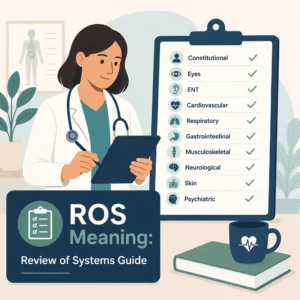
- See how clinicians structure the review of systems.
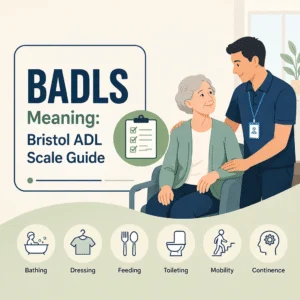
- Learn how care teams measure activities of daily living.
- Read how clinicians write the history of present illness.
- See how doctors read the international normalized ratio blood test.
- Learn how emergency teams use the lactate blood test.
Understand your lab results with BloodSense
Get your results interpreted in minutes
A score like the Glasgow Coma Scale turns a complex bedside picture into a number your care team can track, and your own lab and vital-sign results work in much the same way. BloodSense reads reports such as a complete blood count, a metabolic panel, or a lactate level and explains each value in plain language, alongside how it trends over time. It helps you understand your results and prepare sharper questions for your visit. BloodSense does not diagnose conditions and does not replace your doctor.