









QHS Bedeutung: Jeden Abend zur Schlafenszeit – verständlich erklärt
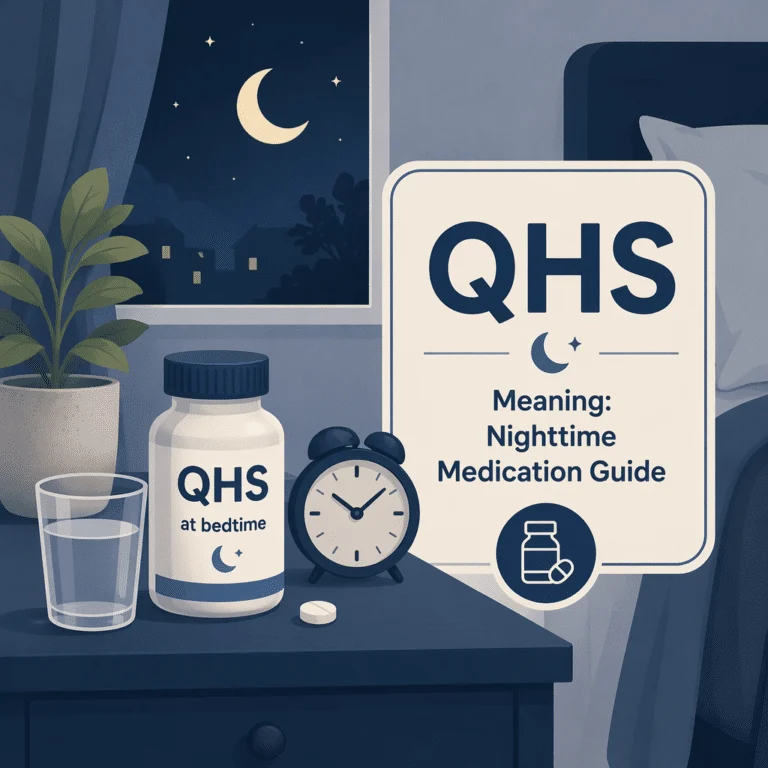
Die Bedeutung von QHS ist einfacher, als die Abkürzung vermuten lässt: QHS steht für quaque hora somni, Lateinisch für „jede Stunde des Schlafs", und auf einem Rezept bedeutet es, dieses Medikament jeden Abend zur Schlafenszeit einzunehmen. Es gibt an, wann Sie eine Dosis einnehmen sollen, nicht wie viel. Ein Detail ist dabei wichtiger als alles andere, und die meisten Etiketten erklären es nie ausdrücklich: Schlafenszeit bedeutet Ihre persönliche Schlafenszeit – keine feste Uhrzeit.
In diesem Ratgeber erfahren Sie, was das Lateinische hinter diesen drei Buchstaben tatsächlich bedeutet, warum Arzneimittelsicherheitsexperten handgeschriebene Schlafenszeit-Abkürzungen als fehleranfällig einstufen, welche Arten von Medikamenten tatsächlich auf den Abend abgestimmt sind und warum, und zu welchem Ergebnis zwei sehr große randomisierte Studien über die weit verbreitete Annahme gekommen sind, dass Blutdruckmittel nachts besser wirken. Nichts hier ersetzt die Anweisungen auf Ihrem eigenen Etikett oder den Rat des Arztes, der es ausgestellt hat.
Was QHS bedeutet
Das Lateinische hinter den Buchstaben
QHS setzt sich aus drei lateinischen Wörtern zusammen. Das q stammt von quaque, was „jede" bedeutet. Hora bedeutet „Stunde". Somni ist eine Form von somnus, was „Schlaf" bedeutet. Zusammengesetzt übersetzt sich quaque hora somni wörtlich als „jede Stunde des Schlafs", was auf Deutsch etwas seltsam klingt. Die von Ärzten gemeinte sinngemäße Übersetzung lautet schlicht „jeden Abend zur Schlafenszeit".
Sie können es auf verschiedene Arten geschrieben sehen: QHS, qhs, q.h.s. oder eingebettet in eine längere Anweisung wie „1 Tab. PO QHS". Das PO ist ein weiteres lateinisches Überbleibsel, per os, was „durch den Mund" bedeutet. „1 Tab. PO QHS" bedeutet also: eine Tablette, geschluckt, jeden Abend zur Schlafenszeit. Die Abkürzung sagt nichts über die Stärke aus und nichts darüber, wie lange die Einnahme fortgesetzt werden soll.
Warum Latein noch immer auf Ihrem Rezept steht
Es ist berechtigt zu fragen, warum eine Sprache, die niemand mehr spricht, noch immer moderne Apothekenetiketten prägt. Die Antwort liegt größtenteils in der Tradition. Die europäische Medizin stützte sich jahrhundertelang auf Latein, und als sich die Verschreibungskonventionen zu Standardformen verfestigten, wurde das Latein einfach beibehalten. Die Abkürzungen überlebten, weil sie kompakt waren: Ein Arzt, der handschriftlich auf einem kleinen Block schrieb, konnte QHS dort unterbringen, wo „jeden Abend zur Schlafenszeit" keinen Platz gehabt hätte.
Dieser Vorteil ist weitgehend weggefallen. Elektronische Verschreibungssysteme haben keine Platzbeschränkung, und die meisten Systeme wandeln die Kurzschrift heute in verständliches Deutsch um, bevor sie Sie erreicht. Die Abkürzungen halten sich in klinischen Gesprächen, in Notizen und auf älteren oder handgeschriebenen Rezepten – genau dort, wo das Risiko von Missverständnissen nach wie vor besteht.
Schlafenszeit bedeutet Ihre Schlafenszeit
Dies ist der Teil, den Patienten am häufigsten falsch verstehen. QHS richtet sich nach dem Schlaf, nicht nach einer Uhrzeit. Wenn Sie um 21 Uhr ins Bett gehen, nehmen Sie Ihre QHS-Dosis um 21 Uhr ein. Wenn Sie im Nachtdienst arbeiten und um 8 Uhr morgens schlafen gehen, nehmen Sie Ihre QHS-Dosis um 8 Uhr morgens ein. Die Anweisung folgt Ihrem Schlaf – genau deshalb bezieht sich der lateinische Begriff auf den Schlaf und nicht auf eine bestimmte Tageszeit.
Diese Flexibilität ist beabsichtigt. Ein schlafförderndes Medikament entfaltet seine Wirkung genau dann, wenn Sie zur Ruhe kommen. Es auf 22 Uhr festzulegen für jemanden, der erst um Mitternacht schläft, würde zwei benommene Stunden dazwischen entstehen lassen. Dennoch ist eine gewisse Regelmäßigkeit hilfreich. Die meisten Menschen kommen am besten zurecht, wenn sie jeden Abend ungefähr zur gleichen Zeit ins Bett gehen – was praktischerweise dazu führt, dass auch die QHS-Dosis stets ungefähr zur gleichen Zeit eingenommen wird.
QHS im Vergleich mit anderen Dosierungsabkürzungen
QHS ist die einzige gängige Abkürzung, die eine Dosis an den Schlaf knüpft. Alle anderen Abkürzungen dieser Gruppe zählen Tage oder Stunden. Wenn man sie nebeneinander betrachtet, wird der Unterschied deutlich – und es erklärt sich, warum manche von ihnen mehr Probleme verursachen als andere.
| Abkürzung | Lateinische Herkunft | Bedeutung in einfachen Worten | Sicherheitshinweis |
|---|---|---|---|
| QHS, qhs | quaque hora somni | Jeden Abend zur Schlafenszeit | Das ISMP weist darauf hin, dass die handschriftliche Form Qhs mit qhr verwechselt werden kann, was „jede Stunde" bedeutet. Das ISMP empfiehlt verschreibenden Ärzten, QHS oder qhs für „zur Schlafenszeit" zu verwenden. |
| HS, hs | hora somni | Zur Schlafenszeit, wörtlich: zur Stunde des Schlafs | Die ISMP-Liste von 2015 warnte, dass HS mit „halbe Dosis" verwechselt werden könnte. Auf der Liste von 2024 erscheint es nicht mehr. |
| QN, qn | quaque nocte | Jede Nacht | Auf der ISMP-Liste: kann als qh gelesen werden, was „jede Stunde" bedeutet. Das ISMP empfiehlt verschreibenden Ärzten stattdessen QHS oder qhs zu verwenden. |
| nocte | nocte | Nachts | Britische und Commonwealth-Schreibweise, auf US-amerikanischen Etiketten selten anzutreffen |
| QD, q.d. | quaque die | Täglich, einmal täglich | Auf der „Do Not Use"-Liste der Joint Commission. Kann als q.i.d. gelesen werden, was „viermal täglich" bedeutet. |
| QDAY | Mischform aus quaque und dem englischen Wort „day" | Einmal täglich | In modernen Systemen wird meist einfach „täglich" geschrieben. |
| BID, b.i.d. | bis in die | Zweimal täglich | Keine Anweisung zur Einnahme zur Schlafenszeit, auch wenn eine Dosis abends eingenommen wird. |
| QID, q.i.d. | quater in die | Viermal täglich | In handschriftlicher Form leicht mit QD zu verwechseln – weshalb beide Abkürzungen nicht empfohlen werden. |
| PRN | pro re nata | Bei Bedarf | Der Einnahmezeitpunkt richtet sich nach den Symptomen, nicht nach der Uhr oder dem Schlaf. |
Die einmal tägliche Einnahme hat in dieser Abkürzungsgruppe ihre eigene Sicherheitsgeschichte, und Krankenhäuser haben weitgehend auf die Einmal-täglich-Abkürzung QD verzichtet. Die praktischen Aspekte der einmal täglichen Einnahme – einschließlich vergessener Dosen und des richtigen Zeitpunkts – werden in den QDAY-Verschreibungsleitfaden. Zweimal tägliche Verordnungen folgen einem ganz anderen Rhythmus, der in den BID-Dosierungsleitfaden, und Zeitpläne für viermal täglich sind aufgeführt in den QID-Medikamentenleitfaden. Anordnungen, die sofort ausgeführt werden sollen, funktionieren wieder anders, wie beschrieben in den STAT-Sofortanordnungsleitfaden.
Warum Schlafenszeit-Abkürzungen ein bekanntes Sicherheitsproblem darstellen
Abkürzungen sparen Platz, können aber auch zu Fehlern führen. Das Institute for Safe Medication Practices, üblicherweise als ISMP abgekürzt, führt eine Liste von Abkürzungen, die durch Falschlesungen bereits zu echten Schäden geführt haben. Die Schlafenszeit-Notation erscheint darauf – und es lohnt sich zu verstehen, warum.
Was die aktuelle ISMP-Liste besagt
In der ISMP-Liste fehleranfälliger Abkürzungen aus dem Jahr 2024 wird die handschriftliche Form „Qhs" mit der beabsichtigten Bedeutung „nächtlich zur Schlafenszeit" aufgeführt und mit einer dokumentierten Fehldeutung versehen: Sie wurde mit „qhr" verwechselt, was „jede Stunde" bedeutet. Der benachbarte Eintrag „Qn" mit der Bedeutung „nächtlich" oder „zur Schlafenszeit" wurde mit „qh" verwechselt, das ebenfalls „jede Stunde" bedeutet. Beide gelten als Probleme, die hauptsächlich bei handschriftlicher Kommunikation auftreten.
Stellen Sie sich vor, wie sich ein solcher Fehler in der Praxis auswirkt. Eine Schlaftablette, die einmal pro Nacht vorgesehen ist, wird plötzlich stündlich eingenommen. Genau solche Fehldeutungen soll die Liste verhindern – und das erklärt, warum das Risiko in der Handschrift liegt und nicht im Konzept selbst.
Hier kommt der Teil, der viele überrascht: Die von der ISMP empfohlene Best Practice für beide Einträge lautet, QHS oder qhs für „zur Schlafenszeit" zu verwenden. Die Organisation fordert Verschreibende nicht dazu auf, QHS aufzugeben. Sie fordert sie auf, es klar und einheitlich zu schreiben – in einer Form, die nicht mit „jede Stunde" verwechselt werden kann.
Wie sich die Empfehlungen verändert haben
Dies ist eine echte Kehrtwende, und veraltete Ratschläge sind online leicht zu finden. Die ISMP-Liste von 2015 vertrat eine andere Position. Sie enthielt einen Eintrag für HS und hs, wobei HS für „halbe Stärke" (half-strength) und hs für „zur Schlafenszeit" stand – und beide wurden in beide Richtungen miteinander verwechselt. Die empfohlene Lösung lautete damals, „halbe Stärke" oder „Schlafenszeit" auszuschreiben. Dieselbe Liste von 2015 empfahl Verschreibenden außerdem, qhs durch das Wort „nightly" zu ersetzen.
Die Liste von 2024 streicht den HS-Eintrag vollständig und kehrt die Empfehlung zu qhs um: Verschreibende werden nun zu QHS oder qhs hingeführt, nicht mehr davon weg. Wenn Sie also lesen, dass HS eine verbotene Abkürzung ist, die mit „halbe Stärke" verwechselt wird, beziehen Sie sich auf eine Empfehlung, die inzwischen zurückgezogen wurde. Sie galt für die ältere Liste – nicht für die aktuelle.
Zum Vergleich erwähnenswert: QD ist ein anderer Fall. Diese Abkürzung trägt in der ISMP-Liste ein doppeltes Sternchen und ist damit als eine der Abkürzungen auf der „Do Not Use"-Liste der Joint Commission gekennzeichnet, deren Verwendung Einrichtungen verpflichtend untersagen müssen. QHS trägt keine solche Kennzeichnung.
Was das für Sie beim Einlösen eines Rezepts bedeutet
All das bedeutet nicht, dass Sie Ihren Arzt oder Ihre Ärztin kontrollieren müssen. Es gibt Ihnen jedoch eine berechtigte Erwartung: Das Etikett, das Sie mit nach Hause nehmen, sollte Ihnen in verständlichen Worten sagen, wann Sie das Medikament einnehmen sollen – ohne dass Sie ein Wörterbuch brauchen. Ein gut formuliertes Etikett lautet: „Eine Tablette zum Einschlafen oral einnehmen." Steht auf Ihrem Etikett nur QHS, ist das zwar nicht gefährlich, erfüllt aber seinen Zweck nicht.
Der richtige Moment zum Nachfragen ist an der Apothekentheke – nicht abends um elf Uhr zu Hause. Apothekerinnen und Apotheker erwarten solche Fragen und beantworten sie ständig. Wenn Ihnen etwas auf dem Etikett widersprüchlich zu dem erscheint, was man Ihnen beim Arzttermin gesagt hat, sprechen Sie es an, bevor Sie gehen. Eine kurze Klärung von dreißig Sekunden ist genau der Sinn der oben beschriebenen Sicherheitssysteme.
Warum manche Medikamente abends eingenommen werden
QHS ist kein Zierrat. Wenn eine Ärztin oder ein Arzt die Einnahme zur Schlafenszeit wählt, gibt es dafür meist einen Grund – auch wenn dieser Grund von Medikament zu Medikament sehr unterschiedlich stark ist. Manche Einnahmeempfehlungen für die Nacht stützen sich auf solide Belege, andere auf praktische Überlegungen, und mindestens eine beruht auf einer Theorie, die große Studien inzwischen widerlegt haben. Die folgende Tabelle ordnet die häufigsten Fälle, und die anschließenden Abschnitte erläutern die jeweilige Begründung.
| Medikamentenart | Warum abends oder zur Schlafenszeit | Was Sie beachten sollten |
|---|---|---|
| Schlafmittel und sedierende Medikamente | Schläfrigkeit ist entweder die gewünschte Wirkung oder eine unvermeidliche Nebenwirkung | Planen Sie eine volle Nacht Schlaf ein, bevor Sie Auto fahren, und rechnen Sie mit Benommenheit, wenn Sie zu wenig schlafen |
| Statine mit kurzer Halbwertszeit | Sie werden schnell abgebaut; die klassische Begründung lautet, dass die Leber einen Großteil ihrer Cholesterinproduktion nachts leistet | Zusammengefasste Studiendaten zeigen eine etwas bessere Cholesterinsenkung bei abendlicher Einnahme |
| Statine mit langer Halbwertszeit | Sie wirken rund um die Uhr, daher spielt der Einnahmezeitpunkt kaum eine Rolle | Zusammengefasste Daten ergaben keinen eindeutigen Vorteil eines bestimmten Zeitpunkts – nehmen Sie sie daher dann ein, wenn Sie es am besten nicht vergessen |
| Diuretika, auch Wassertabletten genannt | Werden in der Regel nicht zur Schlafenszeit, sondern eher tagsüber eingenommen | Sie steigern die Urinproduktion, sodass eine späte Dosis den Schlaf unterbricht |
| Blutdruckmittel zur einmal täglichen Einnahme | Wurden früher aus theoretischen Überlegungen auf die Schlafenszeit verlegt | Große randomisierte Studien fanden keinen kardiovaskulären Vorteil für einen bestimmten Einnahmezeitpunkt |
Sedierende Medikamente und Schlafmittel
Dies ist der unkomplizierteste Fall. Wenn ein Medikament schläfrig macht, ist die Schlafenszeit der ideale Einnahmezeitpunkt – denn dann kostet die Schläfrigkeit Sie nichts. Einige ältere Antihistaminika, bestimmte Medikamente gegen neuropathische Schmerzen und verschreibungspflichtige Schlafmittel fallen alle in diese Kategorie. Die QHS-Anweisung leistet hier echte Arbeit: Sie legt die sedierende Wirkung genau in die Stunden, die Sie ohnehin schlafend verbringen würden.
Statine und die Frage des Abendeinnahmezeitpunkts
Statine senken das LDL-Cholesterin, indem sie die körpereigene Cholesterinproduktion in der Leber verlangsamen und der Leber helfen, bereits im Blut zirkulierendes Cholesterin abzubauen. Die Gewohnheit, sie abends einzunehmen, entstand aus der Überlegung, dass die Leber den Großteil dieser Produktion nachts leistet – ein kurzwirksames Statin sollte also genau dann aktiv sein, wenn dieser Prozess stattfindet.
Die zusammengefasste Studienlage unterstützt diese Gewohnheit grundsätzlich – jedoch nur bei kurzwirksamen Statinen. Eine 2023 im European Journal of Clinical Pharmacology veröffentlichte Metaanalyse wertete fünfzehn Studien mit insgesamt 1.352 Teilnehmern aus. Kurzwirksame Statine senkten Gesamt- und LDL-Cholesterin bei abendlicher Einnahme etwas stärker als bei morgendlicher. Bei Statinen mit langer Halbwertszeit zeigte sich kein wesentlicher Unterschied. Die abschließende Empfehlung der Autoren lautete, die Therapietreue der Patienten zu berücksichtigen – was höflich ausgedrückt bedeutet: Eine Tablette, die morgens tatsächlich eingenommen wird, ist besser als eine, die abends vergessen wird.
Unabhängig davon, welches Statin Sie einnehmen, wird die Wirkung nicht daran gemessen, wie Sie sich fühlen, sondern durch Blutuntersuchungen überprüft. Die Statin-Therapie wird in der Regel mit einem Blutfettwerte-Test (Lipidprofil). Kliniker beobachten dabei besonders eine Zahl, Ihr LDL-Cholesterinwert.
Medikamente, die besser nicht zur Schlafenszeit eingenommen werden
Der Einnahmezeitpunkt kann in beide Richtungen wirken. Diuretika (Entwässerungsmittel) regen die Nieren dazu an, mehr Urin zu produzieren – eine abendliche Einnahme führt daher zuverlässig zu nächtlichen Toilettengängen. Aus diesem Grund werden sie in der Regel früher am Tag eingenommen. Das ist eine gute Erinnerung daran, dass die Einnahme zur Schlafenszeit eine bewusste Entscheidung ist und keine Standardvorgabe. Wenn ein Medikament, das Sie nachts einnehmen, Ihren Schlaf beeinträchtigt, sollten Sie das mit Ihrem Arzt oder Ihrer Ärztin besprechen – und es nicht einfach auf eigene Faust zu einem anderen Zeitpunkt einnehmen.
Die Frage des richtigen Zeitpunkts bei Blutdruckmitteln
Diesem Thema gebührt ein eigener Abschnitt, denn hier haben sich gängige Empfehlungen und aktuelle Studienlage voneinander entfernt.
Frühere Studien deuteten darauf hin, dass die abendliche Einnahme von Blutdruckmitteln zu besseren Ergebnissen führen könnte als die morgendliche. Diese Idee verbreitete sich rasch, und viele Patienten wurden auf dieser Grundlage dazu geraten, ihre Tabletten auf die Schlafenszeit zu verlegen. Die Hypothese war durchaus nachvollziehbar: Der Blutdruck folgt einem Tagesrhythmus, und es schien plausibel, dass eine nächtliche Abdeckung eine Rolle spielen könnte.
Diese Hypothese wurde inzwischen zweimal ordnungsgemäß und in großem Maßstab geprüft. Sie hat sich nicht bestätigt. Das ehrliche Fazit lautet heute: Bei einmal täglich einzunehmenden Blutdruckmitteln ist der beste Einnahmezeitpunkt derjenige, an dem Sie es tatsächlich nicht vergessen. Das ist keine Gleichgültigkeit – es ist ein Studienergebnis. Und die Therapietreue erweist sich als weitaus wichtiger als die genaue Uhrzeit.
Es lohnt sich, genau zu betrachten, was diese Studien gezeigt haben und was nicht. Sie haben nicht gezeigt, dass die Einnahme zur Schlafenszeit schädlich ist, und sie haben nicht gezeigt, dass der Blutdruck keinem Tagesrhythmus folgt. Sie haben etwas Engeres und Nützlicheres gezeigt: dass die Umstellung von einmal täglich einzunehmenden Medikamenten auf die Schlafenszeit nicht zu weniger Herzinfarkten, Schlaganfällen oder Todesfällen führt. Ein Mechanismus kann real sein und dennoch nicht den erhofften Nutzen bringen – das ist ein wesentlicher Grund, warum klinische Studien überhaupt existieren.
Wenn Sie derzeit ein Blutdruckmittel zur Schlafenszeit einnehmen und es Ihnen gut bekommt, gibt es keinen Hinweis darauf, dass Sie sich damit schaden. Gleiches gilt, wenn Sie es morgens einnehmen. Was Sie nicht tun sollten, ist den Einnahmezeitpunkt auf eigene Faust zu ändern – auch nicht aufgrund von etwas, das Sie gelesen haben, einschließlich dieses Artikels. Sprechen Sie mit dem Arzt oder der Ärztin, der bzw. die Ihnen das Medikament verschrieben hat. Es lohnt sich, den Blutdruck selbst richtig zu verstehen. Leserinnen und Leser, die Bluthochdruck behandeln, können sich über ein verständlicher Ratgeber zu Bluthochdruck, während Messungen zu Hause leichter verständlich werden, wenn Sie Grundlagen der Blutdruckmessung.
Neueste wissenschaftliche Erkenntnisse
Drei aktuelle Studien befassen sich direkt mit der Einnahme zur Schlafenszeit. Hier erfahren Sie, was jede einzelne ergeben hat und was das für jemanden bedeutet, der eine Tablettendose in der Hand hält.
Die TIME-Studie: Abends kein Vorteil
Forschende im Vereinigten Königreich teilten 21.104 Erwachsene mit Bluthochdruck per Zufallsprinzip in zwei Gruppen ein: Eine Gruppe nahm ihre gewohnten Medikamente morgens ein, die andere abends. Die Teilnehmenden wurden anschließend im Median etwas mehr als fünf Jahre lang beobachtet. Todesfälle durch Gefäßerkrankungen, Herzinfarkte und Schlaganfälle traten in beiden Gruppen nahezu gleich häufig auf.
Ein Hinweis zum Fachbegriff: „per Zufallsprinzip zugeteilt" bedeutet, dass eine Art Münzwurf entschied, wer die Tabletten wann einnahm. Das ist wichtig, weil dadurch ausgeschlossen wird, dass gesündere Menschen schlicht von sich aus einen bestimmten Einnahmezeitpunkt gewählt haben. Es ist der Unterschied zwischen dem Erkennen eines Musters und dem Testen einer Ursache.
Was das für Sie bedeutet: Die Autoren der Studie selbst kamen zu dem Schluss, dass Patientinnen und Patienten ihre regulären Blutdruckmittel zu dem Zeitpunkt einnehmen können, der für sie am praktischsten ist und die wenigsten Nebenwirkungen verursacht.
Die BedMed-Studie: Einnahme zur Schlafenszeit sicher, aber nicht besser
Eine in JAMA 2025 veröffentlichte kanadische Studie wies 3.357 Erwachsene mit Bluthochdruck zufällig einer Einnahme zur Schlafenszeit oder am Morgen zu und begleitete sie über einen mittleren Zeitraum von 4,6 Jahren. Die Rate an Todesfällen, Schlaganfällen, Herzinfarkten und Herzinsuffizienz war zwischen den Gruppen nahezu identisch.
Die Studie ging auch gezielt auf spezifische Bedenken hinsichtlich der Einnahme zur Schlafenszeit ein und konnte diese ausräumen. Es gab weder eine Zunahme von Stürzen oder Knochenbrüchen noch einen Anstieg neuer Glaukom-Diagnosen oder einen kognitiven Abbau nach achtzehn Monaten. Das Fazit der Forschenden lautete, dass die Einnahme zur Schlafenszeit sicher sei, das Herz-Kreislauf-Risiko jedoch nicht senke und der Einnahmezeitpunkt sich nach den Vorlieben der Patientinnen und Patienten richten solle.
Was das für Sie bedeutet: Wenn ein Arzt Ihr Blutdruckmittel auf den Abend verlegt hat, war das unbedenklich. Wenn Sie es lieber morgens einnehmen möchten, zeigt die Studienlage, dass das ebenso vertretbar ist. Fragen Sie nach, bevor Sie etwas ändern.
Einnahmezeitpunkt bei Statinen: Es kommt auf das jeweilige Statin an
Die zuvor beschriebene Meta-Analyse von 2023 fasste fünfzehn Studien zusammen und stellte fest, dass die abendliche Einnahme den Cholesterinspiegel bei kurzwirksamen Statinen etwas stärker senkte, während bei langwirksamen Statinen kein nennenswerter Unterschied bestand.
Ein kurzer Exkurs zum Fachbegriff: Die Halbwertszeit gibt an, wie lange es dauert, bis die Konzentration eines Medikaments im Blut auf die Hälfte gesunken ist. Eine kurze Halbwertszeit bedeutet, dass das Mittel schnell abgebaut wird – der Einnahmezeitpunkt beeinflusst daher, welchen Zeitraum es abdeckt. Eine lange Halbwertszeit bedeutet, dass das Mittel noch viele Stunden später wirkt, sodass der genaue Zeitpunkt kaum eine Rolle spielt.
Was das für Sie bedeutet: Wenn Ihr Statin mit QHS verschrieben wurde, kann es dafür einen triftigen Grund geben. Wenn es für den Morgen verordnet ist, kann auch das eine bewusste Entscheidung sein. Beides ist kein Fehler, und die Wahl liegt bei Ihrem Arzt oder Ihrer Ärztin – nicht bei einer Tabelle auf einer Website. Es hilft, die eigenen Laborwerte im Zusammenhang mit solchen Entscheidungen zu verstehen. Wer mit einem unbekannten Befund konfrontiert ist, kann beginnen mit ein Ratgeber zum Lesen von Laborbefunden.
Glossar
| Begriff | Definition |
|---|---|
| Quaque hora somni | Der lateinische Ausdruck hinter QHS. Er bedeutet wörtlich „jede Schlafstunde" und wird im Sinne von „jeden Abend zur Schlafenszeit" verwendet. |
| Sig | Kurzform des lateinischen signa, was so viel bedeutet wie „schreibe" oder „bezeichne". Die Sig ist der Anweisungsteil eines Rezepts, in dem QHS erscheint. |
| PO | Aus dem Lateinischen per os, was „durch den Mund" bedeutet. PO QHS heißt: zum Schlucken, jeden Abend zur Schlafenszeit. |
| QN | Aus dem Lateinischen quaque nocte, was „jede Nacht" bedeutet. Das ISMP weist darauf hin, dass es in handschriftlicher Form leicht mit qh (= jede Stunde) verwechselt werden kann. |
| PRN | Aus dem Lateinischen pro re nata, was „bei Bedarf" bedeutet. Im Gegensatz zu QHS ist die Einnahme hier an Beschwerden geknüpft, nicht an einen festen Zeitpunkt. |
| Halbwertszeit | Die Zeit, die ein Medikament benötigt, um seine Konzentration im Blut auf die Hälfte zu reduzieren. Mittel mit kurzer Halbwertszeit werden schnell abgebaut – deshalb kann ihr Einnahmezeitpunkt eine Rolle spielen. |
| ISMP | Das Institute for Safe Medication Practices, eine gemeinnützige Organisation in den Vereinigten Staaten, die eine Liste von Abkürzungen veröffentlicht, die bekanntermaßen zu Medikationsfehlern führen können. |
| Chronotherapie | Das Konzept, Medikamente auf die natürlichen Tagesrhythmen des Körpers abzustimmen. Diese Theorie war die Grundlage für die abendliche Einnahme von Blutdruckmitteln. |
| Therapietreue | Wie zuverlässig jemand ein Medikament wie verordnet einnimmt. Bei den meisten einmal täglich einzunehmenden Mitteln ist das wichtiger als die genaue Uhrzeit. |
Häufig gestellte Fragen
Was bedeutet PO QHS auf einem Rezept?
PO QHS kombiniert zwei lateinische Abkürzungen. PO stammt von per os und bedeutet „durch den Mund" (also zum Einnehmen). QHS stammt von quaque hora somni und bedeutet „jeden Abend zur Schlafenszeit". Zusammen gelesen bedeutet die Dosierungsanweisung „1 Tab. PO QHS", dass Sie jede Nacht beim Zubettgehen eine Tablette schlucken sollen. Die Anweisung gibt nur den Einnahmeweg und den Zeitpunkt an. Sie enthält keine Angaben zur Stärke der Tablette, zur Dauer der Einnahme oder dazu, was bei einer vergessenen Dosis zu tun ist. Diese Informationen finden Sie an anderer Stelle auf dem Etikett oder in dem Gespräch, das Sie mit Ihrem Arzt oder Ihrer Ärztin geführt haben.
Ist QHS dasselbe wie QD oder QDAY?
Nein, obwohl es Überschneidungen gibt. QD und QDAY bedeuten beide „einmal täglich", ohne einen genauen Zeitpunkt festzulegen. QHS bedeutet ebenfalls einmal täglich, legt die Einnahme jedoch auf die Schlafenszeit fest. Jede QHS-Anweisung ist also eine Einmal-täglich-Anweisung, während die meisten Einmal-täglich-Anweisungen kein QHS sind. Der Unterschied ist wichtig, weil QD ein dokumentiertes Sicherheitsproblem aufweist, das QHS nicht hat: QD steht auf der „Do Not Use"-Liste der Joint Commission, da es in handschriftlicher Form leicht als q.i.d. (viermal täglich) missverstanden werden kann.
Was ist ein QHS-Sig-Code?
Ein Sig-Code ist die Kurzschrift, die ein Verschreiber in das Anweisungsfeld eines Rezepts eingibt und die das Apothekensystem anschließend in verständlichen Text auf Ihrem Etikett umwandelt. QHS ist einer dieser Codes. Wenn er korrekt eingegeben wird, sollte das Etikett, das Sie erhalten, in etwa lauten: “eine Tablette oral zur Schlafenszeit einnehmen”, anstatt die rohe Abkürzung anzuzeigen. Wenn auf Ihrem Etikett noch QHS steht oder etwas, das Sie nicht entschlüsseln können, kann Ihr Apotheker es Ihnen erklären. Das ist eine ganz normale Frage und es lohnt sich, sie zu stellen.
Bedeutet QHS jeden Abend zur gleichen Uhrzeit?
Nicht unbedingt. QHS richtet sich nach Ihrem Schlafrhythmus und nicht nach der Uhr – die Einnahme erfolgt also zu dem Zeitpunkt, zu dem Sie tatsächlich schlafen gehen. Eine Person, die im Schichtdienst tagsüber schläft, nimmt eine QHS-Dosis morgens ein. Ein regelmäßiger Schlafrhythmus sorgt jedoch auch für eine regelmäßige Einnahme, was in der Regel vorteilhaft ist. Wenn Ihr Schlafplan stark schwankt oder Sie unsicher sind, ob diese Flexibilität für Ihr spezielles Medikament unbedenklich ist, fragen Sie lieber Ihren Apotheker oder Ihre Apothekerin, anstatt zu raten.
Warum schreiben Pflegepersonal und Apotheker QHS unterschiedlich?
Weil die Schreibweise je nach Einrichtung und Zeitraum variiert. Sie können QHS, qhs, q.h.s., HS, hs oder QN sehen – alle weisen auf die Schlafenszeit hin. Alte Gewohnheiten halten sich hartnäckig, und verschiedene Einrichtungen haben unterschiedliche Formen standardisiert. Die aktuelle Empfehlung des ISMP lautet, sich auf QHS oder qhs zu einigen, um genau diese Uneinheitlichkeit zu beenden, da die handgeschriebenen Varianten diejenigen sind, die als „jede Stunde" missverstanden wurden. Wenn Sie auf zwei verschiedenen Etiketten zwei unterschiedliche Schreibweisen sehen, lohnt es sich zu bestätigen, dass sie dasselbe bedeuten.
Was soll ich tun, wenn ich eine Abenddosis vergessen habe und mich erst morgens daran erinnere?
Es gibt keine einheitliche Antwort, da es ganz auf das jeweilige Medikament ankommt. Bei einem sedierenden Mittel kann eine Einnahme am Morgen dazu führen, dass Sie den ganzen Tag über schläfrig sind. Bei anderen Medikamenten ist eine verspätete Dosis harmlos oder sollte besser ausgelassen werden. Dies ist eine der häufigsten Fragen, die Apotheker gestellt bekommen – und sie können sie für Ihr konkretes Rezept in weniger als einer Minute beantworten. Holen Sie keine vergessene Dosis durch eine doppelte Einnahme nach, es sei denn, Sie wurden ausdrücklich darauf hingewiesen, dass dies unbedenklich ist.
Quellen
- Institute for Safe Medication Practices — ISMP List of Error-Prone Abbreviations, Symbols, and Dose Designations, 2024 — https://online.ecri.org/hubfs/ISMP/Resources/ISMP_ErrorProneAbbreviation_List.pdf
- Institute for Safe Medication Practices — ISMP’s List of Error-Prone Abbreviations, Symbols, and Dose Designations, 2015 edition — https://www.ismp.org/sites/default/files/attachments/2017-11/Error%20Prone%20Abbreviations%202015.pdf
- National Library of Medicine — Statins — MedlinePlus, aktualisiert 2025 — https://medlineplus.gov/statins.html
- Mackenzie IS, Rogers A, Poulter NR, et al. — Cardiovascular outcomes in adults with hypertension with evening versus morning dosing of usual antihypertensives in the UK (TIME study): a prospective, randomised, open-label, blinded-endpoint clinical trial — The Lancet, 2022 — https://pmc.ncbi.nlm.nih.gov/articles/PMC9631239/
- Garrison SR, Bakal JA, Kolber MR, et al. — Antihypertensive Medication Timing and Cardiovascular Events and Death: The BedMed Randomized Clinical Trial — JAMA, 2025 — https://doi.org/10.1001/jama.2025.4390
- Wang C, Quan Y, Wang L, Li G — Effect of timing of administration on lipid-lowering efficacy of statins: meta-analysis — European Journal of Clinical Pharmacology, 2023 — https://doi.org/10.1007/s00228-023-03575-4
Weiterführende Literatur
- QD-Bedeutung: Einmal täglich – und warum Krankenhäuser diese Abkürzung vermeiden
- QDAY Bedeutung: Leitfaden für die einmal tägliche Einnahme
- BID Bedeutung: Zweimal tägliche Dosierungsanleitung
- Lipidprofil: Ihre Testergebnisse verstehen
- Hoher Blutdruck (HBP): Bedeutung, Werte, Risiken
Verstehen Sie Ihre Laborwerte mit BloodSense
Erhalten Sie Ihre Ergebnisse in wenigen Minuten erklärt
Viele Medikamente, die zur Nacht eingenommen werden, werden nicht daran gemessen, wie Sie sich fühlen, sondern durch regelmäßige Blutuntersuchungen überwacht. Ein Lipidprofil zeigt, wie gut ein Statin Ihren Cholesterinspiegel senkt, während Leberwert- und Nierenfunktionstests häufig begleitend zu Langzeitmedikamenten durchgeführt werden. BloodSense hilft Ihnen, diese Werte in verständlicher Sprache nachzuvollziehen, damit Sie Ihrem Arzt gezieltere Fragen stellen können. BloodSense stellt keine Diagnosen und ersetzt nicht Ihren Arzt.