






An IgG blood test measures immunoglobulin G, the most abundant antibody circulating in your bloodstream and the one that carries most of your long-term immune memory. Clinicians order it when someone has repeated infections, an unexplained rise in blood proteins, a suspected autoimmune condition, or a need to confirm past exposure to a specific germ. The number on the report is only half the story, because reference ranges shift by laboratory, by age, and by whether other antibody classes moved in the same direction. In this article you will learn what the test measures, how the four IgG subclasses differ, how to read a result alongside the rest of your panel, what high and low values can point to, and which findings genuinely warrant a follow-up conversation with your clinician.
What an IgG blood test measures
Immunoglobulin G is a Y-shaped protein made by plasma cells, which are mature B lymphocytes that have specialized in antibody production. Each IgG molecule recognizes one specific target, called an antigen, and locks onto it. A standard IgG blood test does not count individual antibodies. It measures the total concentration of IgG protein in your serum, usually reported in milligrams per deciliter or grams per liter depending on the laboratory.
That distinction matters when you read your report. A total IgG result tells you how much antibody protein your immune system is producing overall. A separate category of test, often called a pathogen-specific or serology test, looks for IgG directed at one particular organism such as measles, varicella, or Epstein-Barr virus. Both appear on lab reports with the letters IgG, so it helps to check the full test name before drawing conclusions.
IgG is rarely measured in isolation. Most laboratories run it as part of a quantitative immunoglobulin panel that also reports IgA and IgM. Reading the three together tells a clinician far more than any single value, and many people find it useful to compare the result with our IgA blood test results guide when both markers appear on the same page.
How IgG works inside your immune system
When your body meets a new germ, the first antibody class to appear is IgM, which arrives quickly but binds loosely. Over the following weeks, B cells refine their response and switch to producing IgG, which binds more tightly and lasts far longer. This is why a positive IgG result usually signals past exposure or established immunity, while a positive IgM more often points to a recent or ongoing encounter.
IgG works through several mechanisms at once. It neutralizes viruses and toxins by physically blocking them, it coats bacteria so that phagocytes can find and swallow them, and it activates the complement cascade, a chain of blood proteins that punctures microbial membranes. IgG is also the only antibody class that crosses the placenta in meaningful amounts, which is how a newborn arrives with a borrowed supply of maternal protection during the first months of life.
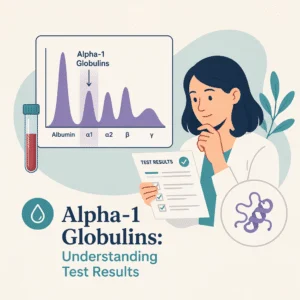
Because IgG makes up the bulk of the gamma fraction on a protein electrophoresis report, its concentration strongly influences that measurement. Readers who see an abnormal band on electrophoresis often want to examine the gamma globulin fraction and what shifts it, since IgG is the dominant contributor.
The four IgG subclasses
Total IgG is a sum of four structurally distinct subclasses. Cleveland Clinic describes each one as having its own preferred targets, and a specialist may request subclass measurement when total IgG looks normal but infections keep recurring.
| Subclass | Share of total IgG | Main role described in the literature |
|---|---|---|
| IgG1 | Largest | Responses to viral infections and to most protein-based vaccines |
| IgG2 | Second largest | Responses to sugar-coated bacteria such as pneumococcus |
| IgG3 | Small | Early, powerful antiviral activity and strong complement activation |
| IgG4 | Smallest | Chronic antigen exposure, parasites, allergen tolerance, and one specific inflammatory disease |
An isolated subclass deficiency can leave total IgG inside the reference range while one arm of the defense is weak. That is a recognized reason for specialist referral when the clinical picture and the total number disagree.
What happens during an IgG blood test
The test requires a routine venous blood draw, usually from the inside of the elbow, and takes a few minutes. No fasting is needed for a quantitative immunoglobulin panel, though a clinician may ask you to fast if other tests are being collected at the same time. Tell the person drawing your blood about recent vaccinations, recent infections, and any medication that affects the immune system, because each of these can shift the result.
Several common exposures move IgG measurably. Corticosteroids, chemotherapy, and B-cell-depleting biologic drugs push levels down. Recent infusions of donor immunoglobulin raise the measured value artificially, since the protein being detected came from a donor rather than from your own plasma cells. Protein loss through the kidneys or the gut lowers IgG alongside other serum proteins, which is one reason clinicians look at total protein levels in your blood before interpreting an isolated antibody value.
Results usually return within a few business days. Most laboratories print your value beside their own reference interval, and that printed interval is the one that applies to your sample.
How to read your IgG blood test results
Cleveland Clinic gives a typical adult reference range of roughly 600 to 1,600 milligrams per deciliter, while noting that values differ between laboratories and are lower in infants and children. Treat any range you find online as an approximation and use the interval printed on your own report.
The more informative step is to read IgG alongside IgA and IgM rather than on its own. The direction all three move in narrows the possibilities considerably.
| Pattern on the panel | What clinicians commonly consider | Typical next step |
|---|---|---|
| IgG, IgA and IgM all low | A broad antibody production problem, or protein loss through kidney or gut | Urine protein testing, review of medications, immunology referral |
| IgG low, IgA and IgM normal | Selective IgG deficiency or a drug effect | Subclass measurement and vaccine response testing |
| IgG high in a broad, diffuse way | Chronic infection, liver disease, or an autoimmune process | Inflammatory markers, liver panel, autoantibody screen |
| IgG high with a single sharp band | A clone of plasma cells producing one identical antibody | Serum electrophoresis, immunofixation, free light chain testing |
| IgG normal but infections keep recurring | A subclass gap or a poor response to specific vaccines | Subclass panel and post-vaccination antibody titers |
When a single sharp band appears, the laboratory usually adds light chain testing, and interpreting that step is easier after reviewing the kappa and lambda light chain ratio, which helps separate a benign finding from one that needs monitoring.
What high and low IgG levels can mean
Higher than expected IgG
MedlinePlus lists autoimmune disease, hepatitis, cirrhosis, chronic infection, and several blood cancers among the causes of raised immunoglobulins. Most elevations found in routine practice are polyclonal, meaning many different plasma cell lines are all working harder at once in response to sustained inflammation or infection. Polyclonal elevations are common and are usually a consequence of something else rather than a disease in themselves.
A monoclonal elevation is different. Here one plasma cell clone produces a large quantity of a single identical antibody, which shows up as a narrow spike on electrophoresis. Most monoclonal findings turn out to be a stable, symptom-free condition that simply gets monitored, but the same pattern needs to be distinguished from plasma cell cancer, and readers often want to understand how multiple myeloma is diagnosed and treated before that appointment.
Because inflammation drives many polyclonal rises, clinicians frequently pair the immunoglobulin panel with inflammatory markers and check C-reactive protein levels in your blood to gauge how active the underlying process is.
Lower than expected IgG
Low IgG is described as hypogammaglobulinemia. It can be primary, meaning present from birth because of an inherited difference in immune development, or secondary, meaning acquired later through medication, protein loss, or an underlying illness. Secondary causes are far more common in adults.
The National Institute of Allergy and Infectious Diseases describes common variable immunodeficiency, usually shortened to CVID, as a primary immune deficiency marked by low levels of protective antibodies. NIAID notes that it is usually diagnosed in adults, that diagnosis draws on infection history, digestive symptoms, low immunoglobulin levels, and poor antibody responses to immunization, and that treatment involves intravenous or subcutaneous immunoglobulin to partially restore levels.
Protein-losing conditions deserve particular attention because they lower IgG without any immune defect at all. Nephrotic syndrome spills protein into the urine, severe burns lose it through the skin, and malabsorption disorders lose it through the gut. In these situations albumin usually falls alongside the immunoglobulins, which is why looking at albumin levels in a blood test often clarifies the picture quickly.
Low IgG also appears alongside low lymphocyte counts in some conditions, so a clinician may compare the antibody panel with the white cell differential and review lymphocyte counts on a blood test as part of the same workup.
How IgG changes across life stages
IgG is the one antibody class that crosses the placenta, so a full-term newborn starts life with a maternal supply. That borrowed IgG fades over the first months while the infant’s own production is still ramping up, producing a predictable dip somewhere around three to six months of age. Pediatric reference intervals account for this, which is why a value that would be low for an adult can be entirely expected in a six-month-old.
Levels then climb through childhood and reach adult concentrations during adolescence. In older adults, total IgG often stays broadly stable while the quality of the antibody response changes, which partly explains why vaccine responses can be less durable with age. This is a reason clinicians interpret an IgG number in the context of age rather than against a single universal cutoff.
Pregnancy adds another layer. Maternal IgG transfer accelerates in the third trimester, and vaccines given during pregnancy are designed to take advantage of that window so the newborn arrives with useful antibody already on board.
When to talk with a doctor about your IgG results
A single value slightly outside a reference range is rarely the point. The pattern over time and the symptoms alongside it matter more. Consider raising the result with your clinician in these situations.
- You have had four or more bacterial infections in a year, or repeated pneumonia, sinus infections, or ear infections that need antibiotics.
- Infections take unusually long to clear, or they return quickly after treatment ends.
- Your IgG is low and you also have chronic diarrhea, weight loss, or swelling that suggests protein loss.
- Your report mentions a monoclonal band, an M-protein, or an abnormal spike on electrophoresis.
- Your IgG is high and you have joint pain, rashes, dry eyes and mouth, or other features that suggest an autoimmune process.
- You take a medication that suppresses B cells and you want to know whether your antibody levels have dropped.
Antibody results frequently sit beside autoimmune markers on the same requisition, and a raised IgG accompanied by joint symptoms often prompts a clinician to add an antinuclear antibody test. Recurrent gut symptoms with a low IgA reading may instead point toward gluten-related disease, and it can help to review celiac disease symptoms and testing, since selective IgA deficiency changes how celiac serology has to be interpreted.
Antibody testing is also usually read next to a routine blood count, and comparing it with your complete blood count results gives a clearer view of whether the immune system as a whole is under strain.
Latest scientific advances
Research on IgG has moved quickly in the last few years, and four developments are worth translating into plain language.
The first concerns IgG4-related disease, a condition in which the smallest IgG subclass is linked to fibrous, inflammatory swelling in organs such as the pancreas, salivary glands, and kidneys. In 2024, a phase 3 randomized trial published in the New England Journal of Medicine tested inebilizumab, a drug that depletes the B cells responsible for producing the antibody. Among the 135 adults enrolled, flares were far less frequent in the treated group than in the placebo group, and more participants reached remission without needing steroids. A randomized trial means participants were assigned by chance to treatment or placebo, which is the strongest design for showing that a drug itself made the difference. What this means for you is that a condition previously managed mainly with long courses of steroids now has a tested alternative, which matters most to the small number of people carrying this specific diagnosis.
The second is a caution rather than a breakthrough. A 2025 review in Nature Reviews Rheumatology emphasized that a raised IgG4 level is not by itself a diagnosis. Elevated IgG4 shows up in allergy, parasitic infection, some cancers, and several conditions that look superficially similar to IgG4-related disease. The authors describe diagnosis as requiring clinical findings, imaging, blood results, and tissue examination together. What this means for you is simple and reassuring: if a report flags a high IgG4, that number is one input among several, and it is not a reason to assume a rare fibrous disease before the rest of the assessment is done.
The third is about how samples are collected. A 2026 proof-of-concept study in The Lancet Microbe compared IgG measured in dried blood spots, taken from a routine newborn heel prick, with IgG measured in standard newborn blood samples. For most of the antibodies tested, the two agreed closely, and umbilical cord blood tracked newborn levels well too. The study was small, involving 27 newborns, so the authors describe the findings as needing confirmation in larger and more varied groups. What this means for you is that antibody measurement is edging toward simpler, less invasive sampling, which is particularly useful for infants and for settings where drawing and shipping serum is difficult.
A fourth thread concerns people who already depend on donor antibody. A 2026 scoping review in the Journal of Medical Economics gathered Canadian evidence comparing immunoglobulin given at home under the skin with the same treatment given intravenously in hospital. Across the studies reviewed, the home-based route was associated with lower overall costs, fewer nursing hours, and less time lost by families. This is health-system evidence rather than a test of whether one route protects better against infection, and the figures come from one country. What this means for you is that if immunoglobulin replacement is ever discussed, the home-based option is well established and worth asking about.
Glossary
| Term | Definition |
|---|---|
| Immunoglobulin G (IgG) | The most abundant antibody class in blood. It carries long-term immune memory and is the only class transferred from mother to baby across the placenta in meaningful amounts. |
| Antigen | Any molecule an antibody can recognize and bind, typically a fragment of a virus, bacterium, or other foreign substance. |
| Plasma cell | A mature B lymphocyte that has specialized in mass-producing one particular antibody. |
| Hypogammaglobulinemia | A lower than expected level of immunoglobulins in blood. It can be inherited or acquired through illness, medication, or protein loss. |
| Polyclonal elevation | A broad rise in antibody levels produced by many different plasma cell lines at once, typically driven by chronic inflammation or infection. |
| Monoclonal elevation | A rise caused by one plasma cell clone making a single identical antibody, seen as a narrow spike on protein electrophoresis. |
| Serum protein electrophoresis | A laboratory method that separates blood proteins into bands by electrical charge, used to detect abnormal antibody patterns. |
| IgG subclass | One of four structural variants of IgG, numbered one through four, each favoring different kinds of targets. |
| Common variable immunodeficiency (CVID) | A primary immune deficiency marked by low protective antibody levels and poor responses to vaccination, usually diagnosed in adulthood. |
| Immunoglobulin replacement | Treatment that supplies antibodies collected from healthy donors, given into a vein or under the skin, to people who cannot make enough of their own. |
Frequently asked questions
What does a high IgG level mean in adults?
A raised IgG most often reflects the immune system responding to something ongoing rather than a disease of the antibody itself. Chronic or repeated infection, long-standing liver disease, and autoimmune conditions are the usual explanations, and in these cases many antibody-producing cells are active at once. Less commonly, a rise comes from a single clone of plasma cells, which laboratories detect as a narrow band on protein electrophoresis and follow up with additional testing. A high number on its own does not identify the cause, so your clinician will read it beside your symptoms, your liver and inflammatory results, and any electrophoresis findings before deciding what it means for you.
Does a high IgG mean cancer?
Usually not. Most elevated IgG results seen in general practice are polyclonal, meaning the rise comes from many different antibody-producing cells reacting to infection or inflammation, and that pattern is not cancer. Certain blood cancers, including multiple myeloma and some lymphomas, can raise immunoglobulins, but they typically produce a monoclonal pattern with one sharp band rather than a broad increase. This is exactly why laboratories add electrophoresis when a high IgG needs explaining. If your report shows no monoclonal band, a cancerous cause is much less likely.
What is a normal IgG level by age?
There is no single universal figure. Cleveland Clinic gives a typical adult range of about 600 to 1,600 milligrams per deciliter while noting that values vary between laboratories and are lower in infants and children. Newborns start with maternal IgG that fades over the first months, so infant values dip before the child’s own production takes over, then rise through childhood to adult levels during adolescence. Because each laboratory validates its own intervals, the range printed on your report is the one that applies to your sample.
What does a positive IgG test for a specific germ mean?
A pathogen-specific IgG result indicates that your immune system has encountered that organism at some point, either through infection or vaccination, and built lasting antibody against it. It generally reflects past exposure rather than active illness, which is why a positive IgG alone is not used to diagnose a current infection. Clinicians usually pair it with IgM, which rises early and fades, to work out whether an encounter was recent or historical. How much protection a positive result confers depends on the specific organism.
What causes low IgG levels?
The most frequent adult causes are acquired rather than inherited. Corticosteroids, chemotherapy, and B-cell-depleting biologic drugs all reduce antibody production, and losses through the kidneys, the gut, or badly burned skin lower IgG alongside other serum proteins. Inherited conditions such as common variable immunodeficiency also cause low levels and are typically identified through a combination of infection history, low immunoglobulin measurements, and poor antibody responses to vaccines. Identifying which category applies determines whether the answer is adjusting a medication, treating protein loss, or referring to an immunologist.
Do I need to fast before an IgG blood test?
Fasting is not required for a quantitative immunoglobulin panel. You may still be asked to fast if other tests, such as a lipid or glucose panel, are being drawn from the same sample. What matters more is telling the laboratory about recent vaccinations, active infections, immune-suppressing medication, and any recent immunoglobulin infusion, since each of these can shift the measured value and change how the result should be read.
Sources
- MedlinePlus, National Library of Medicine — Immunoglobulins Blood Test — MedlinePlus Medical Test, reviewed 2025 — medlineplus.gov
- Cleveland Clinic — Immunoglobulin G (IgG): Function, Tests and Disorders — Cleveland Clinic Health Library, 2024 — my.clevelandclinic.org
- National Institute of Allergy and Infectious Diseases — Common Variable Immunodeficiency (CVID) — NIAID Diseases and Conditions, 2025 — niaid.nih.gov
- Stone JH, Khosroshahi A, Zhang W, et al. — Inebilizumab for Treatment of IgG4-Related Disease — New England Journal of Medicine, 2024 — doi.org/10.1056/NEJMoa2409712
- Peyronel F, Della-Torre E, Maritati F, et al. — IgG4-related disease and other fibro-inflammatory conditions — Nature Reviews Rheumatology, 2025 — doi.org/10.1038/s41584-025-01240-x
- Murra M, Hall T, Henriksen TB, et al. — Assessment of dried blood spot and umbilical cord blood samples for the quantification of maternally transferred IgG against the group B streptococcal alpha-like surface proteins in neonates — The Lancet Microbe, 2026 — doi.org/10.1016/j.lanmic.2026.101409
- Cheung A, Manuel M, Mac S, et al. — The economic value of self-administered subcutaneous immunoglobulin G (SCIg) in Canada: a scoping review — Journal of Medical Economics, 2026 — doi.org/10.1080/13696998.2026.2628450
Further reading
- Compare IgG with the antibody that rises first in a new infection by reading our IgM blood test results guide.
- Examine the protein fraction that carries inflammation signals in this guide to alpha-1 globulin test results.
- Explore a globulin band often reviewed alongside antibody panels with our beta-2 globulin results guide.
- Investigate the autoantibody screen ordered when raised antibodies meet joint symptoms in this guide to antinuclear antibody test results.
- Build a fuller picture of reading your own reports with this guide to reference ranges, flags, and next steps for lab results.
Understand your lab results with BloodSense
An IgG value means far more when you can see it next to IgA, IgM, total protein, albumin, and your blood count instead of reading it alone. The same number can reflect a recent infection, a medication effect, protein loss, or nothing at all, and the difference usually shows up in the pattern rather than the single figure. BloodSense translates a full lab report into plain language, showing where each marker sits relative to its reference range and how the values relate to one another. It helps you understand what you are looking at and prepare better questions, and it does not diagnose or replace your doctor.