






An anti-TPO result appears on your lab report when a clinician wants to know whether your immune system is involved in how your thyroid is working. Anti-TPO is short for anti-thyroid peroxidase antibody, a protein your immune system makes against an enzyme your thyroid gland needs to build hormones. Seeing a positive value can feel alarming, but the number on its own is not a diagnosis, and it is not a severity score either. In this article you will learn what the anti-TPO test measures, how to read your result next to your other thyroid values, which conditions it points toward, what a positive result means when your hormone levels look normal, and which situations genuinely deserve a follow-up conversation with your doctor.
What an anti-TPO test actually measures
Thyroid peroxidase is an enzyme that sits on the surface of thyroid cells. Its job is to attach iodine to a protein called thyroglobulin, a chemical step your body cannot skip when it produces the hormones that regulate your metabolism. Without functioning thyroid peroxidase, hormone production stalls.
An anti-TPO test does not measure that enzyme. It measures antibodies directed against it. Antibodies are the immune system’s targeting proteins, normally aimed at viruses and bacteria. When they are aimed at your own tissue instead, they are called autoantibodies, and their presence signals autoimmunity rather than infection.
The measurement is done with an immunoassay, a laboratory method that uses a binding reaction to detect and quantify a specific molecule in serum. Because different laboratories use different assay platforms and calibrators, the numbers are not interchangeable between labs. A value of 90 from one hospital and a value of 90 from another are not necessarily the same finding, which is why the reference range printed next to your result matters more than the raw figure. Your result becomes far more meaningful when you read it alongside your thyroid stimulating hormone level, since that value reflects how hard your pituitary gland is pushing the thyroid to work.
How to read your anti-TPO number on a lab report
Most reports give three pieces of information: your value, the units (usually IU/mL), and a cutoff above which the result is called positive. Anything at or below the cutoff is reported as negative or undetectable. Anything above it is reported as positive, sometimes with a flag or an H in the margin.
Two points cause most of the confusion. First, anti-TPO is largely a yes-or-no marker in routine care. Clinicians care much more about whether antibodies are present than about the exact figure. Second, a higher number does not automatically mean worse disease or worse symptoms. Two people with the same value can have very different thyroid function and very different day-to-day experiences.
The table below shows how an anti-TPO result is generally interpreted in the context of the rest of a thyroid panel. It is a reading aid, not a diagnostic rule, and only your clinician can apply it to your situation.
| Anti-TPO result | TSH and free T4 | Common interpretation | Usual next step |
|---|---|---|---|
| Negative | Both in range | No sign of thyroid autoimmunity | No routine repeat testing |
| Negative | TSH high, free T4 low | Hypothyroidism from a non-autoimmune cause | Look for other causes, sometimes imaging |
| Positive | Both in range | Thyroid autoimmunity without hormone changes | Periodic thyroid function checks |
| Positive | TSH mildly high, free T4 in range | Subclinical hypothyroidism with autoimmunity | Repeat testing, treatment discussed case by case |
| Positive | TSH high, free T4 low | Autoimmune hypothyroidism, typically Hashimoto disease | Hormone replacement and follow-up |
| Positive | TSH low, free T4 high | Overactive thyroid with autoimmune features | Additional antibody and imaging workup |
Notice that in every row the antibody result changes the explanation but rarely drives treatment on its own. Treatment decisions follow hormone levels and symptoms. That is also why a clinician who already knows you carry antibodies will usually stop retesting them and simply monitor the free thyroxine level in your blood and your TSH instead.
Why anti-TPO antibodies appear in the first place
Autoimmunity develops when the immune system loses tolerance for a tissue it normally ignores. For the thyroid, that loss of tolerance seems to require both an inherited susceptibility and something in the environment that tips the balance.
Inherited susceptibility
Family clustering is well documented. Having a parent, sibling, or child with autoimmune thyroid disease raises your own likelihood of testing positive. The National Institute of Diabetes and Digestive and Kidney Diseases lists family history as a recognized risk factor for Hashimoto disease, alongside female sex and the presence of another autoimmune condition.
Environmental and hormonal triggers
Several exposures have been linked to the onset of thyroid autoimmunity, though none of them explains every case. Mayo Clinic describes infection, stress, radiation exposure, pregnancy, and excessive dietary iodine among the factors that may interact with genetic risk. Iodine deserves a note of caution, because unusually high intake from supplements or seaweed products has been associated with thyroid disruption in susceptible people.
Company with other autoimmune conditions
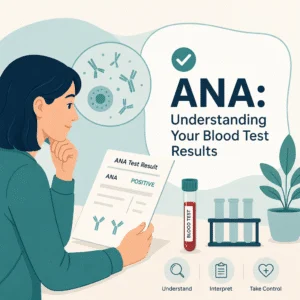
Autoimmune conditions travel together more often than chance would predict. People with a positive anti-TPO result show higher rates of type 1 diabetes, celiac disease, and connective tissue disorders. If your clinician has ordered an antinuclear antibody screen or asked about digestive symptoms that might point toward gluten-triggered intestinal damage, this overlap is the reason.
Conditions linked to a positive anti-TPO test
The same antibody appears across several thyroid conditions, which is exactly why it cannot stand alone as a diagnosis. What distinguishes those conditions is the pattern of hormone values and the clinical picture around them.
| Condition | How often anti-TPO is positive | What sets it apart |
|---|---|---|
| Hashimoto disease | Present in most people with the condition | Gradual underactivity, rising TSH, sometimes a goiter |
| Graves disease | Positive in a substantial share of patients | Overactivity driven by a different antibody against the TSH receptor |
| Postpartum thyroiditis | Frequently positive | Temporary swings in the year after delivery, often self-resolving |
| Silent thyroid autoimmunity | Positive by definition | Normal hormone levels and no symptoms at the time of testing |
| Other autoimmune diseases | Higher than in the general population | Thyroid antibodies found while investigating another condition |
Hashimoto disease is the most common reason for a positive result in the United States, and Cleveland Clinic notes that it affects roughly 5 in 100 people nationally, making it the leading cause of an underactive thyroid where iodized salt is widely available. If your results point in that direction, our guide to the symptoms and management of an underactive thyroid covers what follows. When the pattern points the other way, our guide to an overactive thyroid and its treatment options explains the differences.
What a positive anti-TPO result means when hormones are normal
This is the most common source of worry, and it deserves a direct answer. A positive antibody test with normal TSH and normal free T4 means your immune system is producing antibodies against thyroid tissue while the gland is still keeping up with demand. It does not mean you have a thyroid disease today, and it does not mean you will certainly develop one.
What it does change is your statistical risk over time. People who carry these antibodies are more likely than antibody-negative people to drift toward an underactive thyroid in later years. That is why the usual response is monitoring rather than medication: a thyroid panel at intervals your clinician sets, plus attention to new symptoms in between.
Symptoms worth mentioning at a follow-up visit include persistent fatigue that rest does not fix, unexplained weight change, cold intolerance, constipation, dry skin, hair thinning, low mood, or a visible swelling at the base of the neck. None of these is specific to the thyroid on its own, which is precisely why they are checked against blood work rather than acted on alone. Fatigue in particular has many possible explanations, and a full workup often includes the marker that reflects your stored iron and your vitamin B12 status before anything is attributed to thyroid autoimmunity.
Why age changes the picture
Reference ranges built from broad adult populations do not always fit older adults well. Both TSH and antibody levels shift with age, which means an older person can be labeled with a mild thyroid abnormality that would look entirely ordinary against an age-matched range. This is an active area of research and one reason clinicians increasingly repeat borderline results before acting on them.
Anti-TPO, pregnancy, and family planning
Pregnancy places extra demand on the thyroid, and carrying antibodies makes it harder for the gland to meet that demand. For this reason, an anti-TPO result is often requested when a woman is pregnant, planning a pregnancy, or being evaluated for repeated pregnancy loss.
A positive result in this setting usually leads to closer monitoring of thyroid hormone levels through the pregnancy and in the months after delivery, when temporary thyroid inflammation is relatively common. Whether medication should be started in a woman whose hormone levels are normal is a genuinely debated question, and it is one your obstetric team should decide with you rather than something to resolve from a lab printout. Thyroid values are only one part of a fertility or prenatal panel, and reading them alongside the rest of your results is easier with our guide to reference ranges, flags, and next steps for lab results.
Diet, lifestyle, and what actually moves the needle
Plenty of online advice promises to lower antibody levels through diet alone. The honest summary is narrower than that. No food or supplement has been shown to reverse thyroid autoimmunity, and the antibody level itself is not a treatment target in routine care.
A few things are still worth attention. Iodine intake should stay in a sensible range rather than being pushed high with supplements. Selenium status matters for thyroid enzyme function, and the blood test that reflects selenium status is sometimes checked before any supplement is considered; this is a decision for your clinician, since excess selenium carries its own risks. Vitamin D deficiency is common in people with autoimmune conditions, and the test that measures your vitamin D level is often included in the same draw. Smoking cessation, adequate sleep, and treating any coexisting condition remain the least glamorous and most reliable recommendations.
When to see a doctor
Book an appointment rather than waiting for a scheduled check if you notice a growing lump or swelling in the front of your neck, difficulty swallowing, a resting heart rate that is persistently fast or unusually slow, marked weight change without a change in habits, or new depression or memory difficulty. Seek urgent care for severe symptoms such as chest pain, extreme confusion, or profound lethargy.
Latest scientific advances
Research on thyroid antibodies has moved steadily over the past three years. Here is what the most useful recent work found and what it means for someone reading a lab report at home.
Selenium can lower antibody levels, but that is not the same as curing anything
A systematic review and meta-analysis published in Thyroid in 2024 pooled 35 randomized trials of selenium supplementation in people with Hashimoto disease. A meta-analysis combines the results of many separate trials to get a more stable answer than any single study can give. The pooled result showed that selenium lowered both TSH and anti-TPO levels in people who were not already taking thyroid hormone, with side effects no more frequent than in the comparison groups. A second meta-analysis published in Medicine in 2025 reached a similar conclusion across 21 trials. What this means for you: selenium appears able to nudge antibody numbers down, but the reviews did not show that it changes free T4 or free T3, and lowering an antibody number is not the same as restoring thyroid function. Do not start supplementing on your own, since too much selenium is harmful.
Levothyroxine in pregnancy: a narrower benefit than once hoped
A 2025 systematic review in Revista Brasileira de Ginecologia e Obstetrícia pooled eight randomized trials covering more than 1,600 pregnant women who had normal thyroid hormone levels but a positive anti-TPO result. Treating them with levothyroxine reduced miscarriages by roughly a fifth overall, and the live-birth benefit was concentrated in women who had already experienced repeated pregnancy loss. Women without that history saw no measurable gain. What this means for you: if you are antibody-positive and have had recurrent miscarriages, this is a conversation to have with your obstetric team; if you have not, the evidence does not support routine treatment.
Age-specific reference ranges may prevent overdiagnosis
A longitudinal analysis of the long-running Whickham cohort, published in The Journal of Clinical Endocrinology and Metabolism in 2025, followed older adults for roughly eight years, remeasuring TSH, thyroid hormones, and anti-TPO with the same assay each time. A cohort is simply a group of people followed over time. TSH rose modestly with age while antibody levels declined slightly. Using standard adult reference ranges, the apparent rate of mild underactive thyroid in this group more than doubled over the follow-up; using ranges matched to the age group, it stayed low and flat. What this means for you: a borderline thyroid result in an older adult may reflect normal aging rather than disease, which is a good reason to repeat a borderline test before starting lifelong medication.
Antibody level does not predict how Graves disease will behave
A retrospective cohort study published in Cureus in 2023 followed 142 people treated with antithyroid medication for Graves disease and looked at whether their anti-TPO level at diagnosis predicted who would go into remission and who would relapse. It did not. What this means for you: if you have an overactive thyroid, your anti-TPO number is not a forecast of your course, and a high value is not a reason to expect a worse outcome.
Taken together, these studies point the same direction as everyday practice: anti-TPO is informative about cause and about risk, and much less informative about what will happen next.
Glossary
| Term | Definition |
|---|---|
| Anti-TPO | Anti-thyroid peroxidase antibody. An immune protein directed against an enzyme the thyroid uses to make hormones. |
| Autoantibody | An antibody that targets the body’s own tissue instead of an outside threat such as a virus. |
| Thyroid peroxidase | The thyroid enzyme that attaches iodine to thyroglobulin, an essential step in hormone production. |
| TSH | Thyroid stimulating hormone. Released by the pituitary gland to tell the thyroid how much hormone to produce. |
| Free T4 | The unbound portion of thyroxine circulating in blood, and the fraction available to your tissues. |
| Hashimoto disease | An autoimmune condition in which the immune system gradually reduces the thyroid’s ability to make hormones. |
| Graves disease | An autoimmune condition that drives the thyroid to produce too much hormone. |
| Subclinical hypothyroidism | A mildly raised TSH with a normal free T4, often without clear symptoms. |
| Immunoassay | A laboratory method that uses a binding reaction to detect and measure a specific molecule in a sample. |
| Reference range | The span of values a laboratory considers typical, derived from a comparison population and specific to that lab. |
Frequently asked questions
Can anti-TPO levels go down over time?
Yes, they can rise, fall, or fluctuate without any change in how you feel. Levels sometimes decline after years of autoimmune activity, and they tend to drift slightly downward with age. Because the number does not track symptoms or thyroid function closely, most clinicians do not repeat the test once a positive result has been documented. If your thyroid function is being followed, TSH and free T4 are the values that guide decisions.
Do I need to fast before an anti-TPO blood test?
No. The antibody measurement is not affected by food, so fasting is not required for this test alone. You may still be asked to fast if the same draw includes other tests that need it, such as glucose or a cholesterol panel. Follow whatever instructions your lab or clinic gives you, and mention any biotin supplements you take, since high-dose biotin can interfere with some immunoassay results.
Does a high anti-TPO level mean my symptoms are from my thyroid?
Not necessarily. Antibodies confirm that autoimmunity is present, but symptoms such as fatigue, weight change, or low mood are only attributable to the thyroid when hormone levels are actually abnormal. If your TSH and free T4 are in range, your clinician will usually look for other explanations while continuing to monitor your thyroid over time.
Will a positive anti-TPO result affect my children?
A positive result signals a family tendency toward autoimmune thyroid disease, not a certainty for anyone else. Relatives of antibody-positive people are tested more readily if they develop suggestive symptoms, but routine screening of healthy children is not standard practice. Mentioning your result to your family doctor is enough for it to be taken into account if a question comes up later.
Can I lower my anti-TPO level with diet?
No diet has been shown to eliminate thyroid antibodies. Keeping iodine intake within normal limits and avoiding high-dose supplements taken without a reason are sensible steps. Selenium has lowered antibody levels in trials, but it is not a cure, it carries risks in excess, and it should only be taken if your clinician recommends it after assessing your situation.
Is anti-TPO the same as a thyroglobulin antibody test?
No. They are two different autoantibodies aimed at two different thyroid targets. Anti-TPO is directed against the thyroid peroxidase enzyme, while thyroglobulin antibodies are directed against the protein that stores thyroid hormone precursors. They are often ordered together, and each carries slightly different information for a clinician.
Sources
- MedlinePlus, National Library of Medicine — Thyroid Antibodies Test — MedlinePlus Medical Test, reviewed 2025 — medlineplus.gov
- National Institute of Diabetes and Digestive and Kidney Diseases — Hashimoto’s Disease — NIDDK Health Information, 2021 — nih.gov
- Mayo Clinic Staff — Hashimoto’s Disease: Symptoms and Causes — Mayo Clinic Diseases & Conditions, 2022 — mayoclinic.org
- Cleveland Clinic — Hashimoto’s Disease — Cleveland Clinic Health Library, 2022 — my.clevelandclinic.org
- Huwiler VV, Maissen-Abgottspon S, Stanga Z, et al. — Selenium Supplementation in Patients with Hashimoto Thyroiditis: A Systematic Review and Meta-Analysis of Randomized Clinical Trials — Thyroid, 2024 — doi.org/10.1089/thy.2023.0556
- Zhang H, Yang Y, Liu S, et al. — Clinical Efficacy of Selenium Supplementation in Patients with Hashimoto Thyroiditis: A Systematic Review and Meta-Analysis — Medicine, 2025 — doi.org/10.1097/MD.0000000000044043
- Provinciatto H, Barbalho ME, da Câmara PM, et al. — Levothyroxine in Euthyroid Pregnant Women with Thyroid Peroxidase Antibody: A Systematic Review and Meta-Analysis of Randomized Controlled Trials — Revista Brasileira de Ginecologia e Obstetrícia, 2025 — doi.org/10.61622/rbgo/2025rbgo75
- Razvi S, Wild H, Ingoe L, et al. — Changes in Thyroid Function and Autoimmunity in Older Individuals: Longitudinal Analysis of the Whickham Cohort — The Journal of Clinical Endocrinology and Metabolism, 2025 — doi.org/10.1210/clinem/dgae875
- Guia Lopes ML, Tavares Bello C, Cidade JP, et al. — Influence of Thyroid Peroxidase Antibodies Serum Levels in Graves’ Disease: A Retrospective Cohort Study — Cureus, 2023 — doi.org/10.7759/cureus.40140
Further reading
- Check the pituitary signal that drives most thyroid decisions by reading our TSH blood test results guide.
- Compare the active hormone fraction measured alongside your antibodies in this guide to free T3 levels and what they indicate.
- Review the abbreviation as it appears on a report with our TPO lab test dictionary entry.
- Explore what happens when the gland slows down by reading our hypothyroidism symptoms and treatment guide.
- Investigate a related autoantibody used in joint disease with our anti-CCP blood results guide.
Understand your lab results with BloodSense
An anti-TPO result rarely means much on its own, because its value comes from the company it keeps on your report. Read next to TSH, free T4, free T3, and markers such as vitamin D or ferritin, the same antibody result can point toward watchful monitoring or toward a conversation about treatment. BloodSense turns a full lab report into plain language, showing where each marker sits against its reference range and how your values compare with your own earlier results. It helps you understand what you are looking at and prepare better questions for your appointment; it does not diagnose and it does not replace your doctor.